
School Children Tie Rakhis to Army Chief General Dhiraj Seth in Bharat Raksha Parv Event

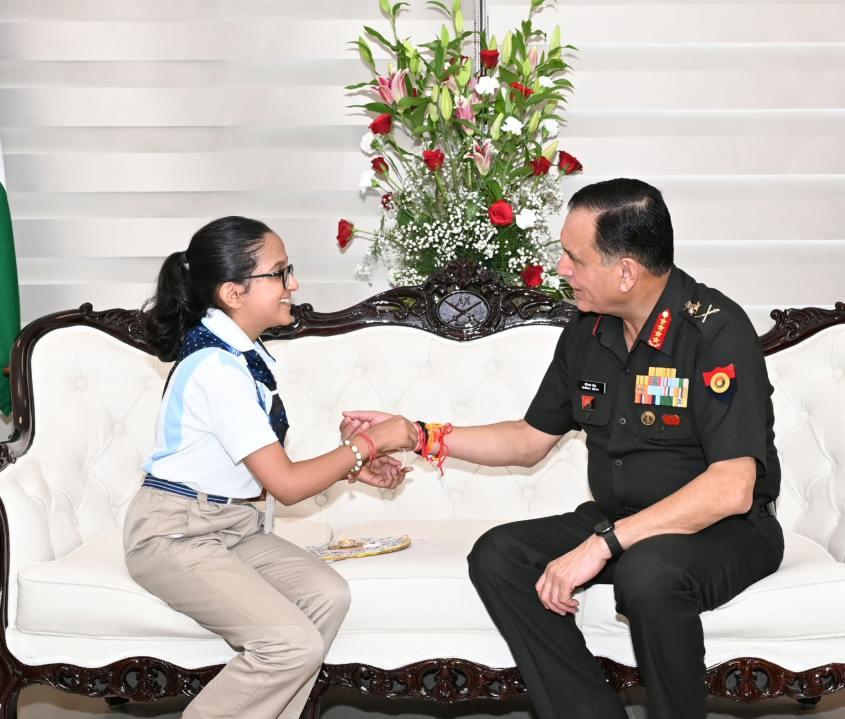
New Delhi: Schoolchildren marked Raksha Bandhan with Chief of the Army Staff General Dhiraj Seth in a gesture that gave the festival a distinctly patriotic tone, as part of the Indian Army’s “Bharat Raksha Parv – रक्षक को राखी” initiative.
The interaction brought young students face to face with the Army’s top leadership and turned a familiar festival ritual into a public expression of gratitude for soldiers serving across the country. As the children tied Rakhis to General Seth, the moment carried the customary emotions associated with Raksha Bandhan — affection, trust and protection — while extending those sentiments to the Armed Forces.
The celebration was characterised by warm exchanges and visible excitement among the children, who used the simple act of tying a Rakhi to convey respect and appreciation for the military. The event reflected the larger message behind the Army’s Bharat Raksha Parv campaign: that the bond between citizens and soldiers can be acknowledged not only through formal ceremonies, but also through personal, symbolic gestures.
By framing the festival around the idea of “Bharat Raksha Parv – रक्षक को राखी”, the Army extended Raksha Bandhan beyond its traditional family setting. The initiative highlighted the emotional connection many citizens feel toward the men and women charged with protecting the nation, and placed that sentiment at the centre of the occasion.
General Dhiraj Seth, who assumed charge as the 31st Chief of the Army Staff on June 30, 2026, has served in the Indian Army for nearly four decades. A graduate of the National Defence Academy, Khadakwasla, he was commissioned into the Armoured Corps in December 1986 and has held a range of important operational and command appointments during his career.
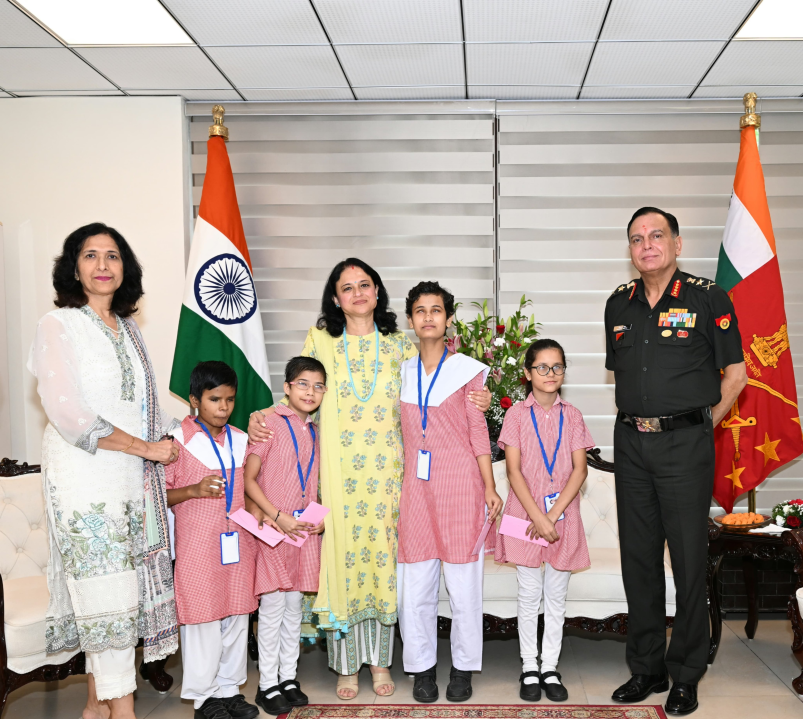
The Raksha Bandhan observance also fit into a broader pattern of civilian participation in Army-linked celebrations during the festival. Similar Rakhi programmes have involved schoolchildren, NCC cadets, community organisations and Army personnel under the wider Bharat Raksha Parv initiative.
For the children taking part, the Rakhi was more than a symbol of sibling affection. In this setting, it became a way to acknowledge the sacrifices of soldiers who spend long periods away from their families while serving the country.
The occasion ultimately conveyed a straightforward message: the relationship between the Indian Army and the people it protects is built not only on duty and security, but also on trust, affection, respect and a shared sense of belonging.
Through the children’s smiles and the Rakhis tied to the Army Chief, Bharat Raksha Parv offered a heartfelt tribute to the soldiers who remain on guard for the nation.


