
Lt Gen Pushpendra Singh Reviews Tiger Division’s Readiness, Troop-Led Innovation Display

Lieutenant General Pushpendra Singh, AVSM, SM**, General Officer Commanding-in-Chief of the Indian Army’s Western Command, visited the Tiger Division of Rising Star Corps to review its operational preparedness and assess how quickly it can respond to emerging contingencies. The visit focused on the division’s combat readiness, its ability to remain agile, and its effectiveness across a range of operational situations.
During the review, the Army Commander examined key aspects of the formation’s preparedness, with particular attention to how the unit can maintain speed, flexibility and mission effectiveness in a changing battlefield environment. Lt Gen Pushpendra Singh stressed the need for formations to sustain a high level of combat readiness and remain prepared for rapidly evolving situations.
He also underlined that adaptability is no longer optional for military units operating in contemporary conditions. According to the broad operational context outlined during the visit, modern warfare increasingly requires faster decision-making, technological adaptability, effective battlefield surveillance and the ability to function in environments shaped by drones, electronic warfare and other emerging technologies.
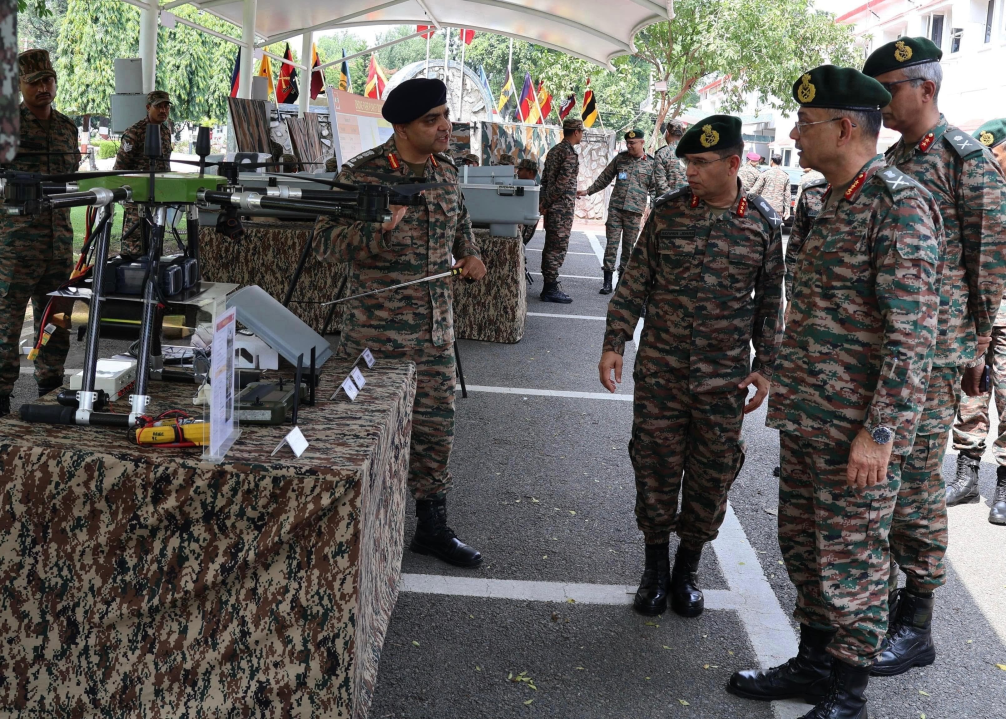
Alongside the operational assessment, Lt Gen Pushpendra Singh witnessed an innovation display featuring indigenous solutions developed and optimised by troops for use in field conditions. The display highlighted ideas conceptualised by soldiers to tackle contemporary operational challenges and improve battlefield effectiveness.
Such troop-led innovations are significant because they come from personnel who work directly with equipment and face practical difficulties during training and deployments. The solutions presented during the display showed how soldiers are using technology and in-house problem-solving to create practical fixes tailored to specific operational needs.
These field-oriented initiatives can help formations improve existing equipment, bridge capability gaps and develop relatively simple but effective solutions without always relying on lengthy conventional procurement processes. The Army’s growing focus on this kind of innovation reflects a wider push to encourage technological awareness and problem-solving among troops at different levels.
The broader relevance of the display also lies in the lessons the Indian Army is drawing from contemporary conflicts around the world. Relatively inexpensive technologies, when adapted and used effectively, can have a substantial impact on battlefield outcomes. That has increased attention on solutions that can be modified quickly as operational requirements change.
Indigenous and locally developed systems offer particular flexibility in areas such as unmanned systems, surveillance, communications, electronic warfare, mobility, protection and logistics, where requirements can shift rapidly. The Army’s emphasis on such solutions is linked not only to operational practicality but also to the ability to respond swiftly to new battlefield challenges.
Lt Gen Pushpendra Singh appreciated the ingenuity and resourcefulness shown by the troops in developing these field-oriented solutions. Their efforts also aligned with the broader objective of Atmanirbhar Bharat by promoting indigenous innovation and reducing dependence on externally sourced solutions wherever suitable alternatives can be developed within the country.
The visit brought together two closely connected dimensions of modern military preparedness: conventional combat readiness and technological innovation. While formations must remain capable of carrying out their core operational tasks, their effectiveness increasingly depends on how quickly they can understand, adopt and adapt new technologies.
The Tiger Division is part of Rising Star Corps under Western Command, one of the Indian Army’s strategically important operational commands. Maintaining a high degree of preparedness across formations under the Command is seen as essential in view of the dynamic security environment and the need to respond effectively to a wide spectrum of contingencies.
In that sense, the visit served both as a review of the Tiger Division’s current operational capabilities and as a reminder of the Army’s expectations on readiness, adaptability and innovation. The emphasis was clear: formations must be prepared not only to fight effectively, but also to evolve rapidly as the character of warfare changes.


