
Lt Gen Pushpendra Singh Pays Tribute to Two Army Special Forces Soldiers Drowned in Yamuna Training Accident

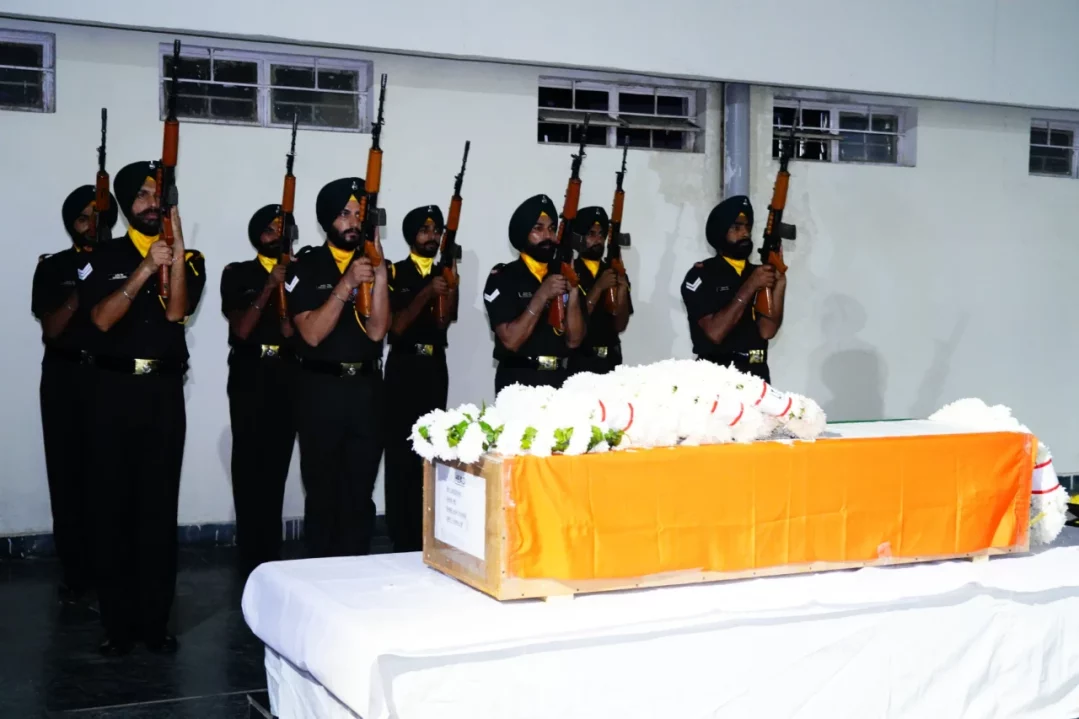
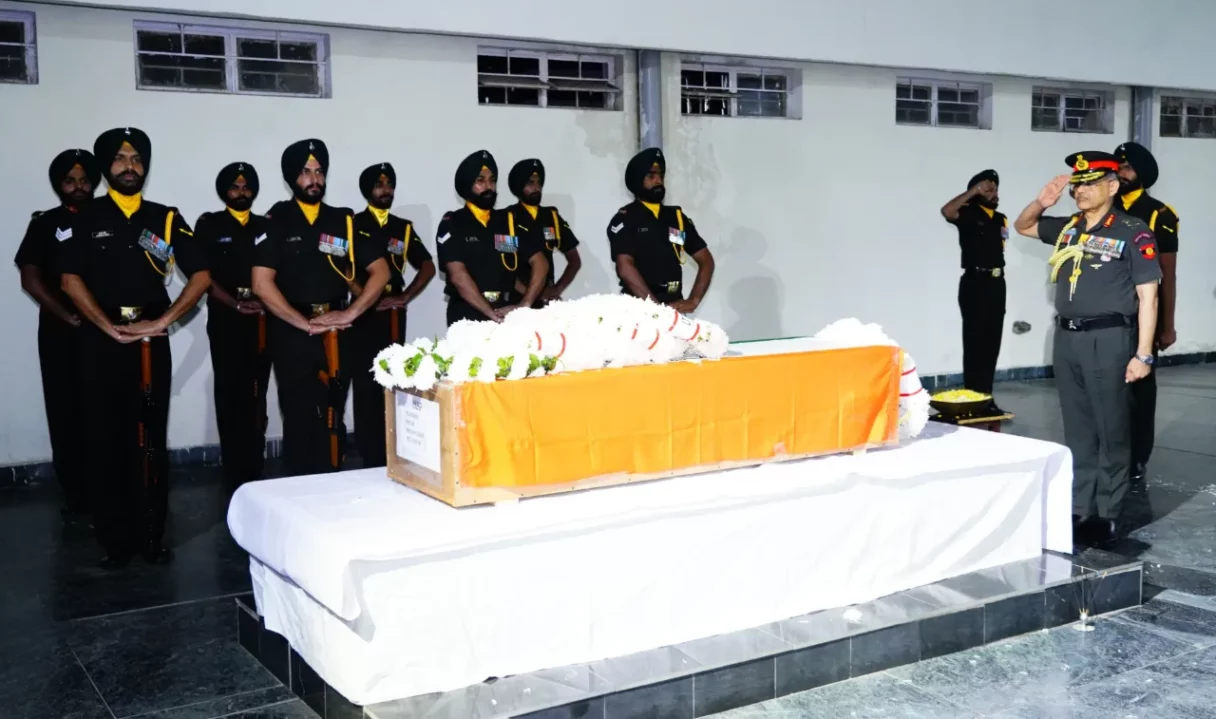
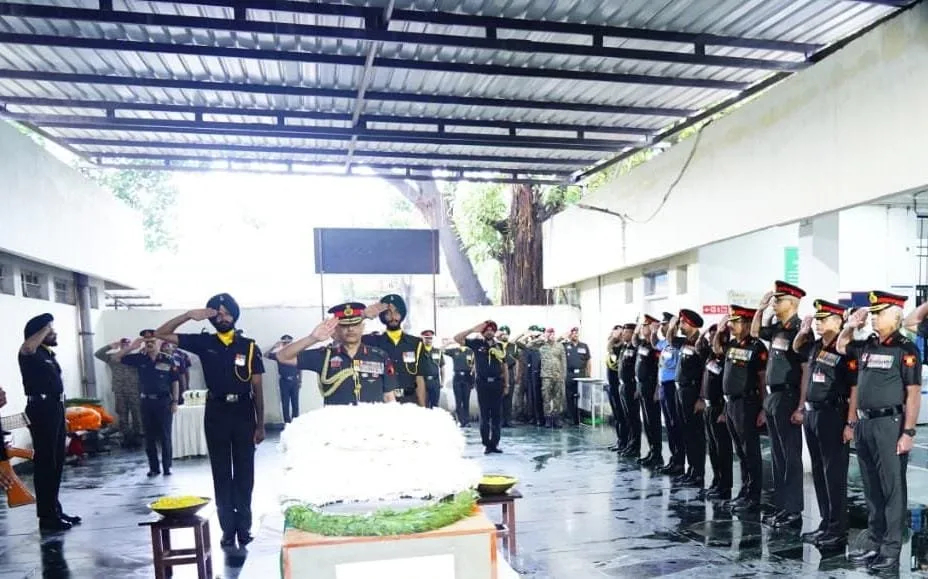
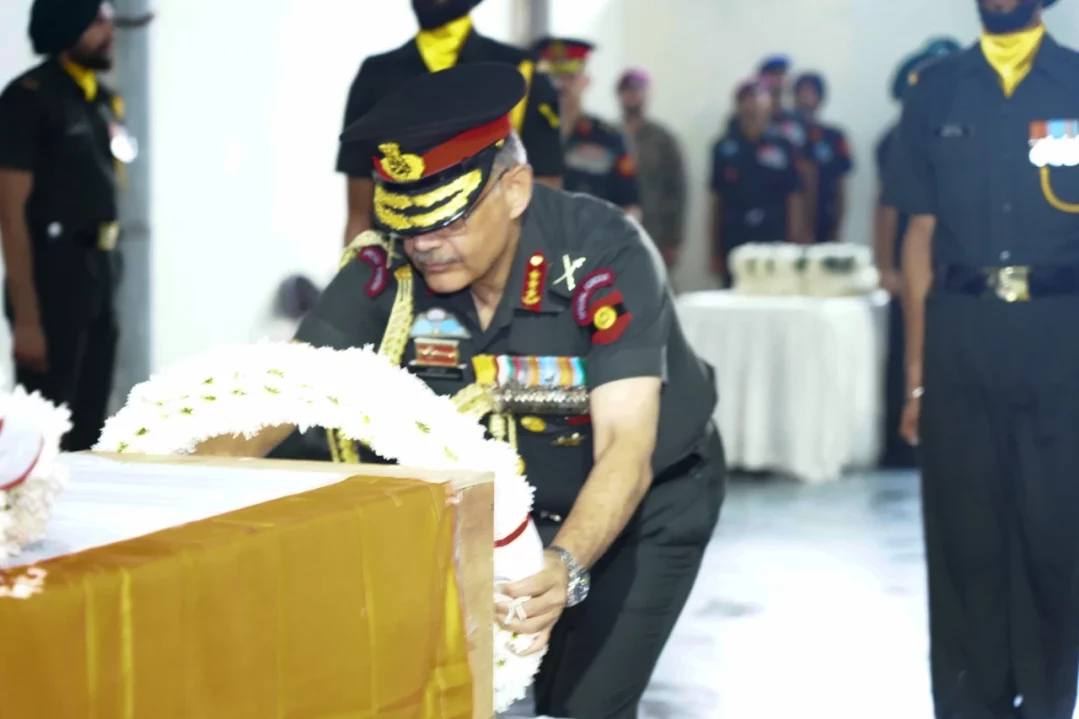
Lieutenant General Pushpendra Singh, AVSM, SM**, Army Commander of Western Command, paid tribute to two Special Forces soldiers of the Indian Army who died during a watermanship training exercise in Haryana’s Yamuna River. He laid a wreath in honour of Naik Ajay Kumar and Lance Naik Rohit Narayan Patil, remembering their courage, dedication and commitment to duty.
The two soldiers were personnel of the Parachute Regiment’s Special Forces. Lance Naik Rohit Narayan Patil served with 1 Para Special Forces, while Naik Ajay Kumar was from Akhnoor in Jammu and Kashmir. They lost their lives in a training accident near Hathnikund Barrage in Yamunanagar district, an incident that has drawn attention to the hazards involved in Special Forces training even in peacetime.
According to the available details, the accident happened during a watermanship exercise involving an Army boat carrying five soldiers. The boat reportedly developed a technical snag and lost power before being pushed by strong currents towards the downstream side of the barrage. It then became trapped in powerful currents and eddies near the sluice gates and eventually capsized.
Three soldiers on board managed to swim to safety, but two were swept away by the current. Their disappearance triggered a large-scale search and rescue operation that continued for more than a day.
The search effort brought together Army personnel, Indian Air Force helicopters, the National Disaster Response Force, State Disaster Response Force teams from Haryana and Uttar Pradesh, police, and civil administration authorities. To aid the operation, water release from the barrage and the Western Yamuna Canal was also reduced.
Naik Ajay Kumar’s body was recovered during the night of September 3 from the Yamuna near Bartha village in Saharanpur district, Uttar Pradesh. Lance Naik Rohit Narayan Patil’s body was later found in the Hansi Branch Canal near Jind in Haryana, nearly 200 kilometres downstream from the accident site.
Patil was a resident of Sangli district in Maharashtra and served with 1 Para Special Forces, one of the Special Forces battalions of the Parachute Regiment. Known as “Pratham”, the battalion has a long association with specialised military operations and retains capabilities required for high-risk missions and demanding operational environments.
Watermanship and river-crossing drills are part of the specialised preparation undertaken by soldiers training for operations in difficult terrain and challenging environmental conditions. Such exercises are meant to improve a unit’s ability to move and operate effectively where water obstacles and terrain can directly affect mobility and mission success.
The accident has therefore highlighted the risks that come with such training. While these exercises are designed to prepare troops for complex operational situations, factors such as strong currents, equipment failure and difficult surroundings can create serious danger.
The deaths of Naik Ajay Kumar and Lance Naik Rohit Narayan Patil were deeply felt by their comrades and families. With both bodies recovered, the search operation came to an end, and the Army moved ahead with identification, last rites and formal military tributes as per established procedure.
Lt Gen Pushpendra Singh’s wreath-laying ceremony reflected the Army’s tradition of honouring those who make the supreme sacrifice in the line of duty. The tribute also served as a reminder that the service and sacrifice of soldiers remain central to the military ethos.
Remembering the two soldiers, the Western Army Commander spoke of their courage, dedication and unwavering commitment to duty. Their sacrifice, he said, would remain etched in the memory of their comrades and continue to inspire future generations of soldiers.
For the Special Forces community, the loss of personnel during training carries particular weight. Such training is essential for operational readiness, and the demanding exercises undertaken by these soldiers are intended to simulate the uncertainty and complexity of real-world operations as closely as possible.
The incident also highlighted the value of coordination between multiple agencies during military emergencies. The combined response of the Army, Air Force, NDRF, SDRF, police and civil administration enabled a search across several downstream locations after the accident.
Beyond the immediate recovery effort, the tragedy has drawn attention to the physical and mental demands placed on soldiers who train in difficult environments so they remain prepared for high-risk missions. For specialised units, the willingness to train under such conditions remains central to maintaining operational effectiveness.
Lt Gen Pushpendra Singh’s tribute also conveyed Western Command’s solidarity with the bereaved families. The Army reaffirmed that the military fraternity stands with them in their grief and will continue to honour the memory of those who have made the supreme sacrifice.
For the families of Naik Ajay Kumar and Lance Naik Rohit Narayan Patil, the loss is deeply personal. For the Armed Forces, their deaths form part of a wider legacy of service carried forward by generations of soldiers.
As their comrades mourned the two soldiers, the tribute in their memory carried both sorrow and resolve. Their courage and devotion to duty, the Army said, reflect the values that define military service.
Though they died during training, Naik Ajay Kumar and Lance Naik Rohit Narayan Patil were preparing for the same demanding conditions that soldiers may face in the defence of the nation. Their sacrifice has now become part of the Army’s continuing remembrance of those who serve with distinction and do not return.
The homage paid by Lt Gen Pushpendra Singh reaffirmed a long-standing tradition within the Indian Army: those who die in service of the nation are remembered, their names preserved in the collective memory of the military fraternity, and their example held up for those who follow.


