
Lt Gen Mohit Malhotra Reviews Drone, Counter-Drone Innovation and Combat Readiness at Hisar Military Station

Lieutenant General Mohit Malhotra, Army Commander of the Sapta Shakti Command, visited Hisar Military Station on August 10 and 11, 2026, to review operational preparedness and examine technology development efforts intended to strengthen the Indian Army’s future combat capability. The visit centred on how quickly new systems can be absorbed into operational use, with particular attention to drones, counter-drone measures and indigenous innovation.
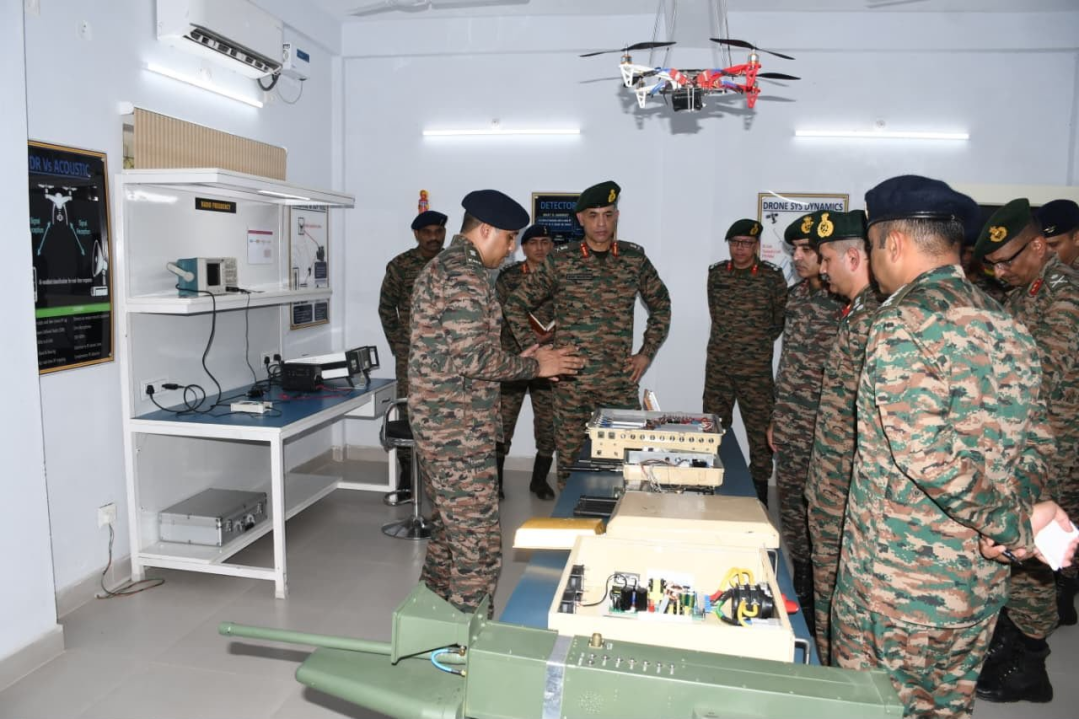
At Hisar, Lt Gen Malhotra inspected the Nodes for Drone and Counter-Drone Centres of Excellence, where he was briefed on progress in the development and integration of unmanned aerial systems, counter-unmanned aerial systems and related technologies for operational formations. The review covered ongoing work to ensure that technological advances are translated into practical battlefield applications rather than remaining limited to demonstration or experimentation.
The Army’s focus at Hisar reflects a wider shift in military thinking driven by the rapid spread of unmanned systems across contemporary battlefields. Drones are now increasingly used for surveillance, reconnaissance, target acquisition, logistics support and precision engagement. At the same time, hostile unmanned platforms have created fresh force protection and battlefield security challenges, making counter-drone capability a parallel operational requirement.
Against that backdrop, the Centres of Excellence reviewed during the visit are intended to support experimentation, training, evaluation and technology integration, enabling units to adopt systems suited to emerging threats more quickly. By creating dedicated nodes for drone and counter-drone work, the Army is attempting to build institutional mechanisms through which new technologies can be tested, refined and woven into operational doctrine and training.
Lt Gen Malhotra also reviewed broader progress in emerging technology integration, assessing how these efforts are being aligned with evolving battlefield requirements. The emphasis during the visit was not only on acquiring or developing new tools, but on ensuring that formations can absorb them fast enough to maintain combat readiness in an increasingly technology-intensive operating environment.
An Innovation Display presented during the visit showcased a range of indigenous solutions designed to improve operational effectiveness. The display highlighted the Army’s growing emphasis on locally developed technologies tailored to the needs of soldiers and formations operating in varied terrain, climatic and tactical conditions. This approach is intended to produce practical systems that answer specific field requirements rather than generic capability additions.
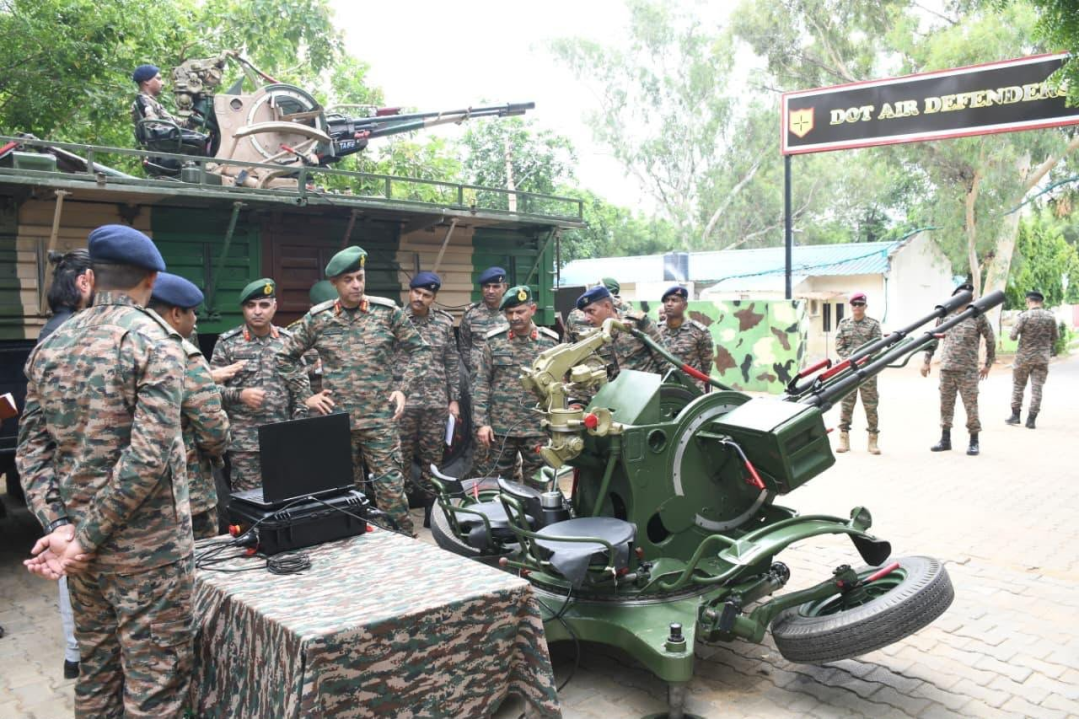
Innovation initiatives of this kind have become an increasingly important part of the Indian Army’s modernisation effort. Formations are being encouraged to identify operational problems and pursue practical technological responses in collaboration with the defence industry, academia, start-ups and internal innovation ecosystems. The objective is to shorten the gap between identifying a battlefield challenge and fielding a usable solution.
The push for indigenous development is also aligned with the wider Aatmanirbhar Bharat initiative, which aims to reduce dependence on imported defence technology while strengthening domestic manufacturing and research capability. In the military context, this means seeking solutions that can be designed, adapted and sustained within India while remaining responsive to operational needs.
Rapid technology absorption has emerged as a major priority for the Army as advances in artificial intelligence, autonomous systems, drones, electronic warfare, surveillance technologies and precision weapons continue to reshape the battlefield. Recent conflicts around the world have shown that relatively inexpensive unmanned systems can have an outsized impact on military operations when linked to effective surveillance, communications and targeting networks.
That experience has also reinforced the importance of counter-drone systems. Modern counter-unmanned aerial measures may combine detection, tracking, electronic warfare, jamming and kinetic or non-kinetic neutralisation, depending on the threat environment. The Army’s work at Hisar indicates that it is treating both the offensive and defensive dimensions of unmanned warfare as integral to future readiness.
The visit was also an opportunity for the Sapta Shakti Command chief to assess the overall operational preparedness of formations and units under his command. Alongside the technology review, Lt Gen Malhotra emphasised the need to maintain high standards of combat readiness while adopting systems that can improve situational awareness, survivability and operational effectiveness for soldiers in the field.
The activity underway at Hisar illustrates the Army’s broader effort to integrate innovation directly with training, operational planning and battlefield requirements, rather than treating modernisation as a separate or purely long-term process. In practical terms, this means linking technological experimentation to the immediate needs of operational units and ensuring that promising systems can be incorporated into regular military practice.
The review by Lt Gen Malhotra brought together three connected priorities that are increasingly shaping the Army’s approach: sustained operational preparedness, faster absorption of emerging technologies and greater reliance on indigenous defence solutions. Those priorities are especially visible in the focus on drones and counter-drone systems, which are becoming central to military operations across multiple theatres.
The initiatives being pursued at Hisar Military Station show how the Army is trying to combine conventional combat proficiency with emerging technologies as it prepares for increasingly complex future battlefields. With innovation, indigenous capability development and readiness being advanced together, the Sapta Shakti Command is seeking to strengthen its ability to meet current security requirements while preparing its formations for the demands of future warfare.


