
Lt Gen Mohit Malhotra briefs DSSC 82 on Western Front operations and Indian Army transformation

Lieutenant General Mohit Malhotra, General Officer Commanding-in-Chief, South Western Command, briefed student officers of the Defence Services Staff College (DSSC) on India’s national and military security environment, with a particular focus on the operational realities of the Western Front.
The interaction, held for officers of DSSC 82, centred on how the Indian Army is adapting to a changing security landscape. Lt Gen Malhotra discussed the broader strategic setting in which military decisions are made and explained the operational considerations relevant to the Western Front, giving the student officers context beyond the immediate tactical level.
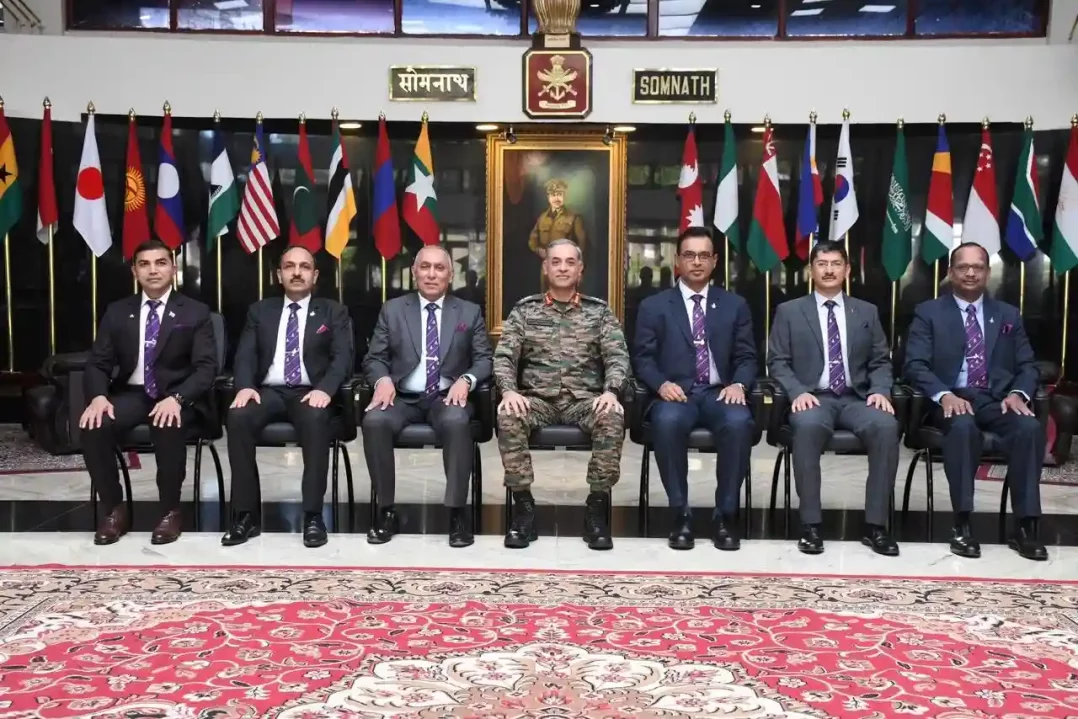
A major part of the discussion was devoted to the Indian Army’s ongoing transformation and modernisation efforts. Lt Gen Malhotra highlighted recent initiatives involving organisational restructuring and technology infusion, both of which are intended to strengthen the force’s ability to meet present and future security challenges.
According to the Army Commander, the modernisation drive is aimed at building formations that are more agile, adaptable and effective in a fast-changing battlespace. The emphasis is not only on acquiring new systems, but also on reshaping structures, operational concepts and methods of employment so that they can deliver better battlefield results and speed up decision-making.
He underlined that these measures are part of a wider effort to create a “Future-ready Force”. In that framework, technological induction is only one element; equal importance is being given to how the Army organises itself, trains its personnel and employs its combat power in modern warfare.
The Western Front received special attention during the interaction. Lt Gen Malhotra stressed the need for the Indian Army to retain the capability to generate a swift and decisive offensive response when required, reflecting the continuing demand for preparedness and operational agility in that sector.
The Army Commander’s remarks also drew attention to the importance of translating technological and organisational advantages into real combat effectiveness. In his broad framing of the challenge, readiness across force structures, equipment, training, logistics, intelligence and command-and-control systems remains essential to maintaining credible offensive capability.
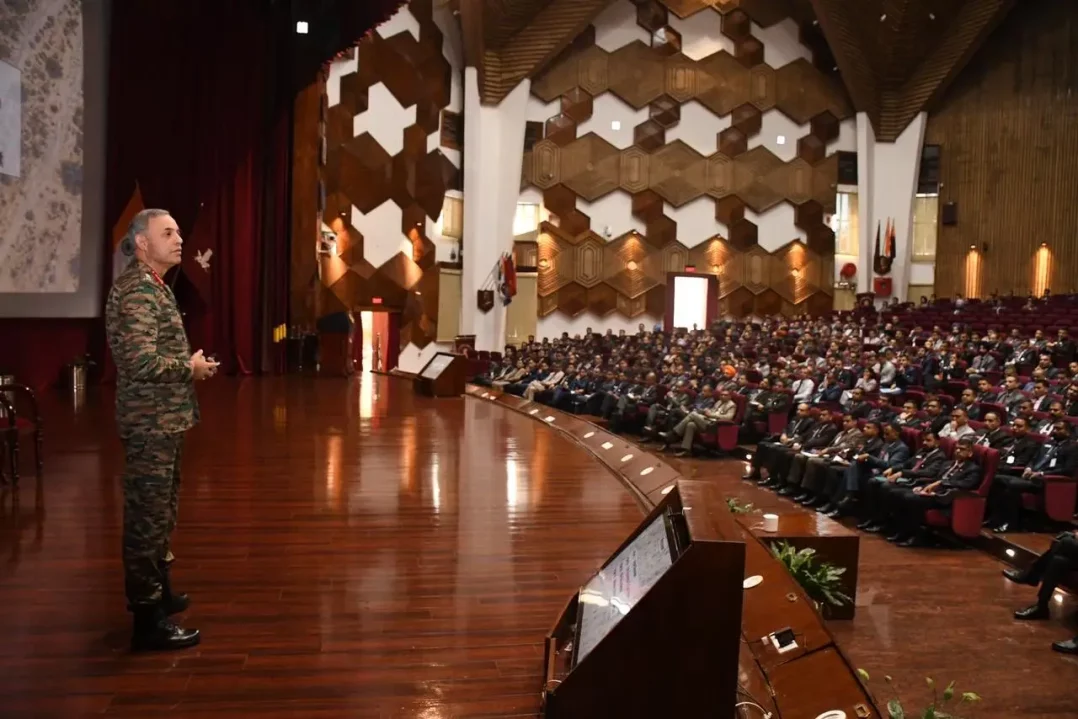
The session also had a strong professional military education angle. DSSC is designed to help officers develop a deeper understanding of operational planning, strategy and joint military affairs, and interaction with senior operational commanders is an important part of that learning process.
For DSSC 82, the briefing came as the officers prepare for the ensuing Western Front capsule. The discussion provided them with a clearer understanding of the operational and tactical nuances associated with the front, and of the complexities involved in planning and executing military operations in a challenging security environment.
Lt Gen Malhotra’s interaction also reinforced the link between strategic thinking and tactical execution. Officers moving into staff and command appointments are expected to understand not just the immediate demands of battlefield operations, but also the national security objectives that shape military planning and force employment.
Technology infusion formed another key strand of the address. The changing character of warfare, he noted, is being shaped by the growing relevance of advanced sensors, unmanned systems, artificial intelligence, precision capabilities and information systems. Integrating such technologies effectively, however, requires corresponding changes in training, organisational design and operational concepts.
That point was linked to the Army’s broader restructuring effort, which seeks to ensure that its formations remain aligned with contemporary operational requirements. The source material makes clear that modernisation is being approached as a combination of personnel, organisation, equipment, training and doctrine, rather than as a technology-only exercise.
For the Western Front, the requirement is to remain ready for a range of contingencies and to adapt quickly as the security environment evolves. That, Lt Gen Malhotra’s comments suggested, depends on realistic training, continuous review of operational concepts and the ability to absorb change without losing combat effectiveness.
By placing these themes before the student officers, the South Western Army Commander linked national security, military transformation and operational preparedness in a single discussion. For DSSC 82, the interaction offered not just a briefing on the Western Front, but also a practical perspective on how the Army expects future leaders to think about warfighting, force development and command.


