
Indian Army Plans PNG Transition for 41 Stations by FY 2026-27

The Indian Army has stepped up its plan to shift feasible establishments to Piped Natural Gas (PNG), hosting the PNG Transition Webinar-2026 at the Manekshaw Centre in Delhi Cantt to bring together the key institutions needed to make the move happen. The webinar was designed to speed up coordination on a structured transition to cleaner and more efficient energy use across Army stations.
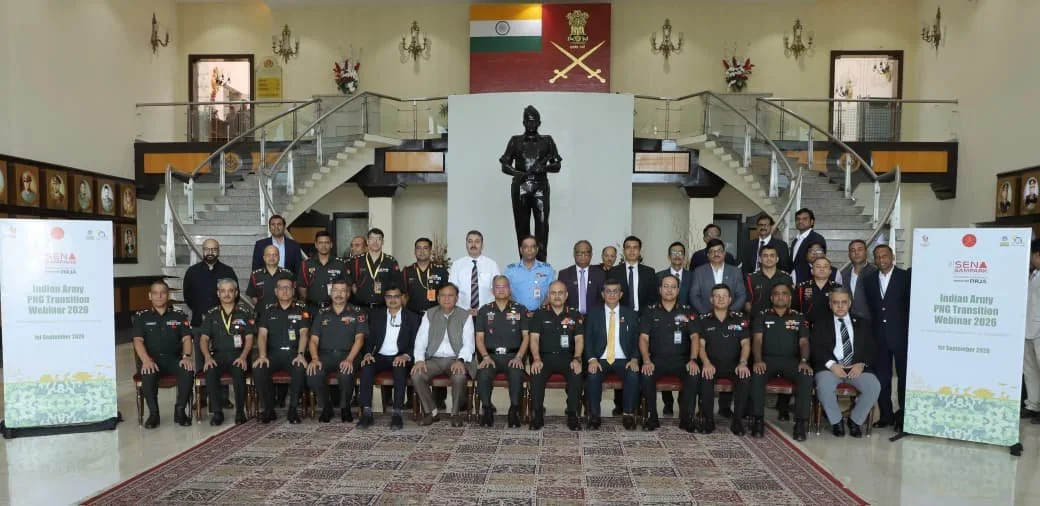
The event drew representatives from the Indian Army, government agencies, the Petroleum and Natural Gas Regulatory Board (PNGRB), the Defence Estates Organisation, the Military Engineer Services and City Gas Distribution (CGD) entities. According to the Army, the aim was to tighten coordination among operational, technical and regulatory stakeholders and to address issues that could affect the rollout of PNG infrastructure in military establishments.
Under the current transition plan, the Army intends to convert 41 Army Stations to PNG during Financial Year 2026–27. The initiative is then expected to be expanded to other establishments that are found to be feasible for such conversion. The move is aligned with the Government of India’s broader push towards a gas-based economy and the wider adoption of more efficient and sustainable energy systems.
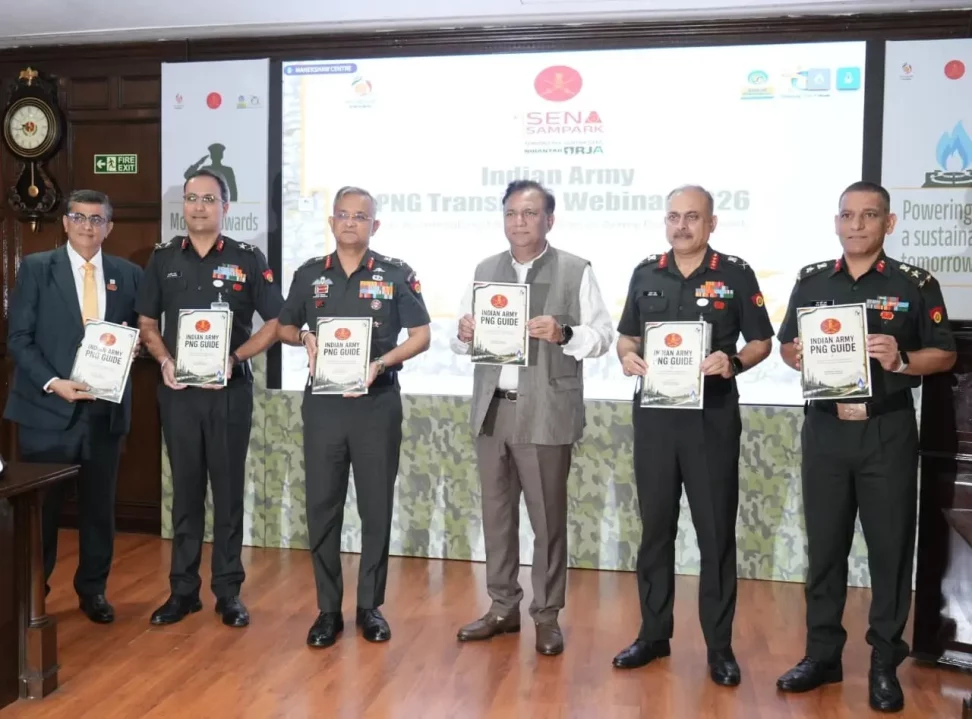
A major outcome of the webinar was the release of the Indian Army PNG Guide, which is intended to serve as a common reference document for the transition process. The guide sets out administrative, technical, safety and implementation requirements and is meant to support standardised planning and execution across formations and establishments.
Discussions during the webinar ranged across the practical and regulatory hurdles involved in the shift to PNG. These included policy and regulatory requirements, statutory clearances, land-related matters, works and infrastructure needs, technical issues, safety protocols, accounting procedures and reimbursement mechanisms.
Participants also reviewed the preparedness of City Gas Distribution entities, shared station-level implementation experiences and examined the safety requirements linked to the adoption and operation of PNG systems. The exchange of practical experiences was aimed at identifying likely bottlenecks early and developing workable solutions for individual Army stations.
The Army said the transition is expected to improve energy management while also supporting its wider efforts on sustainability and responsible resource use. The initiative reflects the growing role of environmental considerations in the planning and development of infrastructure and energy systems across military establishments.
The webinar ended with a reaffirmation of the Indian Army’s commitment to carrying out a safe, efficient and sustainable shift to Piped Natural Gas across feasible establishments, while keeping operational requirements, safety standards and implementation issues at the centre of the process.


