
Indian Army Chief General Dhiraj Seth Arrives in Kathmandu, to Receive Nepali Army’s Honorary General Rank

Indian Army Chief General Dhiraj Seth, PVSM, UYSM, AVSM, arrived in Kathmandu on Sunday to begin a three-day official visit to Nepal that will see him receive the Honorary Rank of General of the Nepali Army from President Ram Chandra Paudel. The visit, scheduled from 17 to 19 August 2026, is intended to deepen defence cooperation and military-to-military ties between India and Nepal.
General Seth’s trip, undertaken at the invitation of Nepali Army Chief of the Army Staff General Ashok Raj Sigdel, is his first official visit to Nepal since taking over as the 31st Chief of the Army Staff on 30 June 2026. The visit also comes as both sides continue to emphasise the long-standing institutional links that have shaped defence relations between the two neighbouring countries.
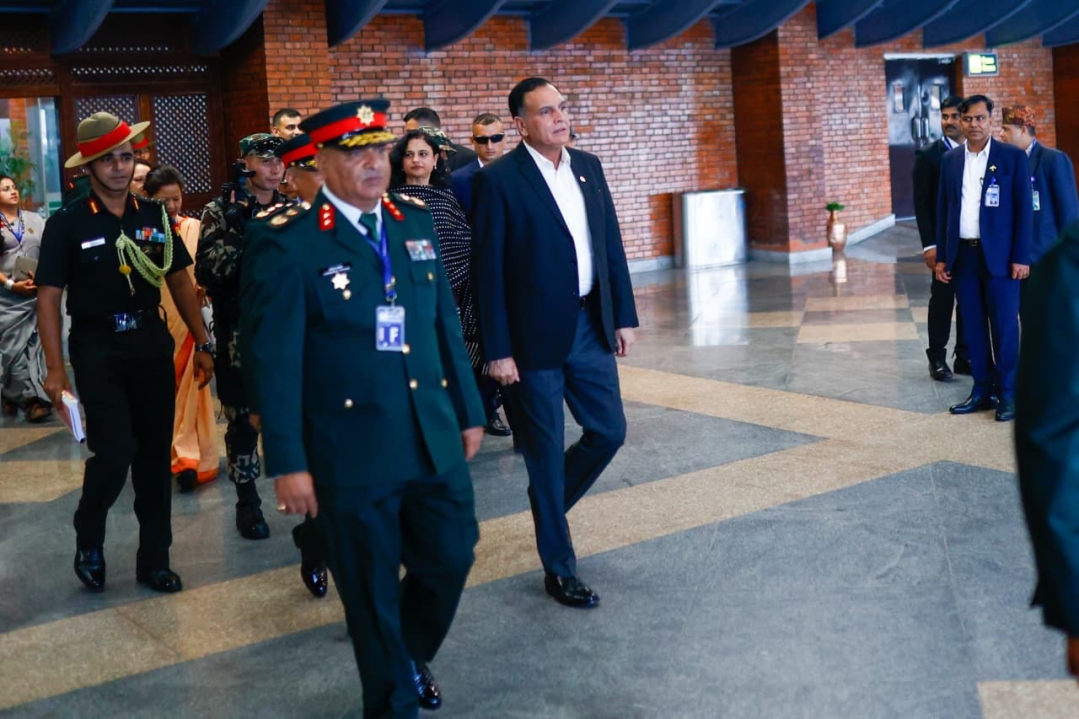
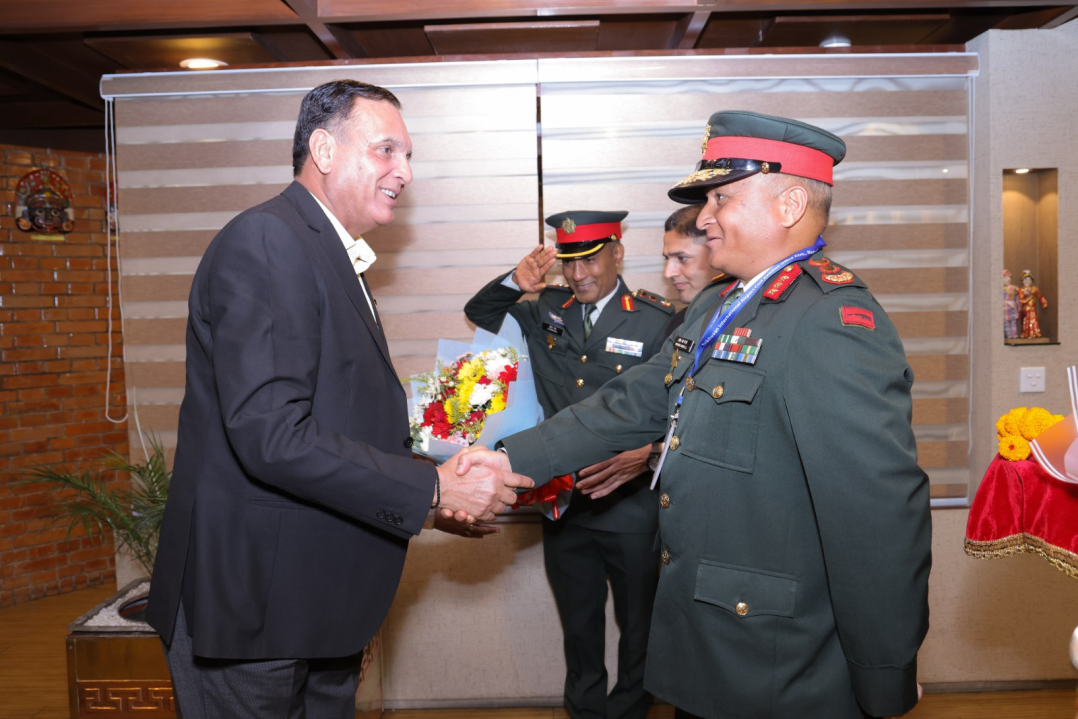
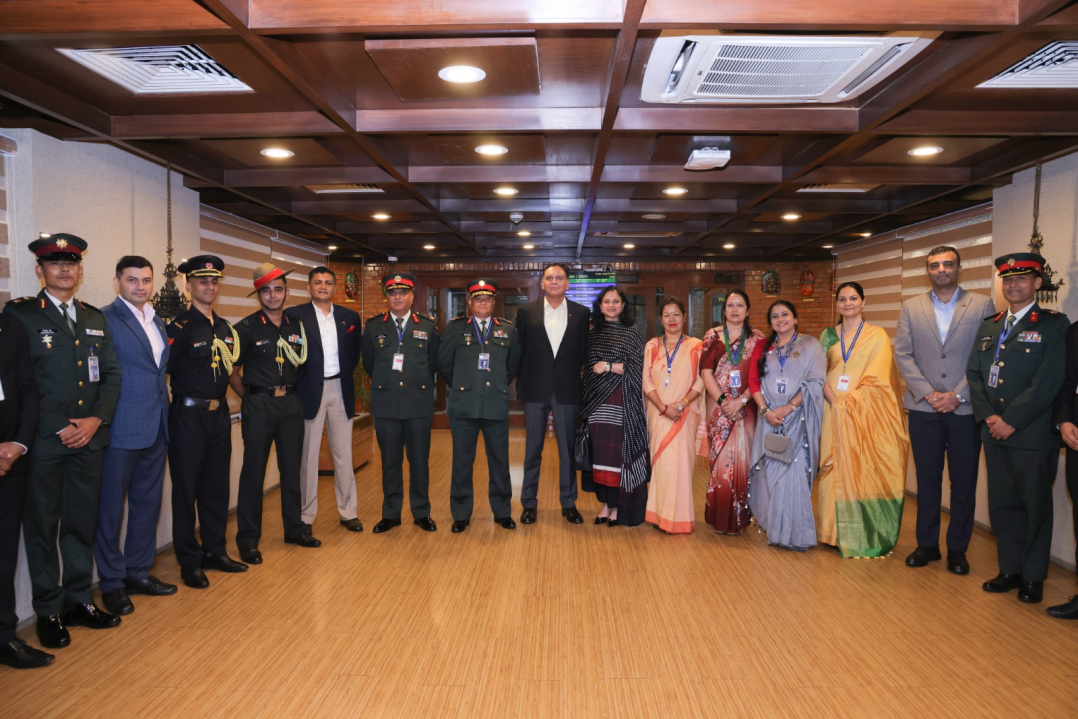
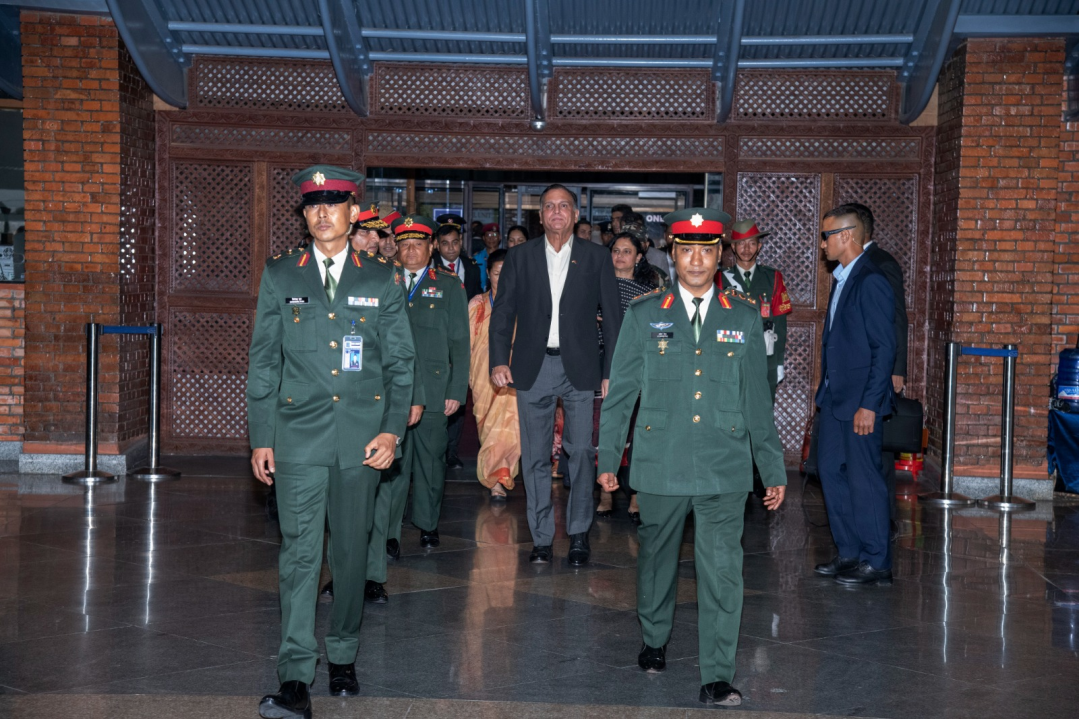
He landed at Tribhuvan International Airport in the evening on Sunday, accompanied by a five-member delegation. He was received by Nepali Army Vice Chief of Army Staff Lieutenant General Pradeep Jung K.C. and his wife. General Seth’s wife, Mrs Komal Seth, who heads the Army Wives Welfare Association (AWWA), is also part of the visiting delegation.
On arrival, the Indian Army Chief also met H.E. Shri Naveen Srivastava, India’s Ambassador to Nepal. According to the Embassy of India in Kathmandu, the two discussed ways to further strengthen the broader India-Nepal relationship, while the visit itself was described as one that highlights the distinctive defence partnership between the two countries.
The official programme begins on Monday, 17 August, when General Seth will lay a wreath at the Army Pavilion in Tundikhel, the historic ceremonial ground in central Kathmandu. He will then receive a Guard of Honour at the Nepali Army Headquarters before holding talks with General Ashok Raj Sigdel. He is also due to receive a briefing from the Director General of Military Operations of the Nepali Army on matters of mutual interest and shared strategic concern.
Later the same day, he will attend the investiture ceremony at Rashtrapati Bhawan, also known as Sheetal Niwas, the official residence of the President of Nepal. President Paudel will confer on him the Honorary Rank of General of the Nepali Army, continuing a tradition that has long been one of the most distinctive features of India-Nepal military relations.
On Tuesday, 18 August, General Seth will address student officers of the Army Command and Staff Course at Shivapuri. He is also scheduled to interact with instructors and foreign student officers training there, and to meet senior dignitaries of Nepal on issues of mutual interest.
The final leg of the visit will take him to Pokhara on Wednesday, 19 August, where he will attend an Ex-Servicemen Rally. He is expected to felicitate Veer Naris, or war widows, and gallantry awardees, and interact with Indian Army veterans before returning to India later the same day.
The honorary generalship exchange between India and Nepal dates back to 1950 and remains a rare example of military diplomacy that has endured through changing political circumstances. Field Marshal K.M. Cariappa, independent India’s first Army Chief, was the first Indian officer to receive the honorary rank of General of the Nepali Army. India reciprocated in 1969 by conferring the honorary rank of General of the Indian Army on then Nepali Army Chief General Surendra Bahadur Shah.
Since then, successive Army Chiefs from both countries have continued the practice. The most recent exchanges took place in late 2024, when President Paudel conferred the Nepali Army’s honorary general rank on then Indian Army Chief General Upendra Dwivedi in November, and President Droupadi Murmu conferred the honorary rank of General of the Indian Army on General Ashok Raj Sigdel during his visit to India in December.
The continuation of this tradition is widely seen as a reflection of the deep trust and institutional respect that underpin the defence relationship between the two armies.
India and Nepal share historical, cultural, social and religious ties that are often described as “Roti-Beti ka Rishta.” Their spiritual links, including those between Janakpur and Ayodhya and between Lumbini and Bodh Gaya, add further depth to the relationship. The 1950 Treaty of Peace and Friendship continues to underpin the open border and the extensive people-to-people contact between the two nations.
Defence cooperation has remained a central pillar of that relationship. Gorkha soldiers have served in the Indian Army for more than two centuries, creating what officials frequently describe as a living bridge between the two countries. Military engagement also includes regular high-level exchanges, the joint exercise Surya Kiran, officer training, disaster response cooperation and capacity-building programmes.
According to the Ministry of Defence, the current visit is meant to foster mutual understanding, exchange views on matters of common interest and strengthen bilateral defence cooperation. It also comes amid continued efforts by both sides to expand institutional linkages and explore new areas of collaboration between their armed forces.
General Seth’s background reflects a long career across operational, command and staff appointments. An alumnus of the National Defence Academy, Khadakwasla, and the Indian Military Academy, Dehradun, he was commissioned into the 2nd Lancers (Gardner’s Horse) of the Armoured Corps on 20 December 1986. He is the first Armoured Corps officer to become Chief of the Army Staff since General Shankar Roychowdhury in 1997, and only the seventh officer from the Corps to hold the appointment.
Over nearly four decades of service, he has commanded an armoured regiment, an armoured brigade, a Rashtriya Rifles force in Jammu and Kashmir, the Sudarshan Chakra Corps (XXI Corps), Delhi Area, and two operational commands — South Western Command and Southern Command. Before assuming the top post, he served as Vice Chief of the Army Staff. He has been decorated with the Param Vishisht Seva Medal, Uttam Yudh Seva Medal and Ati Vishisht Seva Medal.
With the Kathmandu visit, India and Nepal are once again using a ceremonial military tradition to reinforce a broader strategic relationship built on history, geography and sustained institutional engagement.


