
India Approves Development of Nuclear Attack Submarines with Advanced Missile Systems
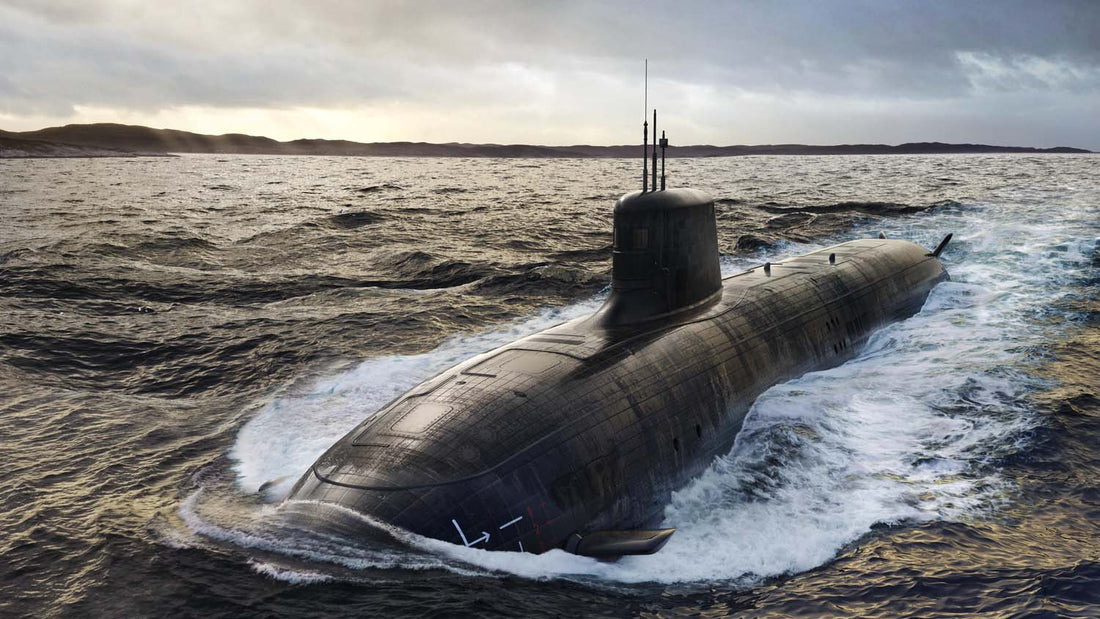
In a significant advancement for India's naval capabilities, the government has approved the development of two nuclear-powered attack submarines under Project-77. These state-of-the-art submarines will be equipped with supersonic BrahMos and future hypersonic cruise missile systems, enhancing India's maritime warfare abilities substantially.
Larsen & Toubro (L&T) will play a pivotal role in this indigenous defense initiative, partnering with the Defence Research and Development Organisation (DRDO) and the Shipbuilding Centre in Visakhapatnam. L&T, which previously contributed significantly to the Arihant-class nuclear submarine program, will again be at the helm of designing and constructing crucial components, such as pressure hulls, likely at its Hazira facility in Gujarat.
The submarines developed under Project-77 will serve tactical purposes distinct from the Arihant-class SSBNs, which are intended for strategic deterrence. These attack submarines are designed for deep-penetration strike missions, tracking enemy warships, and conducting high-risk operations while remaining undetected. Their nuclear propulsion allows them to stay submerged for long durations and move faster than traditional diesel-electric submarines.
A notable feature of these new submarines is their advanced weaponry. Moving away from sub-sonic cruise missiles, the Navy has chosen high-speed offensive systems. The submarines will be equipped with an enhanced BrahMos variant and upcoming DRDO-developed hypersonic missiles, capable of reaching speeds over Mach 5. These systems promise strike ranges between 1,500 and 2,000 kilometers, enabling engagements with high-value targets from safe distances.
The Navy's decision signifies a strategic shift, addressing modern integrated air defense networks and contested maritime areas. In high-threat environments, sub-sonic missiles are increasingly considered vulnerable. As reported by idrw.org, the Navy now sees supersonic and hypersonic missiles as vital for ensuring operational survivability and effectiveness in future conflicts.
As the Indo-Pacific region becomes a focal point of geopolitical tensions, the introduction of high-speed, stealth-capable attack submarines strengthens India's maritime deterrence strategy. Project-77 represents a crucial step in modernizing the country's underwater fleet and asserting power across key strategic maritime routes.


