
Honoring Major Sudhir Kumar Walia: The Bravery and Legacy of the 'Rambo of the Indian Army'

Major Sudhir Kumar Walia, an esteemed officer of the Indian Army's Special Forces, is celebrated for his extraordinary bravery, physical prowess, and commanding presence on the battlefield. Known among his peers as the "Rambo of the Indian Army," his fearless approach in high-risk operations earned him this nickname.
On August 29, 1999, Major Walia made the ultimate sacrifice during a counter-insurgency mission in the Haphruda forest of Kupwara district, Jammu and Kashmir. Despite sustaining multiple gunshot wounds, he continued to direct his troops via radio, ensuring that the terrorists could not flee. In recognition of his exceptional valor, he was posthumously awarded the Ashoka Chakra, India's highest peacetime gallantry honor.
Sudhir Kumar Walia was born on May 24, 1968, at the Military Hospital in Jodhpur, Rajasthan. At the time, his father, Subedar Major Rulia Ram Walia, served in the Indian Army. The family hailed from Banuri village in the Palampur tehsil of Kangra district, Himachal Pradesh.
Growing up in a military household, Sudhir was immersed in values of discipline and service to the nation, inspiring him to pursue a career in the armed forces from a young age. He began his education at the Government School in Banuri before attending Sainik School in Sujanpur Tihra, where his character was further developed for a future in the military. At 16, he joined the National Defence Academy (NDA) at Khadakwasla with the 72nd Course in 1984.
After completing his training at NDA, Major Walia advanced to the Indian Military Academy in Dehradun, where he was commissioned as a Second Lieutenant into the 4th Battalion of the Jat Regiment on June 11, 1988.
Following his commissioning, Lieutenant Walia was deployed with the Indian Peace Keeping Force in Sri Lanka, gaining firsthand experience in combat, jungle warfare, and counter-insurgency operations. During this time, he was deeply impressed by the professionalism of 9 Para Special Forces.
Driven by this experience, he volunteered for the Parachute Regiment Special Forces and was subsequently assigned to 9 Para SF, one of the most esteemed and combat-tested units in the Indian Army.
Major Walia underwent extensive military training, including the Commando Course in Belgaum, Counter-Insurgency and Jungle Warfare training in Vairengte, parachute training, and mountain warfare training in Gulmarg. He also completed two challenging tenures at the Siachen Glacier.
In 1997, Major Walia was chosen for an advanced military course in the United States, where he excelled and achieved the highest position among international participants. His performance earned him respect and the informal title of "Colonel" from his peers abroad.
Major Walia was also invited to speak at the Pentagon, highlighting the admiration he garnered through his superior military skills. This experience further enhanced his tactical expertise.
From 1997, Major Walia served as the Aide-de-Camp to General Ved Prakash Malik, the Chief of the Army Staff. However, his passion for frontline duties led him to request a return to his unit during the Kargil War in 1999, a request that was promptly granted.
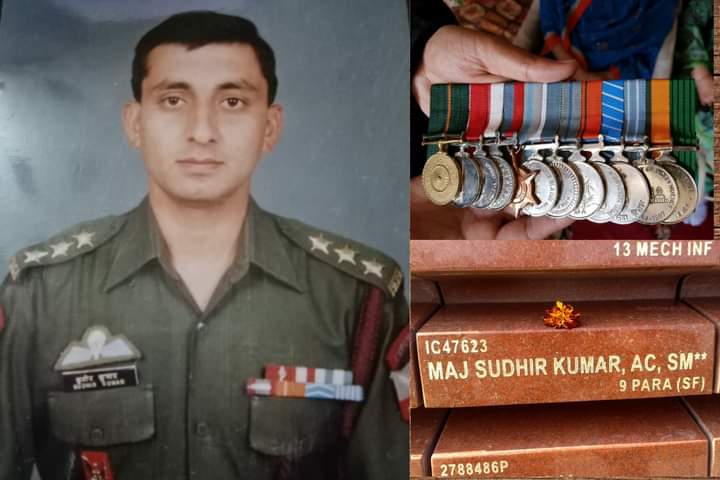
During Operation Vijay, Major Walia led the capture of Zulu Top, a crucial strategic location at approximately 17,000 feet. With minimal time for acclimatization, he approached the mission with assurance and resolve.
Although the Kargil War concluded on July 26, 1999, Major Walia continued his counter-insurgency operations in Jammu and Kashmir.
Before his final mission, Major Walia had already demonstrated remarkable courage. In July 1993, during an operation in Rajouri district, he neutralized three terrorists, earning him the Sena Medal in 1994.
He later received a Bar to the Sena Medal for his role in a demanding expedition to Peak Brammah II in Jammu and Kashmir, further solidifying his reputation as a decorated officer.
On August 29, 1999, Major Walia led a five-man team into the Haphruda forest to tackle heavily armed terrorists. Encountering two armed insurgents and a hideout, he immediately engaged in combat, killing one and charging another, despite the personal risk.
In this intense battle, Major Walia eliminated four terrorists but sustained critical injuries. He continued to command operations over the radio for 35 minutes, ensuring mission success even in his final moments.
After the operation ceased, he permitted his evacuation, succumbing to his injuries en route to a hospital. His unwavering focus remained on the mission and his unit's safety until the end.
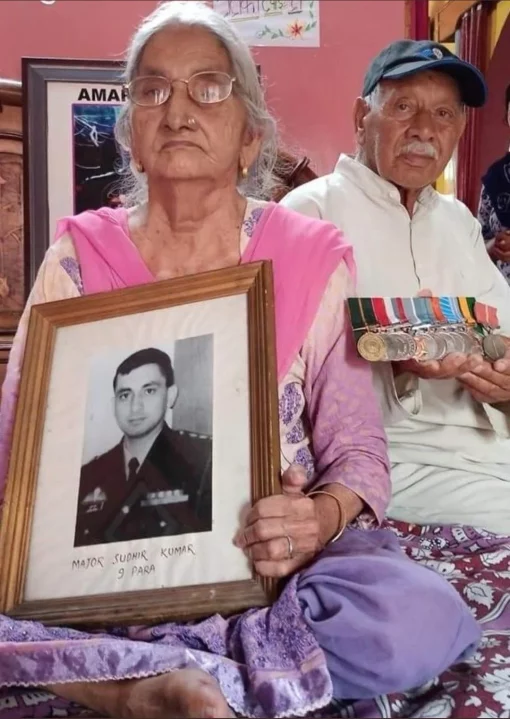
Major Walia was awarded the Ashoka Chakra posthumously on January 26, 2000, in honor of his courage and sacrifice. His father received the award from President K. R. Narayanan, marking a poignant moment for his family.
Colleagues remember Major Walia as a fearless and dedicated leader whose "Rambo" moniker reflected his field operations. He led by example, instilling confidence in his troops and tackling challenging missions with composure.
His legacy continues to inspire many across India. A senior secondary school in Kangra and memorials in Palampur and Banuri honor his memory. His life is chronicled in works like "Rambo" by Colonel Ashutosh Kale and "Coomar: The Story of Major Sudhir Walia, AC, SM" by Jaishree Laxmikant.
Major Walia's journey from Sainik School to the Special Forces epitomizes the Indian Army's finest traditions. His courage, dedication, and leadership continue to resonate as a testament to his service and sacrifice.


