
Group Captain Animesh Patni: Vir Chakra Awardee for S-400 Air Defence Command and Historic 314 km Kill

Group Captain Animesh Patni, a recipient of the Vir Chakra, is recognized for his valor and leadership within the Indian Air Force, particularly during Operation Sindoor. Trained as a fighter pilot and serving as an air defence commander, he was honored with the Vir Chakra for his bravery and dedication while leading a Surface-to-Air Missile Squadron at a forward airfield during a critical operational period.
His commendation was read during the Defence Investiture Ceremony 2026 Phase-1, underscoring his leadership while under enemy threat. The citation highlighted his strategic mobility, protection of personnel and equipment, and successful neutralization of enemy aerial targets. His unit's involvement with India's advanced S-400 air defence system, referred to as Sudarshan, added to the significance of his role.
Group Captain Patni's narrative extends beyond a missile engagement, encompassing planning, vigilance, calm under pressure, and the ability to lead effectively in challenging operational conditions.
Originating from Baran in Rajasthan, Group Captain Animesh Patni joined the Indian Air Force on 17 December 2005, in the Flying Pilot branch as part of the 176 Course with service number 28689 F(P).
Initially a fighter pilot, he specialized in the MiG-29, one of the Indian Air Force's primary air superiority fighters. His extensive operational exposure allowed him to accumulate over 2,500 flying hours on advanced fighter aircraft such as the MiG-29, Su-30MKI, and Mirage 2000.
His experience as a fighter pilot provided him with a profound understanding of aerial combat, enemy strategies, aircraft dynamics, and airspace management. This knowledge was instrumental when he transitioned to commanding a modern long-range air defence system.
He earned a promotion to Wing Commander on 17 December 2018 and subsequently advanced to the rank of Group Captain.
In 2024, Group Captain Animesh Patni was chosen to command a regiment of the S-400 Triumf surface-to-air missile system. Procured under a significant defence agreement with Russia, the S-400, known in India as Sudarshan, is among the most advanced long-range air defence systems globally.
The system is designed to detect, track, and engage numerous aerial threats, including fighter jets, drones, cruise missiles, and airborne early warning systems. Commanding such a system was a notable operational decision, bringing with it the perspective of a combat aviator who understands enemy strategies and aerial threat evasions. This blend of flying experience and air defence responsibility made him well-suited for a pivotal command role during Operation Sindoor.
Operation Sindoor was India's military reaction to the terrorist assault in Pahalgam's Baisaran area in Jammu and Kashmir on 22 April 2025. This operation involved precise strikes against terrorist infrastructure in Pakistan and Pakistan-occupied Kashmir, supported by comprehensive air defence and counter-air measures.
During this period, Indian air defence units were on high alert against potential enemy retaliation as forward airfields and strategic assets required protection from aerial threats.
Group Captain Animesh Patni's command of a Surface-to-Air Missile Squadron at a forward airfield during this demanding operation was pivotal. His duties included ensuring the readiness, protection, mobility, and effectiveness of his units even under enemy pressure.
According to his commendation, Group Captain Patni effectively led two firing units that intercepted and neutralized multiple enemy aerial threats. This required substantial coordination, technical expertise, tactical decision-making, and composure.
Operating surface-to-air missiles involves more than just launching and hitting targets. It includes detection, identification, threat assessment, tracking, engagement decisions, and coordination with the broader air defence network. In a live operational setting, the commander must make split-second decisions while ensuring the safety of friendly aircraft, civilian air traffic, and strategic assets.
Group Captain Patni demonstrated outstanding command capabilities in such an environment, maintaining operational readiness and delivering effective firepower without personnel or equipment loss.
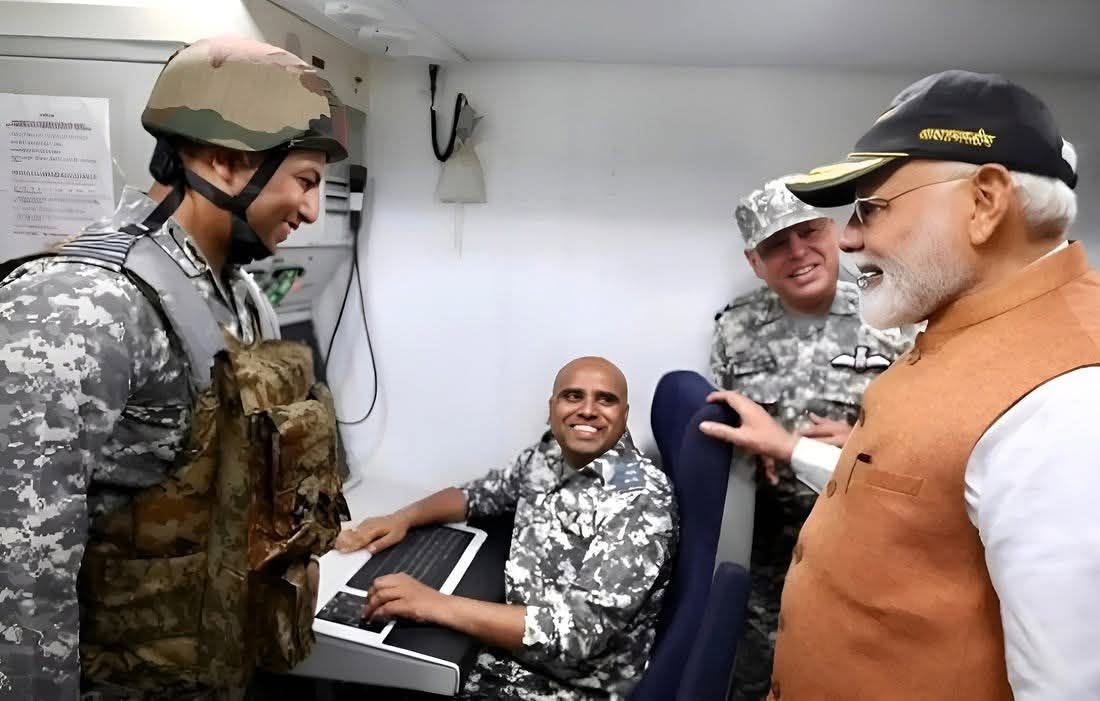
A significant aspect of his commendation was his tactical brilliance in continuously shifting his units' positions to mislead the enemy, a crucial decision in a forward area.
Modern air defence systems are high-value targets susceptible to attack by enemy aircraft, missiles, drones, or electronic warfare. Remaining stationary can pose significant risks.
Recognizing this threat, Group Captain Patni frequently altered his units' positions, denying the enemy a fixed target and ensuring his squadron's survivability. This constant movement preserved the element of surprise and maintained his units' effectiveness during the operation.
Despite facing heavy enemy fire, he ensured the safety of his personnel and protected critical equipment, demonstrating his foresight, calmness, and professional competence as a commander.
His vigilance on the ground also contributed to the apprehension of a suspected enemy spy. Recognizing the severe threat posed by such an operative near sensitive air defence locations, Group Captain Patni's situational awareness played a crucial role in addressing this danger. His leadership extended beyond missile operations to encompass ground security, counter-intelligence, and the safety of his personnel and assets.
Group Captain Animesh Patni's unit is linked to a historic long-range air defence engagement during Operation Sindoor, where India's S-400 system reportedly achieved a 314 km interception, marking the longest confirmed surface-to-air missile kill in aviation history.
The target was identified as a Pakistani Saab 2000 Erieye Airborne Early Warning and Control aircraft, a valuable asset providing long-range surveillance and command-and-control support.
The destruction of such an aircraft would significantly impact the enemy's operational capabilities, reducing their ability to monitor Indian air activity and coordinate air operations.
Indian air defence units reportedly succeeded in engagements against other Pakistani aerial targets, including fighter jets. While specific details remain confidential, the 314 km interception is a defining achievement of Operation Sindoor.
The operation also marked the first combat validation of India's S-400 system, highlighting its importance as an active operational asset under Group Captain Patni's command, dominating the airspace and restricting the enemy's freedom of action.
His leadership emphasized the role of long-range air defence in modern warfare, demonstrating how advanced technology reaches its full potential when operated by skilled and motivated personnel.
A vital aspect of Group Captain Patni's leadership was his ability to maintain morale and readiness under pressure. Air defence crews, although not in the cockpit, work under high-stress conditions, making critical decisions that impact air operations.
His leadership inspired confidence, discipline, and precise performance among his team, ensuring their effectiveness even when facing enemy threats.
Military accounts describe the tension surrounding live missile launches, the decision to engage, and the subsequent confirmation of target success, reflecting the pressure on commanders during live operations.
For his extraordinary courage and leadership under fire, Group Captain Animesh Patni was awarded the Vir Chakra, India’s third-highest wartime gallantry award. This honor recognizes acts of bravery in the presence of the enemy and acknowledges his significant contributions during Operation Sindoor.
His award citation praised his command of missile firing units, neutralization of aerial threats, tactical repositioning under fire, protection of strategic equipment, and vigilance leading to the capture of a suspected enemy spy.
Group Captain Patni's recognition highlights the evolving importance of India's integrated air defence network, celebrating not just his bravery but the broader capabilities of the Indian Air Force.
His actions during Operation Sindoor have established Group Captain Animesh Patni as a prominent figure in modern air defence warfare. His transition from fighter pilot to S-400 commander typifies the changing nature of air power, combining flying experience with technological prowess.
Modern conflicts are fought through interconnected networks, sensors, missiles, electronic warfare, surveillance, and real-time command decisions. Officers like Group Captain Patni exemplify this new generation of air warriors who blend traditional flying skills with advanced technological command.
His achievements underscore the Indian Air Force's emphasis on adaptability, showcasing how a fighter pilot can successfully command one of the world's most advanced air defence systems.
Group Captain Animesh Patni’s story is one of courage, professionalism, and operational excellence. Leading an S-400 air defence unit during Operation Sindoor, he guided his team through a challenging operational environment.
He commanded two firing units, neutralized enemy aerial threats, safeguarded strategic equipment, employed tactical maneuvers, ensured personnel safety, and helped apprehend a suspected enemy spy.
The 314 km air defence kill attributed to his command remains a landmark in military aviation, reflecting an officer who combined calm judgment with decisive action.
For his valor and dedication, Group Captain Animesh Patni was deservedly honored with the Vir Chakra. His story continues to inspire future defense personnel, air warriors, and all Indians who take pride in the professionalism and courage of the Indian Armed Forces.


