
Gajraj Corps Flags Off 28-Member Indian Army Expedition to Jongsong, Domekhang Peaks

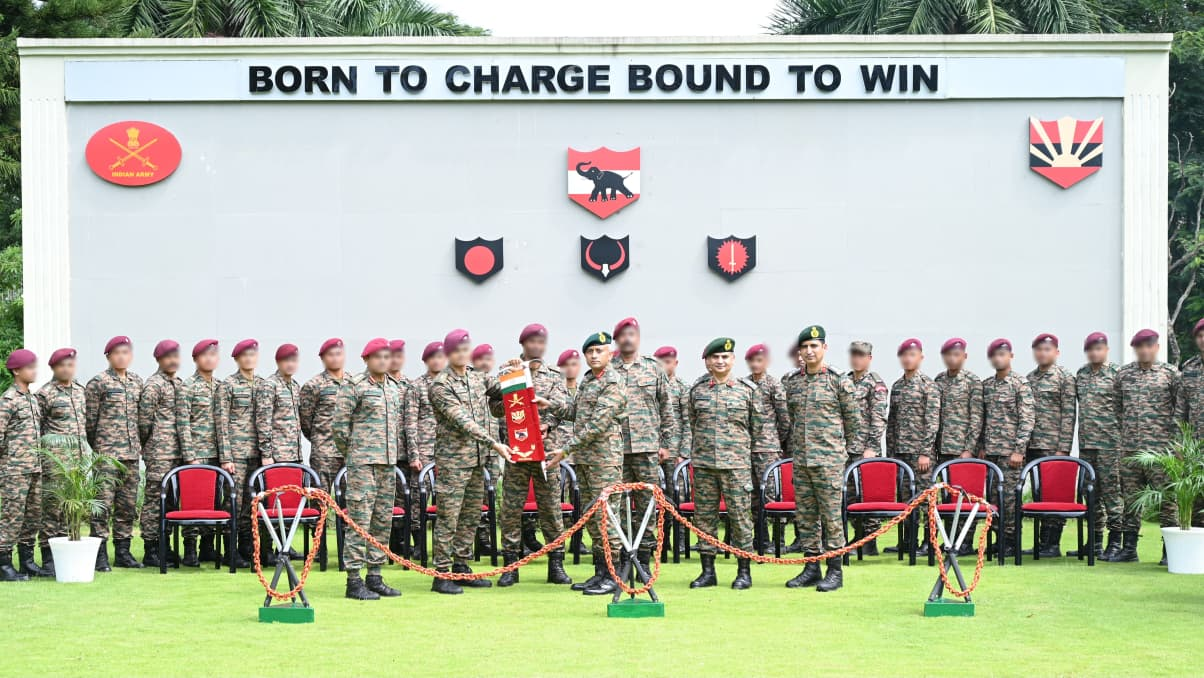
Lieutenant General Neeraj Shukla, General Officer Commanding of Gajraj Corps, on 18 August 2026 flagged off a 28-member Indian Army mountaineering expedition to Jongsong Peak and Domekhang Peak in the Eastern Himalayas, sending the team into one of the most demanding high-altitude environments in the country.
The expedition will attempt two major Himalayan summits: Jongsong Peak, which rises to 7,462 metres, and Domekhang Peak, which stands at 7,264 metres. Both peaks lie in the Eastern Himalayan region, where climbers face steep icy slopes, crevasses, strong winds, freezing temperatures and rapidly changing weather conditions.
For the soldiers taking part, the mission will be a test of endurance as much as mountaineering skill. At elevations above 7,000 metres, the thin air places severe strain on the body, making even routine movement physically exhausting. The route is expected to take the team across snow-covered ridges and technically difficult terrain, with low oxygen levels adding to the challenge.
The Army said the expedition reflects courage, discipline and the “indomitable spirit” of its personnel. Such missions are also intended to push soldiers beyond conventional training settings, where resilience, leadership, mutual trust and mental strength become as important as technical climbing ability.
Before formally setting the team on its way, Lt Gen Shukla interacted with the members of the expedition. The flag-off marked the beginning of a carefully planned journey that will require gradual acclimatisation, close coordination and strict adherence to safety procedures in difficult mountain conditions.
Mountaineering has long been part of adventure training in the armed forces, and expeditions to Himalayan peaks have traditionally been used to build confidence, endurance and familiarity with extreme terrain. For soldiers, such exercises also have direct operational relevance, since they mirror many of the physical and environmental demands of military service in high-altitude regions.
The Eastern Himalayas are known for their harsh operating environment. Climbers must contend with snowfields, freezing temperatures, steep gradients and the constant risk of weather worsening without warning. Above 7,000 metres, oxygen levels fall sharply, affecting physical performance, concentration and recovery.
The 28-member team will therefore have to move in stages, establishing camps, assessing terrain and watching weather conditions closely before pushing higher. Success in such an expedition depends not only on individual conditioning but also on teamwork, disciplined planning and the ability to make sound decisions under stress.
By attempting both Jongsong and Domekhang, the expedition has taken on an especially ambitious objective. The scale of the challenge will test the climbers’ physical and mental limits while also showcasing the Army’s tradition of perseverance in extreme environments.
Adventure expeditions of this sort also strengthen camaraderie within the team. In remote mountain terrain, soldiers must depend on one another for route planning, carrying loads, setting up camps and maintaining safety, reinforcing the sense of collective responsibility that is central to military life.
The mission also highlights the Army’s emphasis on developing personnel who can operate confidently in harsh climates and difficult terrain. High-altitude mountaineering demands calm judgment, discipline under pressure and the ability to keep functioning effectively despite fatigue, discomfort and physical strain.
As the team moves towards the two peaks, the expedition will be about more than reaching summits in the Eastern Himalayas. It will also serve as a practical test of resilience, coordination and determination, reflecting the adventurous spirit associated with the Indian Army.
In that sense, the journey to Jongsong and Domekhang continues a long-standing military tradition in which soldiers challenge themselves in severe natural environments, carrying forward values of physical endurance, professional discipline and the resolve to overcome adversity.


