
DGAFMS Surgeon Vice Admiral Arti Sarin Bids Farewell at AFMC Pune, Unveils Book and Indigenous Digital Stethoscope

Surgeon Vice Admiral Arti Sarin, PVSM, AVSM, VSM, Director General Armed Forces Medical Services (DGAFMS), paid a farewell visit to the Armed Forces Medical College (AFMC), Pune, on 10 August 2026, where she addressed Armed Forces Medical Services officers as well as medical and nursing cadets and highlighted the institution’s central role in military healthcare, medical education and innovation.
The interaction took place at the Pune-Khadki Medical Complex and served both as a formal farewell and as a review of the work being carried out across the Armed Forces Medical Services ecosystem. During the visit, Surgeon Vice Admiral Sarin praised the dedicated service of AFMS hospitals and acknowledged the contribution of medical personnel in sustaining high standards of healthcare for serving personnel, veterans and their families.
She also commended AFMC for its academic record and its recognition in national and international rankings, describing the institution as more than a leading medical college. In her remarks, AFMC was presented as a major centre not only for medical education but also for research, innovation and the training of future military healthcare professionals.
The visit also drew attention to the college’s ongoing efforts to align medical training and healthcare delivery with emerging needs. One of the key announcements during the programme was the unveiling of ABLE, a book centred on Adolescent Behaviour and Lifestyle Enrichment. The initiative reflects AFMC’s effort to respond to evolving health and lifestyle concerns among adolescents through awareness-building and structured engagement.
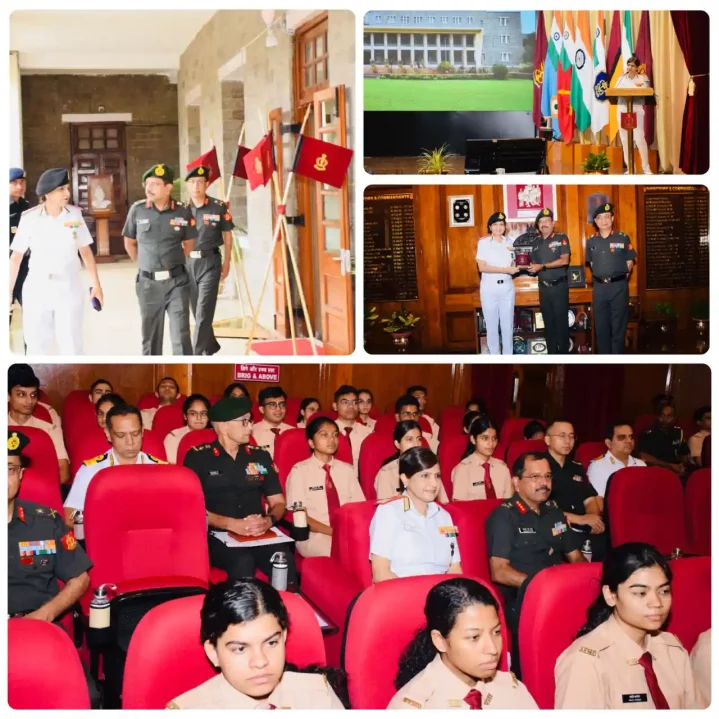
Another important development showcased during the farewell visit was an indigenous digital stethoscope developed by Surgeon Commander Arnab Ghosh. The project reflects AFMC’s growing emphasis on indigenous medical technologies and the integration of modern tools into military healthcare practice.
Such innovations carry particular relevance for the Armed Forces Medical Services, where dependable, portable and technologically advanced medical equipment can improve healthcare delivery in varied operational environments. The presentation of the digital stethoscope during the visit linked AFMC’s academic and research work directly to the practical demands of military medicine.
In her interaction with officers and cadets, the DGAFMS reinforced the importance of professionalism, academic excellence, innovation and a strong commitment to patient care. The occasion therefore served not only as a ceremonial farewell, but also as a message to the next generation of military medical professionals about the standards expected within the services.
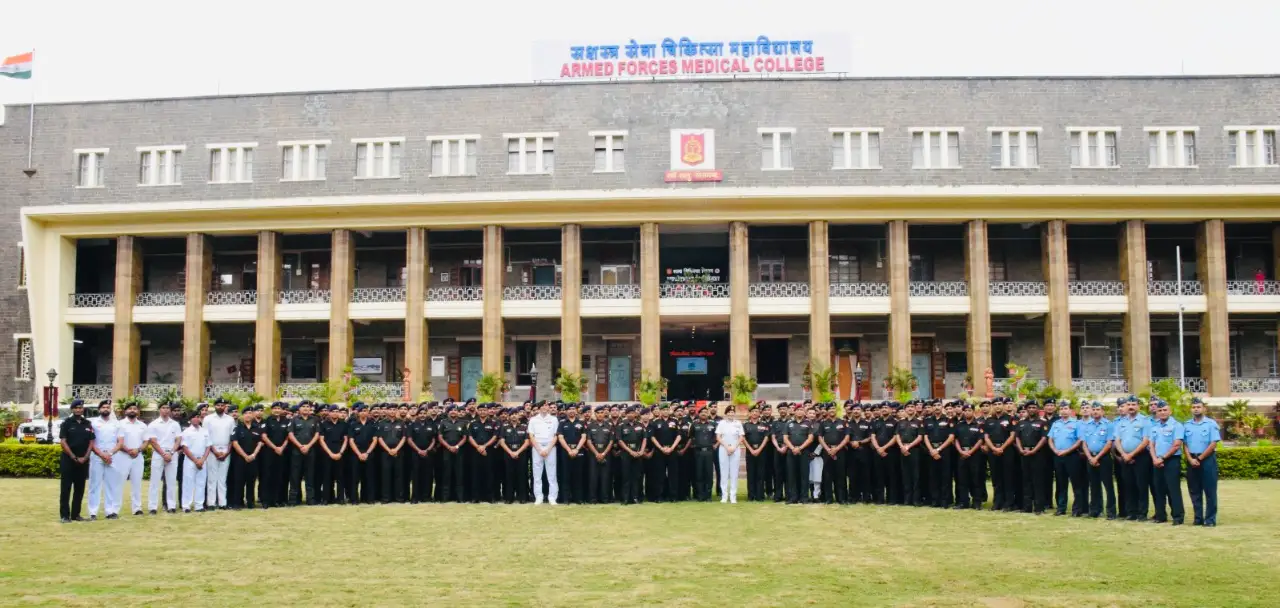
Surgeon Vice Admiral Arti Sarin’s visit carried added significance because of her long-standing association with AFMC. She completed her medical education at the institution and later returned to lead it as Director and Commandant. Over the course of her career, she went on to hold several senior appointments across the Indian Army, Indian Navy and Indian Air Force before becoming the first woman to serve as DGAFMS.
That personal and professional connection shaped the significance of the farewell event at AFMC. It brought together her own journey through the institution with a wider vision of strengthening military medicine through education, service and innovation.
The unveiling of the ABLE book and the indigenous digital stethoscope reflected AFMC’s effort to combine academic excellence with practical responses to changing healthcare needs. Together, the initiatives illustrated the institution’s attempt to remain future-ready while continuing to support the operational, educational and technological requirements of the Armed Forces Medical Services.
The visit ultimately reinforced AFMC’s position within the AFMS framework as a key institution for building an academically strong, technologically capable and operationally responsive medical fraternity.


