Comparing Elite Forces: The Endurance and Expertise of US Army Rangers and Indian Para SF

The U.S. Army Rangers from the 75th Ranger Regiment and India's Para (Special Forces), commonly referred to as Para SF, are among the world's leading special operations units. These forces are known for their exceptional physical stamina, mental toughness, tactical skills, and operational efficiency. Determining which unit is "toughest" is inherently subjective and depends on various criteria such as selection dropout rates, training rigor, combat experience, technological use, and adaptation to environments. This comparison is rooted in historical backgrounds, organizational structures, selection processes, operational roles, and documented missions.
Historical Origins and Evolution
The 75th Ranger Regiment's history dates back to colonial ranger companies and World War II battalions, including those involved in the D-Day assaults at Pointe du Hoc and deep raids in the Pacific. In 1974, the regiment was reactivated as the modern 75th Ranger Regiment under the U.S. Army Special Operations Command (USASOC) and has since become the Army’s premier large-scale special operations light infantry force. After Vietnam, the 1st and 2nd Battalions were activated in 1974, followed by the 3rd in 1984, and the regiment was formally established in 1986. The motto "Rangers Lead the Way" highlights their role in leading invasions and handling crises.
Conversely, India's Para SF evolved from the Parachute Regiment, which originated in the British Indian Army’s 50th Indian Parachute Brigade established in 1941. After independence, the regiment gained distinction in the 1947–48 Jammu and Kashmir operations. The modern Para SF began in 1966 with the formation of the 9th Parachute Commando Battalion, stemming from the Meghdoot Force led by Colonel Megh Singh during the 1965 Indo-Pakistani War. The 10th Battalion was formed in 1967, followed by the conversion of regular parachute battalions, such as 1 PARA in 1978 and 21 PARA in 1996, expanding their capabilities. Today, these units fall under the Parachute Regiment with a focus on special operations.
Both the Rangers and Para SF have adapted their airborne traditions to confront modern threats: the Rangers for global expeditionary warfare, and the Para SF for high-intensity regional conflicts and counter-insurgency in varied terrains.
Organization and Structure
The 75th Ranger Regiment includes approximately 3,623 personnel, encompassing support elements, and consists of a regimental headquarters, a Regimental Special Troops Battalion, a Regimental Military Intelligence Battalion, and three active Ranger battalions (1st, 2nd, and 3rd). Each battalion comprises roughly 600–800 Rangers organized into rifle companies for rapid deployment, with a global response capability within 18 hours.
The Para SF is part of the larger Parachute Regiment, comprising 15 battalions designated for special forces roles, some with dual airborne/special forces capabilities, a counter-insurgency battalion under Rashtriya Rifles, and elements from the territorial army. Each Para SF battalion consists of about 620 soldiers, totaling an estimated 5,000–6,000 personnel across specialized units. These battalions are specialized by geography, such as mountain, desert, and jungle warfare, and conduct operations in small assault teams of six, often under the Armed Forces Special Operations Division for specific missions.
The organization of the Rangers focuses on scalable battalion-level operations, while the Para SF emphasizes decentralized, small-team independence suitable for India's border regions.
Selection and Training: The Ultimate Tests of Endurance
Both units have extraordinarily demanding selection processes, differing significantly in structure and attrition rates.
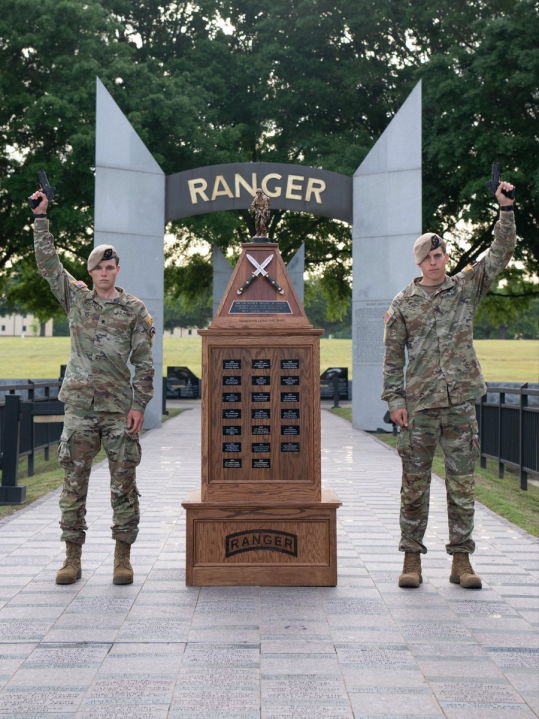
U.S. Army Rangers: Prospective candidates must first complete Basic Combat Training, Advanced Individual Training, and Airborne School before entering the Ranger Assessment and Selection Program (RASP). RASP 1, for enlisted personnel E1–E5, spans eight weeks and evaluates physical fitness, land navigation, small-unit tactics, and mental resilience through challenging exercises like ruck marches and swims. Initial standards include a five-mile run in under 40 minutes and a 12-mile ruck march with a 35-pound load in under three hours. RASP attrition rates vary between 35–65 percent, depending on class size and cohort fitness. Successful candidates may later attend Ranger School, a 61-day leadership course with historically 40–50 percent graduation rates, which includes phases of extreme sleep and food deprivation across mountain, swamp, and desert environments.
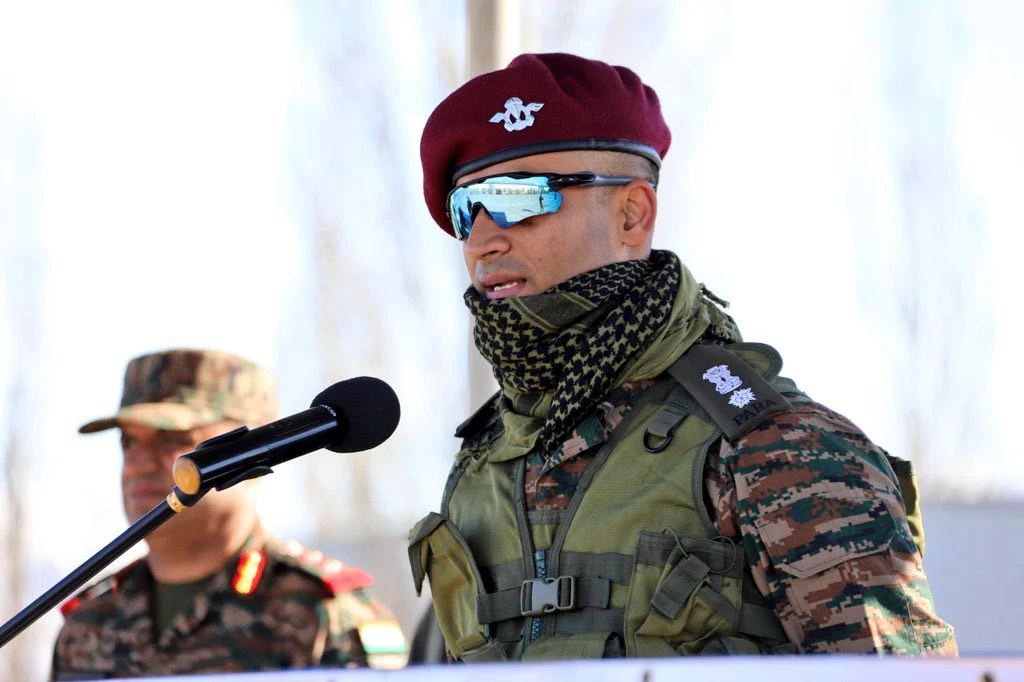
Indian Para SF: Volunteers must first qualify as paratroopers through a three-week Basic Parachute Course, which includes five jumps, one at night. This is followed by a three- to six-month probationary period, usually 90 days, with ranks temporarily stripped. Attrition rates often exceed 85–90 percent, with pass rates sometimes as low as 10–15 percent. The process involves several phases:
- Days 1–35: Intense physical conditioning, training in demolitions, medical skills, and navigation, speed marches from 10–40 km with full loads, and survival exercises with minimal food and water.
- Day 45: A 36-hour stress test with 10 km marches carrying 30–40 kg, buddy carries, simulated drowning/hypoxia, and continuous operations under observation.
- Day 56: A 100 km endurance run with a 10 kg load plus a 7 kg weapon, finished within 13–15 hours over hilly terrain.
- Final phases: Classified counter-terrorism tasks.
Continuous training includes daily 20 km runs, weekly 80–130 km marches with 60 kg loads, HALO/HAHO jumps, combat diving, and live-fire drills. Specialization occurs at schools focused on high-altitude, desert, jungle, and counter-insurgency warfare.
While Para SF selection emphasizes raw endurance and psychological strength under extreme deprivation, the Ranger's approach integrates broader tactical and leadership elements with slightly lower, yet elite, attrition rates.
Roles, Missions, and Combat Experience
The Rangers are adept in direct action raids, airfield seizures, special reconnaissance, hostage rescues, and crisis response, excelling in large-scale joint operations with strong air and intelligence support. Since 9/11, they have maintained over 7,000 consecutive days of combat, participating in operations like Gothic Serpent in Somalia (1993), early Afghanistan deployments (2001), the Battle of Takur Ghar (2002), and repeated deployments in Iraq and Afghanistan.
Para SF focuses on special reconnaissance, unconventional warfare, counter-terrorism, hostage rescue, and surgical strikes, often in small teams operating behind enemy lines. Their missions include the 1971 Chachro Raid, Operation Cactus in the Maldives (1988), Operation Khukri in Sierra Leone (2002), operations during the Kargil War (1999), the 2015 Myanmar cross-border strike, and the 2016 surgical strikes across the Line of Control. They also play a significant counter-insurgency role in Jammu and Kashmir and Northeastern regions of India.
The Rangers benefit from a higher operational tempo and integration with tier-one partners, whereas the Para SF excel in executing missions in some of the world's most challenging environments.
Equipment and Technological Edge
The Rangers utilize resources provided by the U.S. Special Operations Command, including advanced night-vision and thermal systems, modular weapons like M4 carbines and Mk 48 machine guns, precision munitions, secure communications, and extensive aerial and medical support, which facilitates sustained high-intensity operations.
Para SF use a combination of indigenous, Israeli, and Russian-origin equipment, including Tavor rifles and Carl Gustav recoilless rifles, alongside improving drone and loitering munitions, all optimized for portability and reliability in high-altitude or jungle conditions. While effective, they operate with leaner logistical support, relying heavily on the proficiency of individual soldiers.
Conclusion: A Question of Context
Claiming one unit as the ultimate "toughest" oversimplifies a complex issue. The Para SF selection and training process imposes unmatched physical and mental demands through rigorous endurance and deprivation tests, creating operators suited to India’s harsh border environments with minimal external assistance. The 75th Ranger Regiment, on the other hand, offers scalable combat power with unrivaled global reach, technological integration, and extensive operational experience across various theaters.
Both units embody the apex of their respective militaries—Rangers as expeditionary forces, Para SF as experts in asymmetric endurance warfare. Their shared commitment to voluntary service, rigorous preparation, and mission success reinforces a universal truth: true toughness transcends nationality or equipment, residing in the human determination to conquer formidable challenges. In an era characterized by hybrid threats, the capabilities of both units are highly valued.