
Colonel Archit Goswami: Decorated Indian Army Officer's Impactful Farewell in Mizoram

In May 2026, a heart-wrenching video from Mizoram surfaced on social media, capturing the poignant farewell of an Indian Army officer. It portrayed something profoundly touching — a group of specially-abled children shedding tears as they bid goodbye to a figure who had provided them with strength and affection.
The officer in question was Colonel Archit Goswami, SM, the Commanding Officer of the 14th Battalion, Assam Rifles. As he prepared to transfer out of Mizoram, students from Shalom Special School, also known as Vohbik School in Serchhip, were seen clinging to him, unable to hold back their emotions. This emotional departure offered a glimpse into the compassionate side of military service in India’s Northeast.
Colonel Goswami is more than just an officer in uniform; he is a seasoned veteran of the elite 4 Para SF, decorated with the Sena Medal, and known for his leadership that transcends operational duties. His career embodies courage in combat, discipline in command, and compassion in public service.
Part of the 4th Battalion, The Parachute Regiment (Special Forces), Colonel Goswami served in one of the Indian Army’s most elite units. The 4 Para SF is renowned for undertaking high-risk missions, such as counter-terrorism operations, hostage rescues, and surgical strikes deep within enemy lines.
Selection for the Para Special Forces is rigorous, demanding extraordinary physical endurance, mental resilience, and tactical intelligence. Only those who pass this challenging probation earn the prestigious Balidan badge. Colonel Goswami’s journey within this elite group prepared him for leadership roles both on the battlefield and in sensitive regions.
Early in his career, Major Archit Goswami was chosen to join India’s Special Forces delegation at Exercise Vajra Prahar in 2011, a joint training operation with US Army Special Operations Forces held in Washington, USA. As an Assault Team Leader, he developed skills in close-quarter battles, urban warfare, and advanced mission planning.
This international training, reserved for top-tier operators, underscored the trust in his abilities. Before his emotional departure from Mizoram, Colonel Goswami had already proven himself within the challenging realm of Indian Special Forces.
A pivotal moment in his military service occurred on 20 August 2019 during a counter-terrorism mission in Jammu and Kashmir. He was involved in a high-stakes operation where a local police officer was trapped under hostile conditions.
Major Goswami showed remarkable bravery and leadership, eliminating a hardcore terrorist and rescuing the trapped officer. His courageous actions ensured the mission's success and saved a fellow security personnel.
For his valor, Major Goswami was awarded the Sena Medal for Gallantry, approved by the President of India and announced in August 2020. The medal acknowledged his bravery, tactical leadership, and courage.
The Sena Medal honors Indian Army personnel for acts of gallantry or distinguished service. Colonel Goswami’s recognition came from direct combat, highlighting his decisive leadership under life-threatening conditions.
Following his time in Special Forces and counter-terrorism environments, Colonel Goswami assumed command of the 14th Battalion, Assam Rifles. This role brought him to the strategic and sensitive Northeast region of India.
The Assam Rifles, known as the “Sentinels of the Northeast,” plays a crucial role in the region. Its duties include guarding border areas, assisting in counter-insurgency efforts, supporting civil administration, and fostering local community relations.
Under Colonel Goswami’s leadership, the 14 Assam Rifles operated in sensitive areas of Nagaland and Mizoram, including border regions near Myanmar. Challenges in these areas include illegal activities, insurgent threats, and narcotics trafficking.
A significant issue in Mizoram and surrounding border districts is drug trafficking. Narcotics like heroin and methamphetamine traverse routes connected to the Golden Triangle, causing societal harm in border communities.
During his tenure, Colonel Goswami actively targeted drug trafficking networks. His leadership focused on intercepting smuggling attempts and disrupting supply chains through vulnerable border routes, forming a vital part of the battalion's duties.
Colonel Goswami also recognized the importance of community engagement in combating the drug problem. His approach included awareness campaigns and working with local organizations to educate young people about the dangers of drugs.
In the Northeast, security is built through trust and cooperation. Colonel Goswami’s leadership extended beyond enforcement to building confidence among the community, fostering a bond between the military and local people.
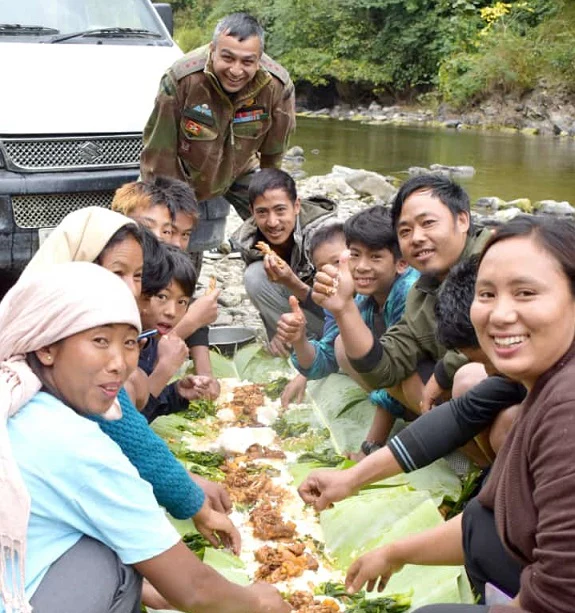
In Nagaland, his efforts were appreciated by local communities, including the Khiamniungan, who expressed gratitude for the support from Colonel Goswami and his men. His actions helped establish trust and cooperation with the people.
In remote hill districts, small acts of assistance created strong bonds between the battalion and the communities. These gestures demonstrated that the military presence was not just authoritative but supportive and reassuring.
Colonel Goswami’s most emotional impact was felt in Serchhip, Mizoram, through his involvement with Shalom Special School. The school, which serves specially-abled children, received ongoing support from him and his battalion.
He was more than just an officer; he was a recurring and caring presence for the children. His consistent support built a deep bond with the students, who often communicate more through emotions than words.
Upon news of his transfer, the farewell at the school became an emotional moment. Children hugged him, expressing their feelings through tears, creating a powerful scene that resonated nationwide.
The farewell video highlighted a compassionate side of the armed forces, showcasing how the Indian Army and Assam Rifles positively impact communities, building bridges and healing lives.
In Mizoram, Colonel Goswami’s farewell was more than a ceremony; it was a testament to the bond between a soldier and the community. It showed that true respect is earned through conduct and compassion.
Colonel Archit Goswami’s career demonstrates that an Indian Army officer is expected to be a leader, protector, and guardian for communities in challenging circumstances.
In Kashmir, he showed battlefield bravery by saving a fellow officer. In the Northeast, he tackled security challenges while engaging with communities. In Mizoram, he supported children who needed care.
This blend of courage and compassion defines his story. His bravery in combat is marked by the Sena Medal, while the gratitude of children in Mizoram speaks to his kindness.
Colonel Goswami’s journey from 4 Para SF to Assam Rifles reflects the spirit of the Indian Army — a spirit that fights, protects, and serves silently yet profoundly, leaving lasting memories.
In an era of fleeting viral stories, Colonel Goswami’s farewell is a reminder of what true service represents. It is the story of a soldier who became a valued part of the community he served.
Colonel Archit Goswami, SM, exemplifies the finest qualities of an Indian Army officer — brave, disciplined, and profoundly humane. His story is about quietly changing lives and earning trust, a testament to his commendable service.


