
Air Marshal Tejpal Singh Inaugurates CAPSS Seminar on Surveillance, C4I2 in New Delhi

The Centre for Aerospace Power and Strategic Studies (CAPSS) convened the Surveillance, C4I2 and Electro-Optics 2026 seminar in New Delhi, bringing together senior military leaders, representatives of the Defence Research and Development Organisation (DRDO), industry executives and technology specialists to discuss capabilities needed for the modern multi-domain battlespace.
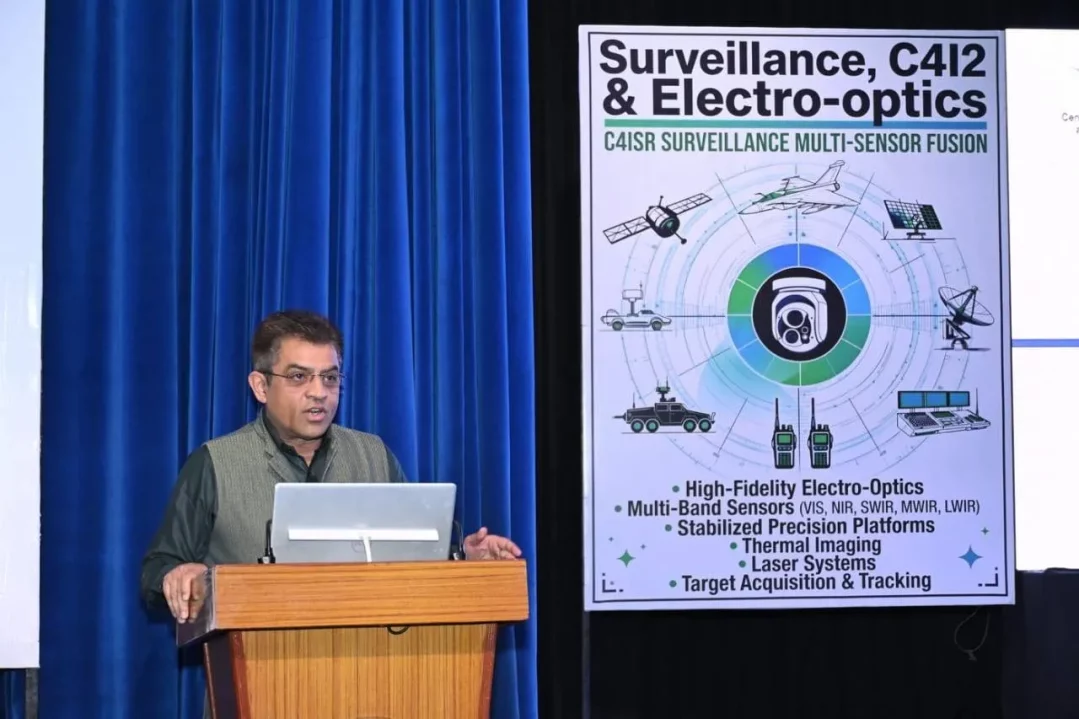
The seminar centred on the strategic and operational value of surveillance systems, command, control, communications, computers, intelligence and information (C4I2), and electro-optical technologies. These capabilities were discussed in the context of improving situational awareness and supporting faster, better-informed decision-making in increasingly complex military operations.
Air Marshal Tejpal Singh, Deputy Chief of the Air Staff (DCAS), delivered the inaugural address. He spoke about the rising importance of technology-enabled capabilities in meeting the demands of current and future military operations.
The event served as a forum for military officers and technology experts to examine emerging operational requirements and the ways in which advanced surveillance and electro-optical systems can be integrated into multi-domain operations. The discussions also reflected the broader move toward networked and technology-intensive warfare, where information flow and sensor integration play a central role.
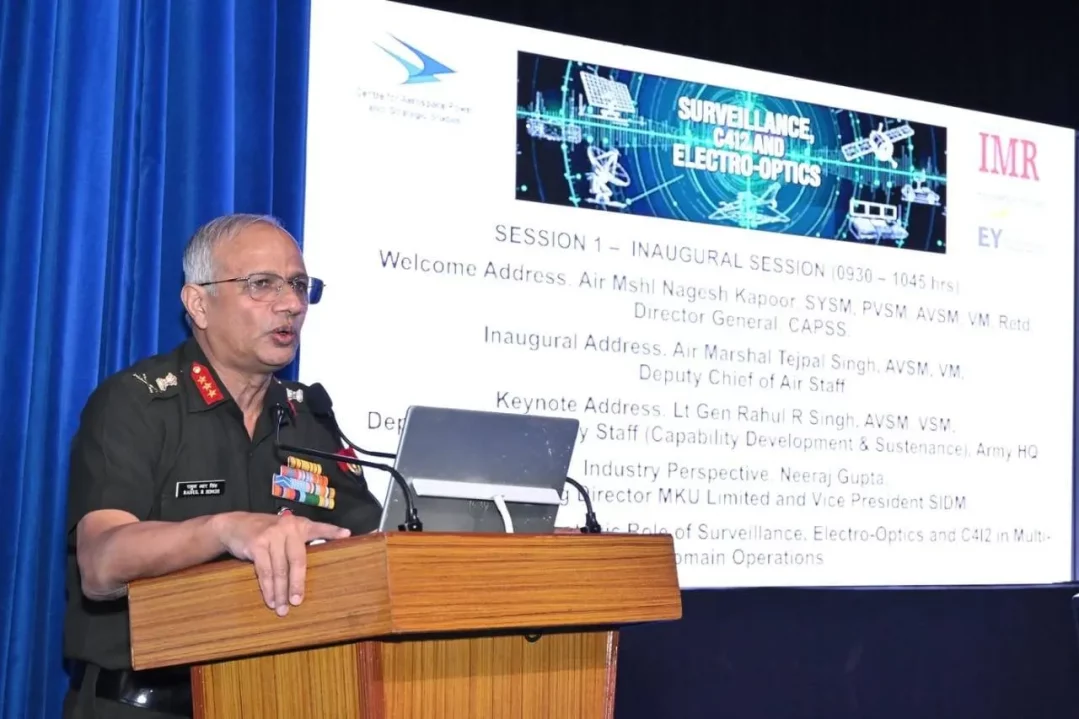
Bringing together stakeholders from the armed forces, the defence research ecosystem and private industry, the seminar created a setting for exchanging views on capability development, technological innovation and practical operational applications. That mix of participants was central to the event’s focus on translating research and industry effort into tools relevant for the battlefield.
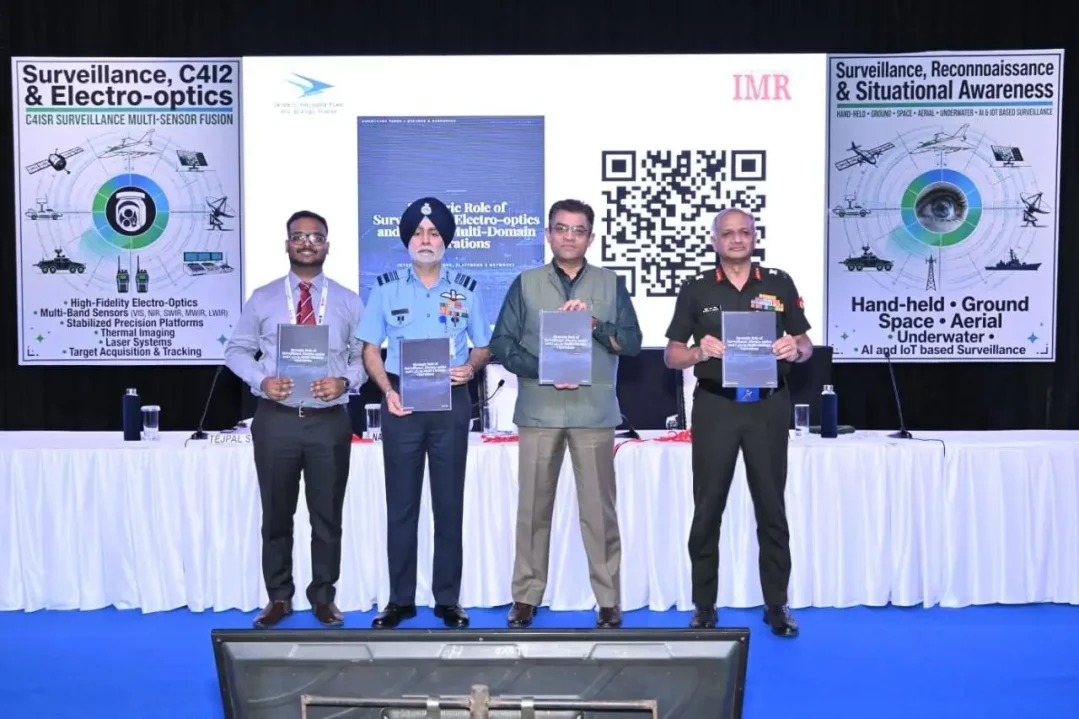
During the seminar, a report titled “Strategic Role of Surveillance, Electro-Optics and C4I2 in Multi-Domain Operations” was released. The report offers a focused assessment of how these technologies can improve operational effectiveness across battlefields that are increasingly interconnected and information-driven.
Speakers and participants emphasised the need to integrate advanced sensors, surveillance assets and networked command-and-control systems so that information can move more quickly through the operational chain. In their view, such integration is essential for enhancing situational awareness and enabling more effective decision-making.
The seminar also pointed to the need for sustained collaboration among the armed forces, DRDO, industry and technology experts to develop and adopt capabilities suited to multi-domain warfare. Organisers and participants framed this cooperation as essential for matching future operational demands with appropriate technological solutions.
Through the CAPSS initiative, the event highlighted India’s growing emphasis on technology-driven military transformation and the push to build future-ready capabilities for the armed forces.


