
41 Officers, Including Indian Navy and Coast Guard Personnel, Complete MPCTC-78 at MILIT

A total of 41 officers have completed the 10-week Marine Propulsion Controls Technology Course (MPCTC-78) at the Military Institute of Training (MILIT), with the graduating batch drawing participants from the Indian Navy, the Indian Coast Guard and friendly foreign countries.
According to the course details, 17 officers from the Indian Navy, eight from the Indian Coast Guard and 16 officers from friendly foreign countries successfully finished the specialised programme. The foreign contingent included officers from Namibia, Togo, Tanzania, the Philippines and Sri Lanka, reflecting the international mix that has become a feature of such professional military courses in India.
The course was aimed at building advanced technical competence in areas that are increasingly central to modern naval operations. Its curriculum covered controls, embedded systems, digital signal processing, sensors and instrumentation, microcontrollers, and technologies linked to autonomous systems and platform management.
These subjects are becoming more relevant as naval platforms evolve into highly integrated systems dependent on electronics, automation and software-driven control architecture. Warships and other maritime assets now rely on sensors, embedded computing and automated mechanisms not just for propulsion, but also for the management of complex onboard functions.
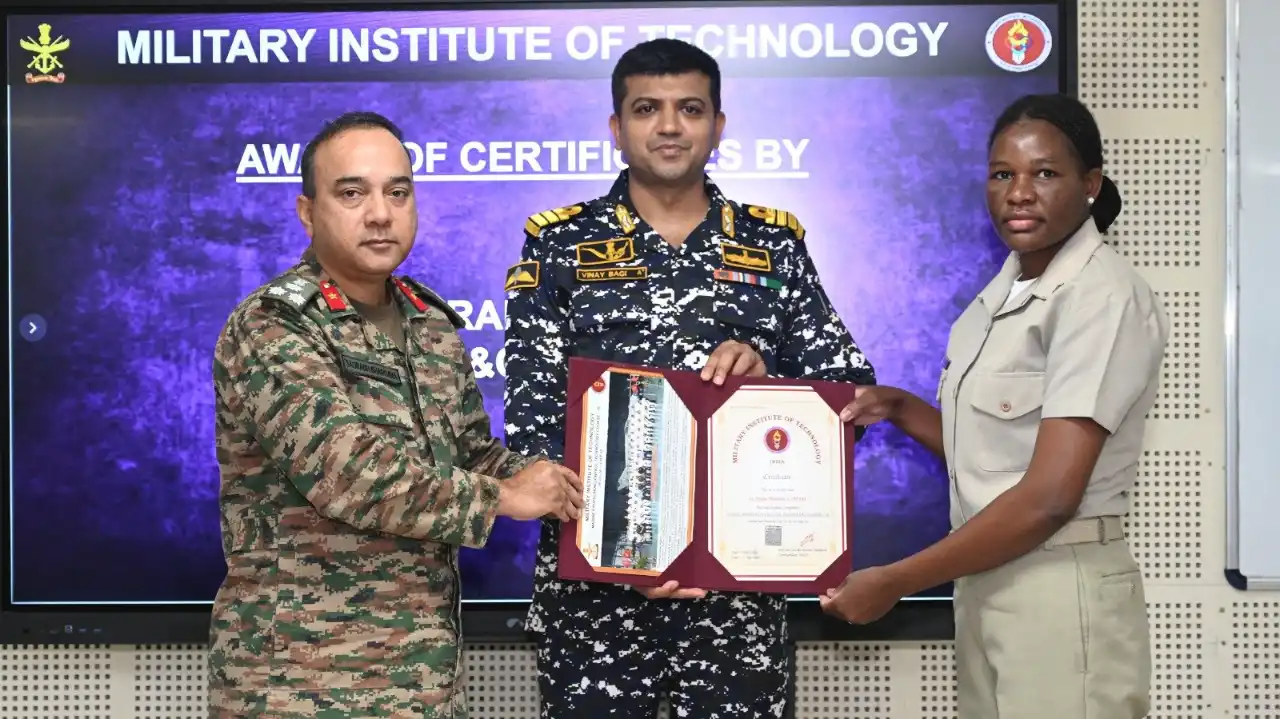
Addressing the graduating officers, Brigadier Saurabh Bhargava, DC&CI, MILIT, spoke about the speed at which autonomous systems and related technologies are changing military capability. He referred to developments seen globally during the three months in which the officers were undergoing training, pointing to the pace of change in the technological environment.
His remarks also underlined a wider shift in military education: officers are now expected to understand not only how platforms operate, but also the technological principles behind increasingly automated and interconnected systems. That requirement is becoming more important as autonomy and digital integration expand across defence platforms.
Brig Saurabh Bhargava further drew attention to the wide range of naval platforms that have been inducted recently, noting the growing complexity of maritime forces. As the number and variety of platforms increase, officers must keep updating their technical knowledge and develop the ability to absorb and integrate new technologies.
The graduating officers were urged to strengthen their grasp of core technology concepts and continue expanding their professional skills. They were also encouraged to stay informed about emerging technologies, reinforcing the role of continuous learning in a military environment that is becoming more technology-intensive by the day.
Within that framework, the course’s emphasis on controls and embedded systems is especially relevant. These technologies are central to propulsion, platform management and automated functions on modern naval vessels. Sensors and instrumentation provide the data needed to monitor and manage complex systems, while digital signal processing helps extract and use information generated by those sensors.
Microcontrollers and embedded technologies are equally important in contemporary military systems because they support compact and efficient electronic architectures. Together, these areas form the technological base for many of the automated and autonomous capabilities now being developed and integrated across defence platforms.
The presence of officers from the Indian Navy and Indian Coast Guard alongside personnel from partner countries also provided a setting for professional interaction and exchange of technical knowledge. Courses of this kind allow officers from different maritime services to develop a shared understanding of new technologies and their military applications.
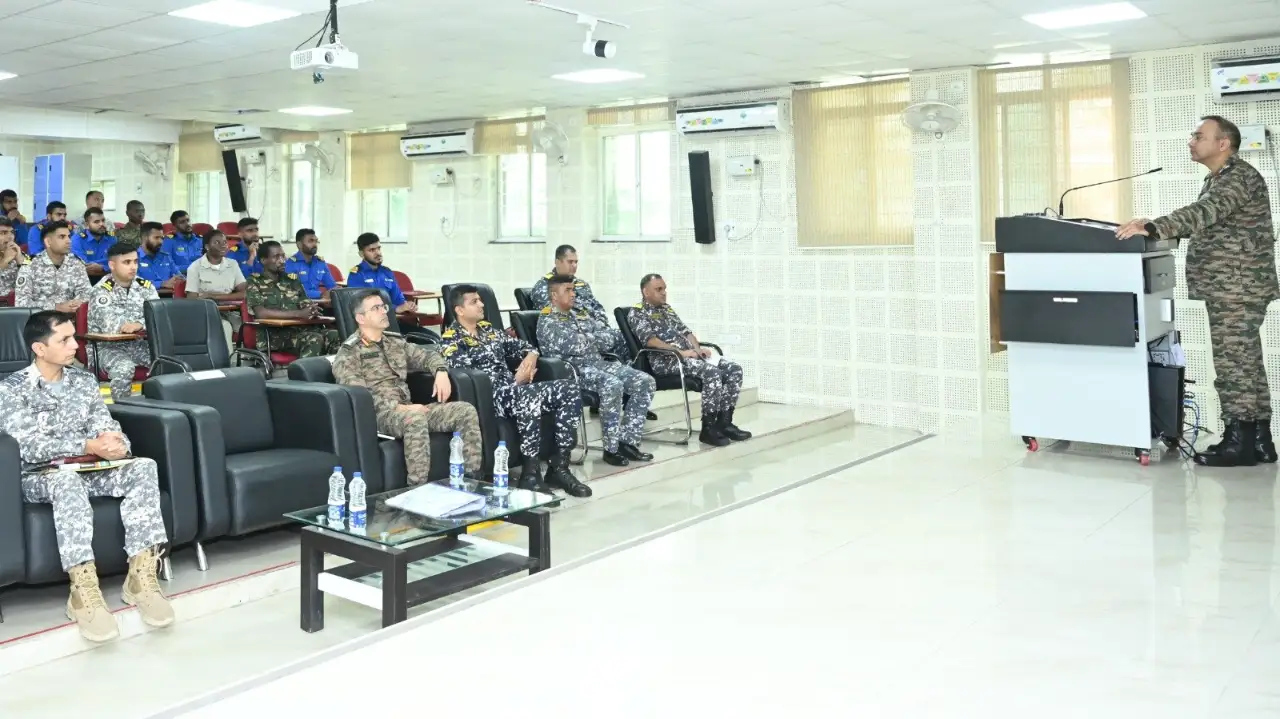
For the foreign officers who took part, the programme offered exposure to India’s specialised military training system. Their participation also helped deepen professional links between Indian maritime institutions and partner nations through education, training and exchange.
The course also reflected the closer convergence now taking place between traditional platform engineering and emerging technologies. Naval officers operating in future maritime environments will increasingly need to understand systems that combine propulsion, electronics, sensors, computing and autonomy in a single operational framework.
That need is particularly pronounced in the context of unmanned and autonomous systems, which are reshaping approaches to surveillance, reconnaissance, logistics and other maritime missions. Officers who understand the technological foundations of these systems are likely to be better prepared to employ and manage them effectively.
MILIT’s focus on advanced technology training therefore serves a broader purpose: building technically proficient military leadership. As platforms become more sophisticated, operational effectiveness will depend not only on the hardware itself but also on the ability of personnel to understand, operate and adapt to it.
The completion of MPCTC-78 by 41 officers is another step in that direction. The course brought together officers from India’s maritime services and five friendly foreign countries around a common focus on marine propulsion controls and emerging technology.
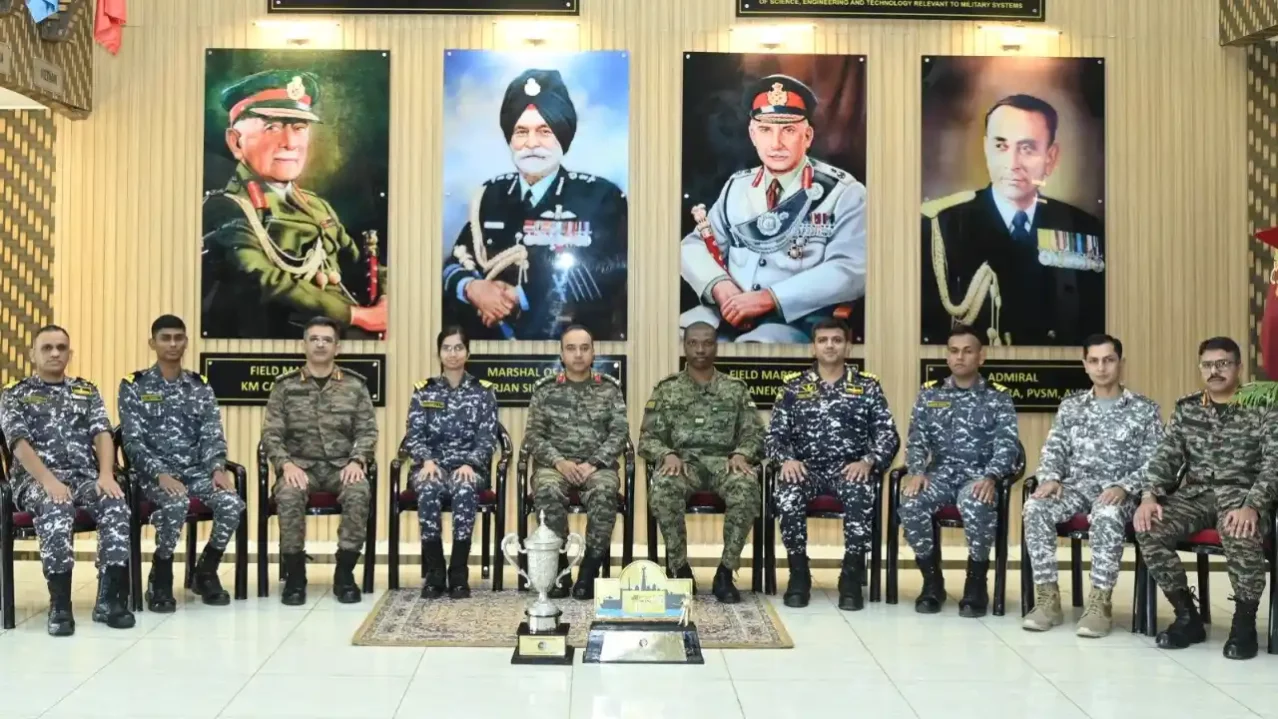
The closing message from the training programme was clear: in a rapidly changing technological battlespace, keeping pace with new systems is no longer optional. For naval and maritime officers, continuous learning, technological awareness and adaptability will remain essential to maintaining operational effectiveness in future conflicts.
Seen in that light, MPCTC-78 was more than the end of a 10-week course. It highlighted the growing importance of specialised technology education, international professional exchange and ongoing skill development in preparing maritime forces for an increasingly autonomous, interconnected and technologically complex environment.


