
Trishakti Corps Hosts Inno-Yoddha 2026–27 Innovation Competition to Drive Battlefield Solutions

Trishakti Corps has organised “Inno-Yoddha 2026–27”, an idea and innovation competition designed to push Indian Army personnel to develop practical, indigenous and technology-driven answers to operational problems. Framed as a platform for soldier-led innovation, the initiative brought field experience and technical thinking together to focus on solutions that can work in real military conditions.
The competition was held under the theme “Ideas from Experience. Innovation for the Future,” reflecting its core intent: to convert lessons drawn from service in demanding environments into workable improvements for the force. Participants were encouraged to present ideas shaped by their understanding of the needs of troops on the ground, rather than abstract concepts detached from day-to-day operational realities.
The innovations displayed at the event highlighted the creativity, technical competence and problem-solving ability of Army personnel. Each entry was rooted in operational experience and aimed at addressing practical requirements that could improve effectiveness, safety, efficiency and preparedness. The emphasis remained on utility and relevance, with solutions expected to support troops in actual field conditions.
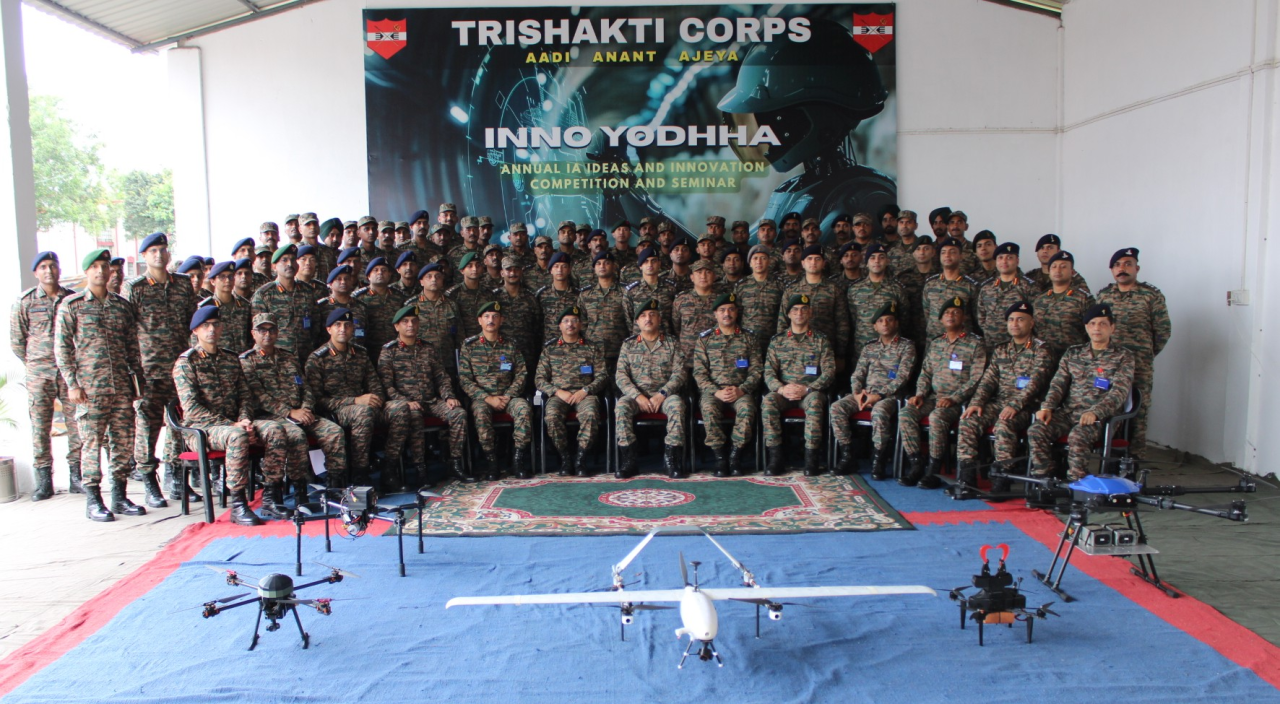
According to the formation, the initiative showed how experience gained in difficult terrain and operational settings can be turned into useful technological responses. Personnel deployed in such areas routinely face challenges linked to surveillance, mobility, communication, logistics, equipment employment, force protection and sustainment. Their direct exposure to these issues allows them to identify capability gaps and think through solutions suited to the realities on the ground.
“Inno-Yoddha 2026–27” was meant not only to highlight problems, but to encourage participants to design responses that could actually be implemented. In that sense, the competition promoted a solution-oriented approach in which operational difficulties were treated as opportunities for innovation, adaptation and improvement.
The event also placed emphasis on soldier-led innovation as a contributor to capability development. Ideas emerging from field formations often draw on a clear understanding of terrain, weather, equipment limitations and operational procedures, making them potentially simple, economical and mission-focused alternatives to conventional approaches.
By creating a formal platform for such ideas, Trishakti Corps sought to strengthen a culture in which creativity and technological awareness become part of military functioning. Personnel were encouraged to combine operational knowledge with emerging technologies and indigenous resources to produce solutions aligned with the Army’s requirements.
The competition also reflected the Indian Army’s broader focus on indigenisation and technology-enabled transformation. Indigenous solutions can help reduce dependence on external systems, shorten the time needed to respond to field requirements and make equipment easier to adapt to Indian operational conditions.
That focus is increasingly relevant as technology becomes central to modern military operations. Advances in automation, unmanned systems, communications, surveillance, data processing and advanced materials are changing how forces prepare for and conduct operations. Initiatives such as “Inno-Yoddha” allow personnel to engage directly with this evolving environment and contribute to technological adaptation at the formation level.
The programme also made the point that innovation is not confined to laboratories or specialist institutions. Useful ideas can emerge at every level when operational experience is backed by technical knowledge, institutional support and space for experimentation.
The entries presented during the competition reflected that philosophy. They were aimed at practical use, with the focus firmly on operational relevance rather than technology for its own sake. In that respect, the event served as a showcase for ideas that could support troops in real-world conditions.
Beyond highlighting individual initiative, the competition created opportunities for participants to exchange ideas. Discussions around the innovations allowed personnel to compare approaches, assess their operational value and consider how promising concepts might be refined or applied more widely.
The initiative also underlined the need for collaboration between users, technical specialists and military leadership. A functioning innovation ecosystem depends on field formations clearly identifying their needs, innovators developing suitable responses and the organisation identifying ideas that merit further evaluation and development.
In that context, “Inno-Yoddha 2026–27” represented an effort to strengthen such an ecosystem within Trishakti Corps. It recognised personnel who used initiative and ingenuity to address military challenges while encouraging others to contribute ideas based on their own service experience.
The competition also fit into the larger goal of building a future-ready force that can adapt quickly to changing threats and operational environments. Future battlefields will require forces that can absorb new technologies, adjust tactics and respond rapidly to emerging challenges. Promoting innovation at the formation level helps develop the intellectual agility needed for that transition.
Through the initiative, Trishakti Corps reaffirmed that operational effectiveness depends not only on the acquisition of advanced equipment, but also on empowering personnel to think creatively and improve the systems they use. Field experience remains central to that process because it links technological development directly to actual operational requirements.
The broader message of the competition was that different experiences and perspectives can be brought together in pursuit of a common military purpose. By assembling diverse minds around practical problem-solving, “Inno-Yoddha 2026–27” reinforced a spirit of innovation and shared responsibility within the formation.
With its focus on indigenous solutions, technical competence and mission-oriented problem-solving, the event reflected the Indian Army’s continuing effort to remain adaptive, self-reliant and technologically prepared.


