Top Five Fastest Missiles in the World for 2026: A Comprehensive Ranking

In the modern era, missile technology has emerged as a crucial element in the global power balance, influencing military doctrines and geopolitical strategies worldwide. Nations are investing significantly in next-generation weapons that offer a combination of speed, precision, and survivability to establish a commanding presence on the battlefield. Among these advancements, hypersonic missiles are particularly transformative, capable of traveling at extraordinary speeds while eluding even the most advanced defense systems. Their development has not only reshaped deterrence strategies but has also sparked a new arms race among superpowers, where the ability to strike rapidly is often a determining factor for strategic dominance.
The field of military technology is advancing quickly, with speed playing an essential role in a missile's ability to bypass enemy defenses, shorten adversary reaction times, and ensure successful target engagement. By 2026, various countries have developed missiles reaching hypersonic speeds above Mach 5 (about 6,174 km/h), altering the face of modern warfare. This article presents an in-depth look at the world's top five fastest missiles, examining their specifications, capabilities, and strategic importance, supported by a comparative table.
Missiles are classified by speed into subsonic (below Mach 1), supersonic (Mach 1 to Mach 5), and hypersonic (above Mach 5). Hypersonic missiles are particularly disruptive due to their extreme speed and, in some instances, maneuverability, making them difficult to intercept.
These weapons are predominantly used for strategic deterrence, often armed with nuclear or conventional warheads, and are central to the military strategies of nations such as Russia, China, and the United States. The subsequent sections examine the top five fastest missiles in 2026, ranked by their maximum speed according to reliable defense sources.
Why Speed Matters for Missiles?
The speed of missiles is crucial for several reasons. High velocities enhance a missile's ability to avoid enemy defenses, making interception exceedingly difficult. The faster a missile travels, the less time the adversary has to respond, thereby increasing the probability of a successful strike.

Additionally, high speeds contribute to a missile's range and agility, allowing for swift deployment and engagement.
The List of the 5 Fastest Missiles in the World
Here are the five fastest missiles in the world:
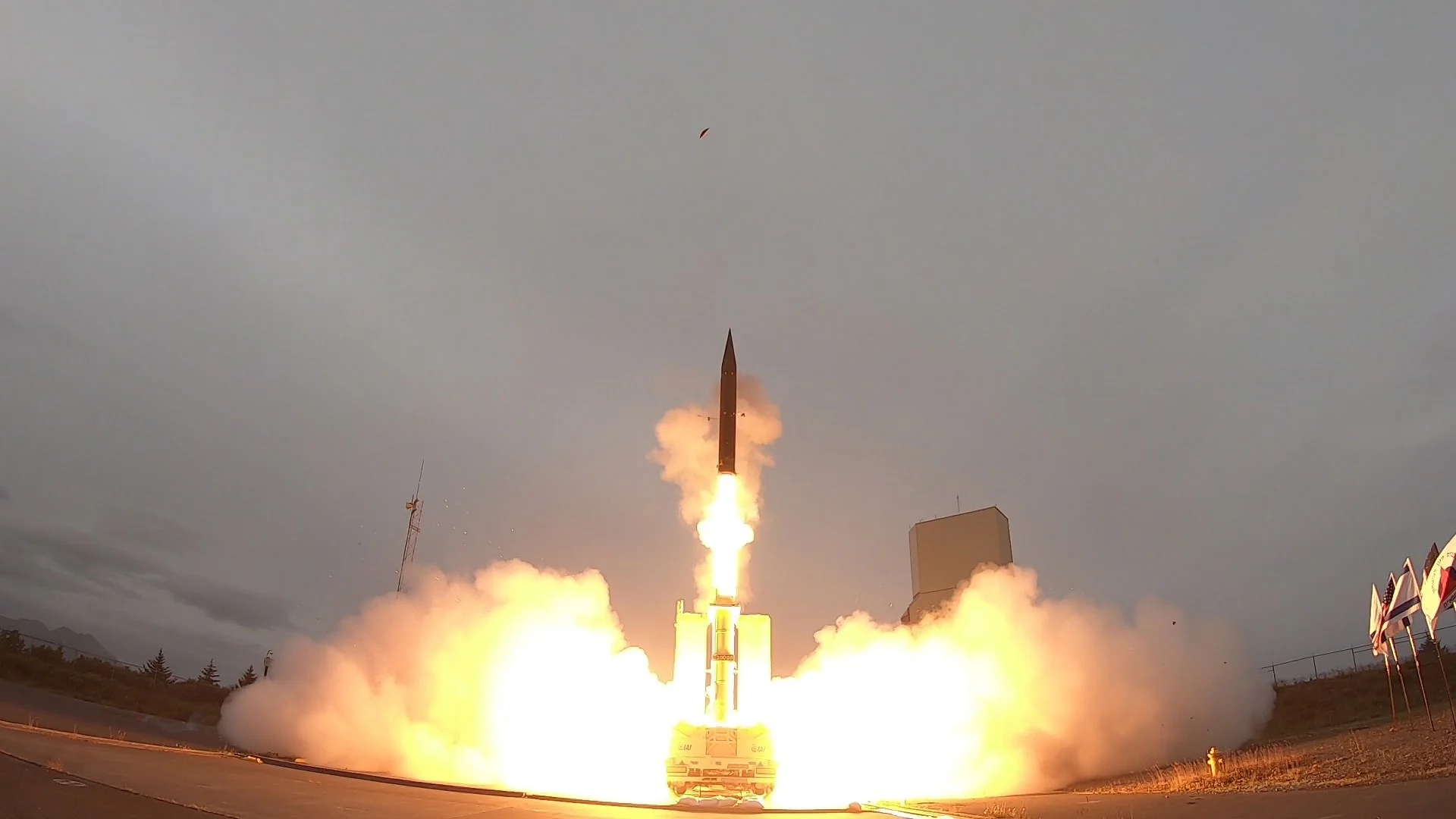
1. Avangard: Revolutionizing Hypersonic Technology
Russia's Avangard missile is recognized as a transformative force in hypersonic technology. Capable of reaching speeds up to Mach 27, or 32,200 kilometers per hour, the Avangard is distinguished by its ability to make swift maneuvers, rendering interception almost impossible. Its outstanding precision and range establish it as a formidable presence on the battlefield.
Key Features:
- Origin: Russia
- Class: Hypersonic Glide Vehicle (HGV)
- Range: >6000km
- Warhead: Nuclear 2MT option
- Status: In service
Also Read: 15 Best Aircraft Carriers in the World
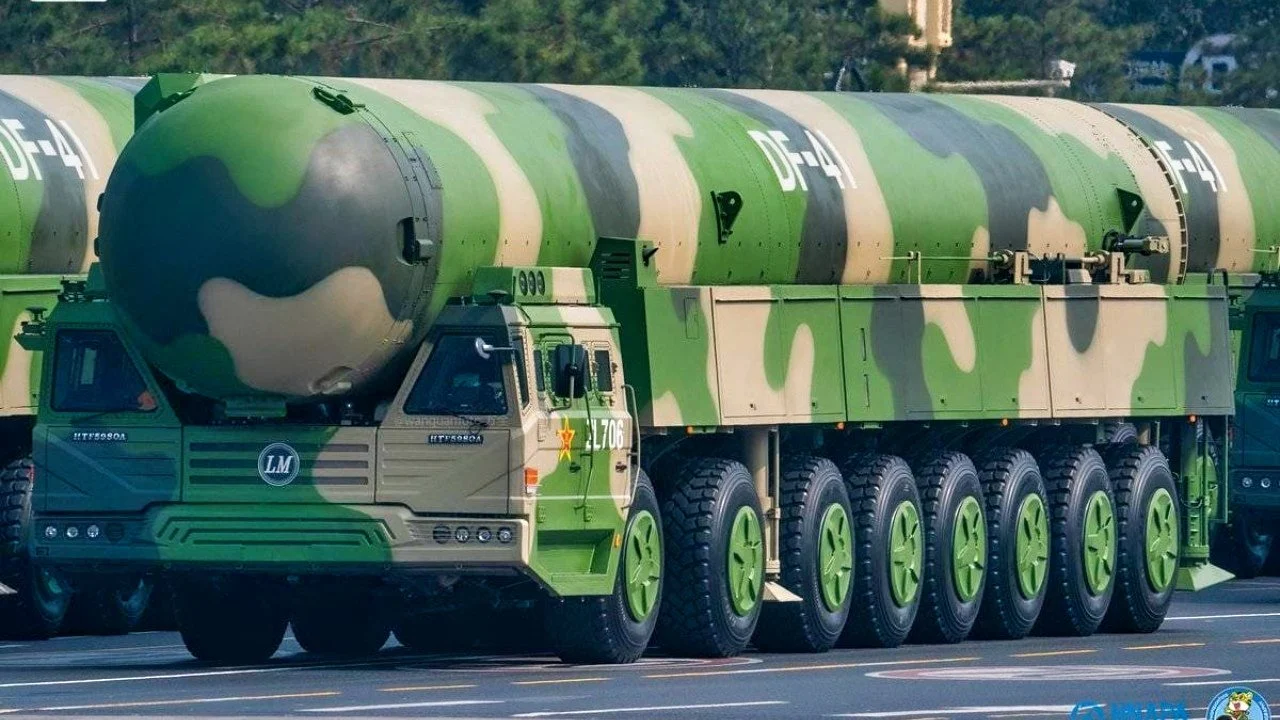
2. DF-41: China's Swift Strategic Deterrent
China's Dongfeng-41 (DF-41) ballistic missile has drawn global military interest. With a top speed reported at Mach 25, or approximately 30,600 kilometers per hour, the DF-41 stands among China's fastest missiles. It boasts impressive range and the capability to carry multiple warheads, serving as a significant strategic deterrent.
Key Features:
- Origin: China
- Class: Intercontinental Ballistic Missile (ICBM)
- Length: 20-22m
- Payload: 2,500 kg
- Warhead: up to 10 nuclear warheads, MIRV
- Range: 12,000-15,000 km
- Status: In service
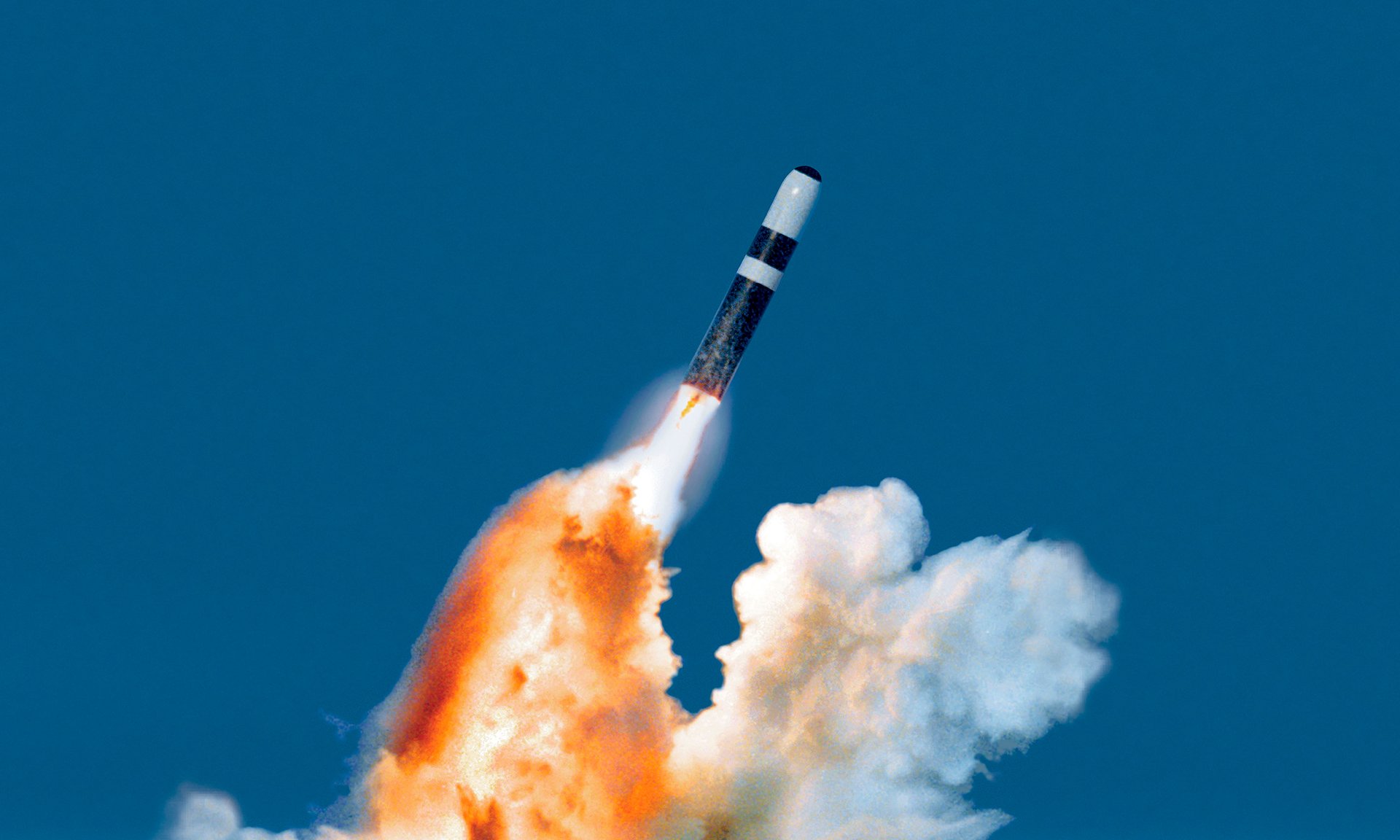
3. Trident 2: Unmatched Submarine-launched Precision
The Trident 2 is a key element of the United States' naval defense, known for its remarkable speed and accuracy. With speeds exceeding Mach 24, or around 29,654 kilometers per hour, Trident 2 forms a critical component of the U.S. Navy's sea-based nuclear deterrent.
Key Features:
- Origin: United States
- Class: Submarine Launched Ballistic Missile (SLBM)
- Length: 13.42
- Payload: 2,800 kg
- Warhead: Up to 8 MIRV Mk 4 or Mk 5 warheads
- Range: Minimum 2,000 km, Maximum 12,000 km
- Status: In service (1990-present)
Also Read: 11 Best Sniper Rifles in the World
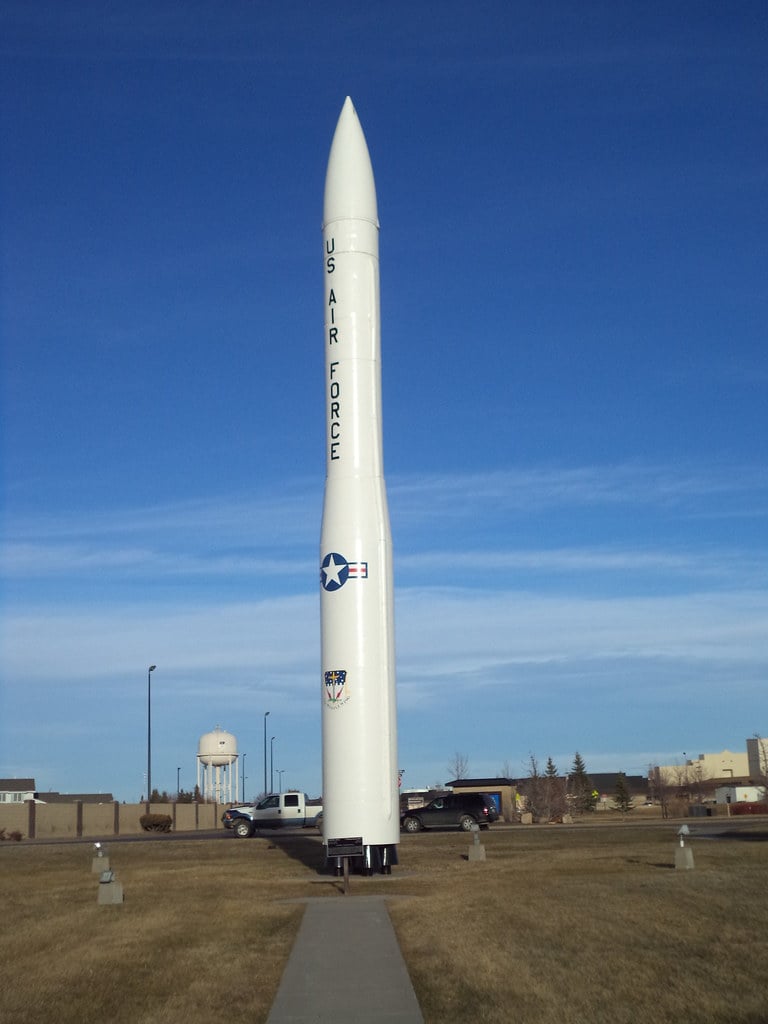
4. Minuteman 3: America's Intercontinental Ballistic Missile
The Minuteman 3 is a mainstay in the United States' missile arsenal, noted for its impressive speed and range. With a maximum speed of about Mach 23, or 28,200 kilometers per hour, the Minuteman 3 remains a vital component of America's intercontinental ballistic missile (ICBM) capabilities, offering rapid and precise response capabilities.
Key Features:
- Origin: United States
- Class: Intercontinental Ballistic Missile (ICBM)
- Length: 18.2m
- Payload: Up to 3 Mk 12A; 1 Mk 21 RV with penetration aids
- Warhead: W78 at 335 kT, W87 at 300 kT nuclear
- Range: 13,000 km
- Status: Operational
5. RS-28 Sarmat: Russia's Heavyweight Hypersonic Missile
The RS-28 Sarmat, often referred to as "Satan 2," stands as a heavyweight in Russia's hypersonic missile lineup. While its exact speed remains classified, estimates suggest it exceeds Mach 20.4, or 25,500 kilometers per hour. Engineered to carry varied warheads and penetrate any current or future missile defense systems, the RS-28 Sarmat represents a significant leap in Russia's military capabilities. With a maximum range of up to 18,000km, it is the longest-range missile globally.
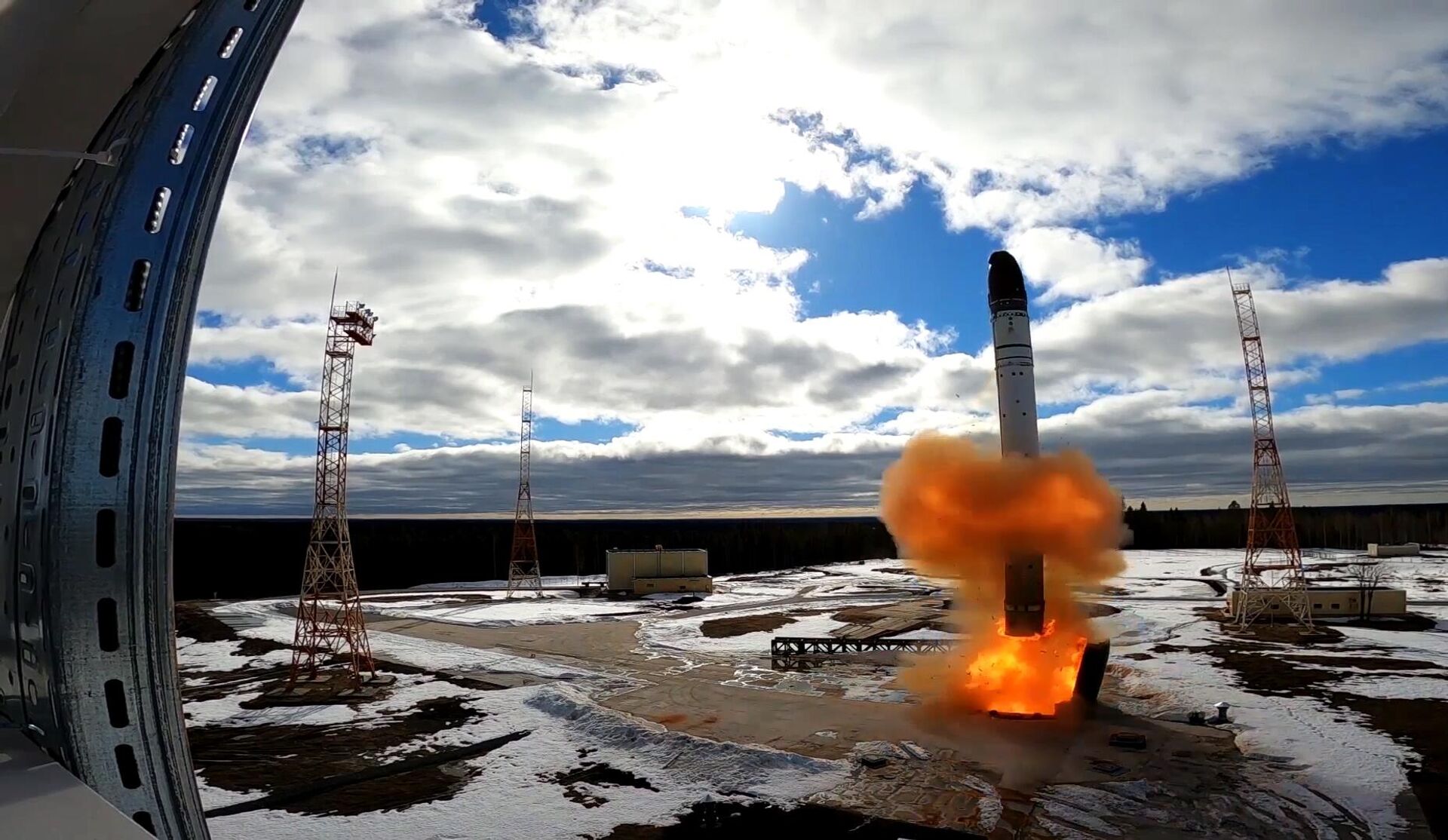
Key Features:
- Origin: Russia
- Class: Intercontinental Ballistic Missile (ICBM)
- Length: 35.3m
- Payload: 10,000 kg
- Warhead: Nuclear, MIRV or glide vehicles
- Range: 10,000-18,000 km
- Status: Operational
Comparative Table
| Rank | Missile Name | Origin | Class | Speed (Mach) | Speed (km/h) | Range (km) | Warhead | Status |
|---|---|---|---|---|---|---|---|---|
| 1 | Avangard | Russia | Hypersonic Glide Vehicle (HGV) | 27 | 32,200 | >6,000 | Nuclear (up to 2MT) | In service |
| 2 | DF-41 | China | Intercontinental Ballistic Missile (ICBM) | 25 | 30,600 | 12,000–15,000 | Up to 10 nuclear warheads (MIRV) | In service |
| 3 | Trident 2 | United States | Submarine Launched Ballistic Missile (SLBM) | 25 | 30,600 | 2,000–12,000 | Up to 8 MIRV Mk 4 or Mk 5 warheads | In service |
| 4 | Minuteman 3 | United States | Intercontinental Ballistic Missile (ICBM) | 23 | 28,200 | 13,000 | W78 (335 kT) or W87 (300 kT) nuclear | Operational |
| 5 | RS-28 Sarmat | Russia | Intercontinental Ballistic Missile (ICBM) | 20.4 | 25,500 | 10,000–18,000 | Nuclear (MIRV or glide vehicles) | Operational |
Strategic and Technological Insights
Speed and Maneuverability
Hypersonic missiles like the Avangard and certain configurations of the RS-28 Sarmat present interception challenges due to their high speeds and capability to alter course mid-flight. Traditional ballistic missiles, such as the DF-41, Trident 2, and Minuteman 3, follow predictable paths, but their hypersonic speeds nonetheless minimize the time available for defensive actions.
Strategic Deterrence
These missiles are primarily designed for nuclear deterrence, ensuring nations can counter any attack even if their primary forces are compromised. For instance, the Trident 2’s submarine-based launch system offers a concealed and resilient platform, while the DF-41’s MIRV capability enables multiple simultaneous strikes, reinforcing deterrence.
Technological Advancements
The advancement of hypersonic glide vehicles (HGVs) like the Avangard marks a significant technological leap. Unlike traditional ICBMs, HGVs can maneuver at high speeds, making them less predictable. Enhanced guidance systems and solid-fuel propulsion in missiles such as the DF-41 further boost their dependability and rapid deployment potential.
Global Security Implications
The proliferation of hypersonic and high-speed ballistic missiles raises global stability concerns. Their capacity for rapid, unforeseen strikes could escalate conflicts without robust arms control agreements. The presence of these missiles in the arsenals of Russia, China, and the United States underscores the importance of diplomatic efforts to manage their deployment and avert an arms race.
Also Read: 7 Deadliest ICBMs That Changed Military Power
Additional Considerations
While the top five missiles dominate in speed, other missiles, such as India’s Agni-V (Mach 24, 29,400 km/h), are notable contenders but did not make this list due to slightly lower speeds or less consistent reporting. Similarly, emerging missiles like the BrahMos-II (Mach 7–8, in development) show promise but are not yet operational as of 2026. The U.S. is also developing hypersonic weapons, but as of 2023, these were still in testing, and no operational systems have surpassed the Trident 2 or Minuteman 3 in speed by 2026.
Conclusion
The top five fastest missiles in the world in 2026, Avangard, DF-41, Trident 2, Minuteman 3, and RS-28 Sarmat, represent the pinnacle of military technology, combining extreme speed, long range, and devastating payloads. These missiles underscore the strategic priorities of Russia, China, and the United States in maintaining robust deterrence capabilities. As missile technology continues to evolve, international cooperation and arms control will be crucial in ensuring global stability in the face of these powerful weapons.