
Major General Sunil Sheoran - Decorated Para SF Veteran Known as "Bullet Catcher"

Major General Sunil Sheoran, SM Bar, VSM, is recognized as one of the most seasoned and esteemed individuals within the Indian Army's Special Forces community. As a veteran of the elite Para Special Forces, he has navigated some of the most challenging operational situations, from high-altitude assignments to counter-terrorism operations. Over the years, his bravery, leadership, and exceptional endurance in combat situations have earned him the distinguished nickname "Bullet Catcher."
Currently, Major General Sheoran holds the position of General Officer Commanding of the 4th Infantry Division, known as the Red Eagle Division, based in Prayagraj. His ascent to this role is a testament to decades of service characterized by combat experience, leadership in institutional settings, and dedication to the highest traditions of the Indian Army.
Commissioned into the Infantry, Major General Sheoran later qualified for the demanding Para Special Forces stream. His association with 3 Para Special Forces places him among the Army’s most elite combatants, trained for covert operations, direct action, special reconnaissance, counter-insurgency, and high-risk missions. The Para SF selection and operational culture require not only physical endurance but also mental resilience, adaptability, and the ability to make decisions in uncertain and hostile environments.
A significant phase of his early service involved his deployment at Darshak Post in the Siachen Glacier region. Known as the world's highest battlefield, Siachen challenges soldiers with extreme cold, low oxygen, avalanche-prone areas, and isolation. Serving there is not just a posting; it is a survival test, requiring stamina, discipline, and leadership. For an officer with a Special Forces background, such experiences shaped his operational perspective and strengthened his ability to lead under the harshest conditions.
The nickname "Bullet Catcher" is linked to Major General Sheoran due to the multiple bullet wounds he reportedly survived during his operational career, with documented injuries above the heart, on the shoulder, and through the cheek and neck. While specifics of many Special Forces operations remain undisclosed due to their sensitive nature, these injuries highlight the direct combat exposure he faced during his service.
The title "Bullet Catcher" is not merely dramatic. In military circles, it symbolizes a unique blend of bravery, luck, endurance, and a propensity for leading from the front. For those engaged in close-quarter combat and counter-terrorism environments, the margin for error is minimal. Major General Sheoran's story serves as a reminder of the personal risks borne by officers and men in elite combat units.
His most notable public role was during the 26/11 Mumbai terror attacks in November 2008. During Operation Black Tornado, he served as a Colonel, commanding the 51 Special Action Group of the National Security Guard. The NSG commandos were tasked with one of India's most complex urban counter-terrorism operations, involving multiple sites, heavily armed terrorists, hostages, confusion, and intense media scrutiny.
The operation, which lasted nearly 60 hours, involved room-to-room and floor-to-floor clearance, especially at the Taj Mahal Palace Hotel. The NSG's challenge was not only to neutralize the terrorists but also to rescue trapped civilians and minimize further casualties in a complex built-up setting. Under such conditions, command decisions needed to be executed with speed, precision, and restraint.
During the Mumbai operation, NSG personnel exhibited extraordinary bravery, with losses including Major Sandeep Unnikrishnan, posthumously awarded the Ashoka Chakra. Major Unnikrishnan was under Colonel Sheoran's command during the operation, making the episode a significant chapter in Sheoran’s career and in India's counter-terrorism history.
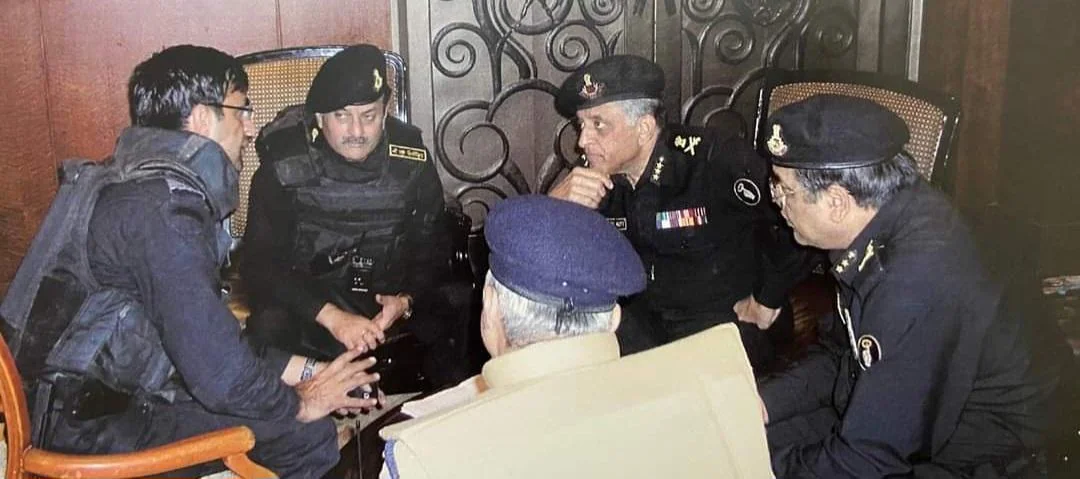
The 26/11 attacks also highlighted several gaps in India's urban counter-terrorism response, including response time, intelligence flow, weapons, communication, and specialized equipment. Colonel Sheoran was among those advocating for better preparedness, improved tactical systems, enhanced real-time intelligence, and modernized equipment for the NSG. His operational experience proved valuable in discussions on strengthening India's counter-terrorism capabilities.
Following Operation Black Tornado, the Government of India reportedly sent him on international study visits to countries such as Germany, France, Australia, and Israel. These visits were crucial for understanding global best practices in counter-terrorism, hostage rescue, rapid deployment, and special operations, contributing to the broader effort to strengthen the NSG and establish additional hubs across India after the Mumbai attacks.
After serving with the NSG, Major General Sheoran took on key roles, including Commandant of the Parachute Regiment Training Centre in Bengaluru, essential for training and preparing airborne and Special Forces personnel. The PRTC is crucial in forming soldiers for some of the most demanding units of the Indian Army. His leadership there marked his transition from combat commander to mentor and institution builder.
His advancement from Colonel to Brigadier and then Major General signifies consistent professional recognition. Officers from Special Forces backgrounds bring a distinctive operational culture to higher command roles, characterized by initiative, mission focus, physical courage, and decentralized leadership. Major General Sheoran’s journey underscores how battlefield-tested leadership can contribute beyond tactical missions to larger formation-level command.
As General Officer Commanding of the Red Eagle Division, Major General Sheoran leads a formation with a proud legacy and significant operational responsibilities. Division-level command necessitates a broader approach than special operations alone, involving training, administration, operational readiness, logistics, welfare, discipline, and troop preparation for conventional and emerging security challenges. His appointment to such a command signifies the Army’s confidence in his experience and leadership.
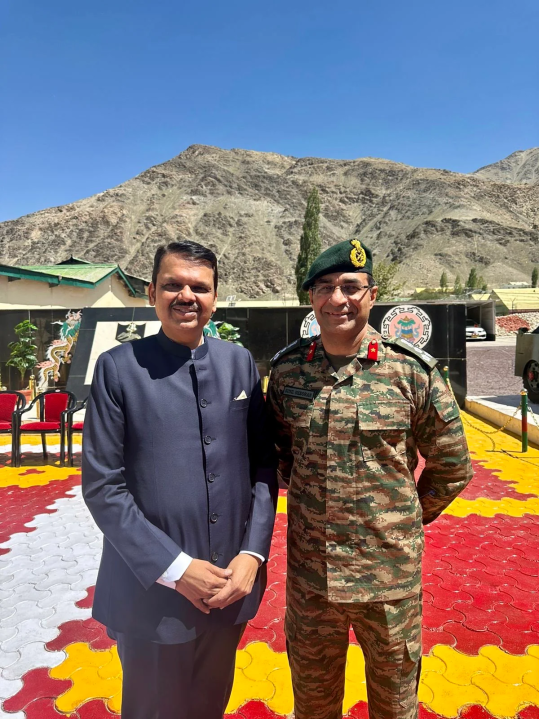
Major General Sheoran has been honored with the Sena Medal with Bar and the Vishisht Seva Medal. The Sena Medal is awarded for acts of gallantry or distinguished service, with a Bar indicating further recognition after the initial award. The Vishisht Seva Medal acknowledges distinguished service of a high order. Together, these accolades reflect both his courage in operations and his contributions beyond the battlefield.
Beyond these decorations, Major General Sheoran garners deep respect among veterans, soldiers, and defense observers. Stories about him are frequently shared as examples of calmness under pressure, loyalty to subordinates, and personal bravery. His life illustrates a type of soldiering that rarely receives public attention due to its classified or sensitive nature.
His role during 26/11 has left an impact on popular culture as well. A character in the web series State of Siege: 26/11 is believed to have drawn inspiration from his real-life leadership during the Mumbai terror attacks, showcasing how the courage and decisions of officers during national crises continue to shape public memory years later.
For young defense aspirants, Major General Sunil Sheoran’s career presents numerous lessons. It demonstrates that military leadership is forged through hardship, danger, responsibility, and continual tests of character. His journey from Infantry officer to Para SF veteran, NSG commander, training leader, and divisional commander highlights the multiple dimensions of service in the Indian Army.
The narrative of the "Bullet Catcher" is ultimately not just about surviving bullets. It is about resilience, duty, and the courage to remain steadfast in situations where hesitation can cost lives. Major General Sunil Sheoran’s career continues to inspire both soldiers and citizens, serving as a reminder of the quiet strength of those who dedicate their lives to India’s security.


