
Pakistan Initiates Airstrikes in Escalating Conflict with Afghanistan; Taliban Report Downing of Fighter Jets

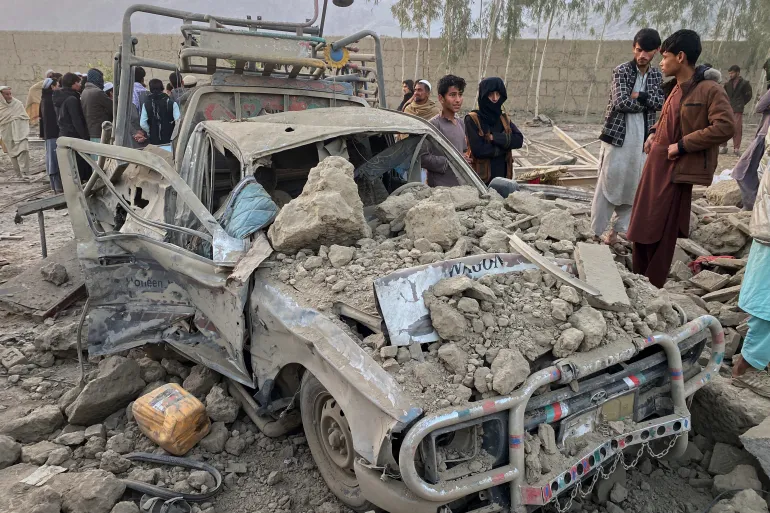
ISLAMABAD/KABUL – In a significant escalation of longstanding border tensions, Pakistan declared an "open war" against Afghanistan's Taliban-led government, launching airstrikes with fighter jets across multiple Afghan cities in the early hours of February 27, 2026. The strikes, targeting Kabul, Kandahar, and Paktia provinces, resulted in reported casualties and significant destruction, according to statements from both countries. This military offensive comes after Afghan forces allegedly attacked Pakistani border positions, which Islamabad claims were unprovoked.
Khawaja Muhammad Asif, Pakistan's Defense Minister, announced the onset of war, stating that their patience had run out. He outlined the operation, named "Ghazab lil Haq," as a necessary retaliation to Afghan hostilities. Pakistani officials have reported that the airstrikes successfully destroyed two Taliban brigade headquarters in Kabul and resulted in the deaths of approximately 130 Taliban fighters. The Pakistan Air Force released footage of their nighttime operations, showcasing precision attacks on what they claimed were military facilities.
The Taliban government, represented by spokesperson Zabihullah Mujahid, condemned the raids as violations of Afghanistan's sovereignty, reporting explosions, anti-aircraft fire, and impacts on civilians in the affected areas. Former Afghan President Hamid Karzai also reported bombings in Kabul, Kandahar, and Paktia. Afghan defense sources boldly claimed that their forces shot down at least five Pakistani fighter jets, including F-16s, JF-17 Thunders, and J-10Cs, during overnight engagements along the Durand Line.
Social media platforms have been circulating videos of wreckage allegedly from a downed American-made F-16. Afghan officials have labeled this a significant blow to Pakistan's aerial capabilities, although Pakistan has dismissed these assertions as unfounded propaganda. The rapidly evolving situation makes independent verification challenging.
The roots of this conflict trace back to recent border skirmishes, including Pakistani airstrikes last week that killed 18 individuals in Afghanistan, prompting Taliban retaliation on February 26. Both nations have reported substantial losses: Afghanistan claims 55 Pakistani soldiers were killed and several border posts captured, while Pakistan maintains that dozens of Afghan troops were eliminated. The Durand Line, a disputed 2,600-kilometer border established in the 19th century, has long been a source of territorial disputes and cross-border militancy issues.
Pakistan's air force, with a fleet of approximately 465 fighter jets, including U.S.-manufactured F-16s, and Chinese-Pakistani co-developed JF-17s and J-10Cs, maintains a clear advantage in aerial combat. Conversely, Afghanistan has minimal air capabilities, reportedly lacking operational fighter jets and relying on ground-based defenses and equipment from previous regimes. This disparity highlights the potential for rapid escalation, with Pakistan's nuclear arsenal adding another layer of strategic deterrence.
In a separate development amid these hostilities, Pakistan continues to market its JF-17 Thunder Block III internationally. At the World Defense Show in Saudi Arabia earlier this month, officials promoted the jet's combat effectiveness in previous Indo-Pakistani conflicts as an attractive feature for potential buyers in 13 countries. Additionally, Somalia is negotiating to purchase 24 JF-17 Block III jets from Pakistan in a $900 million deal, aiming to revitalize its air forces.
International observers, including those from Qatar, have called for restraint to prevent the situation from evolving into a broader regional crisis. With both militaries mobilizing troops in the border areas, Pakistan's 660,000-strong force significantly outnumbers Afghanistan's 170,000. As the situation progresses, the global community remains vigilant, watching for indications of either de-escalation or further intensification.


