
Lt Gen Anindya Sengupta Reviews Shatrujeet Brigade Readiness, Inaugurates Indoor Shooting Range

Lieutenant General Anindya Sengupta, General Officer Commanding-in-Chief of the Indian Army’s Central Command, visited the elite Shatrujeet Brigade to assess its operational readiness, review its training architecture and examine how the formation is bringing niche technologies into contemporary military preparation.
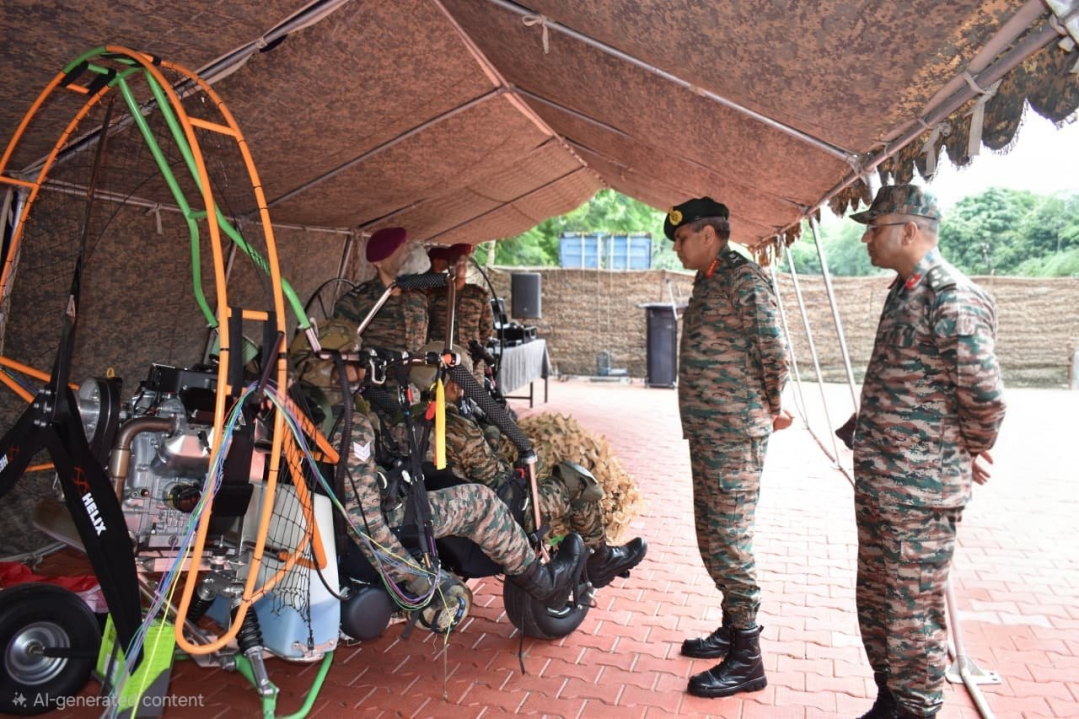
The visit centred on the brigade’s effort to remain “Airborne, Agile and Future-Ready”, reflecting a broader Army push to sustain high combat preparedness while adapting to the changing character of warfare. During the review, Lt Gen Sengupta was briefed on a set of comprehensive training modules aimed at sharpening combat skills and improving battlefield performance for airborne troops expected to respond quickly in demanding operational environments.
According to the briefing, these modules use technology-enabled methods to build speed, accuracy, situational awareness and decision-making. The emphasis is on preparing soldiers for operational scenarios in which battlefield conditions are becoming more complex and increasingly shaped by unmanned systems, sensors, precision weapons, electronic warfare tools, advanced communications and digitally connected command-and-control networks.
One of the key moments of the visit was the inauguration of a state-of-the-art Modular Containerised Indoor Shooting Range by the Army Commander. The facility has been created to give soldiers realistic, technology-enabled conditions in which to improve reflex shooting, marksmanship and weapon-handling skills.
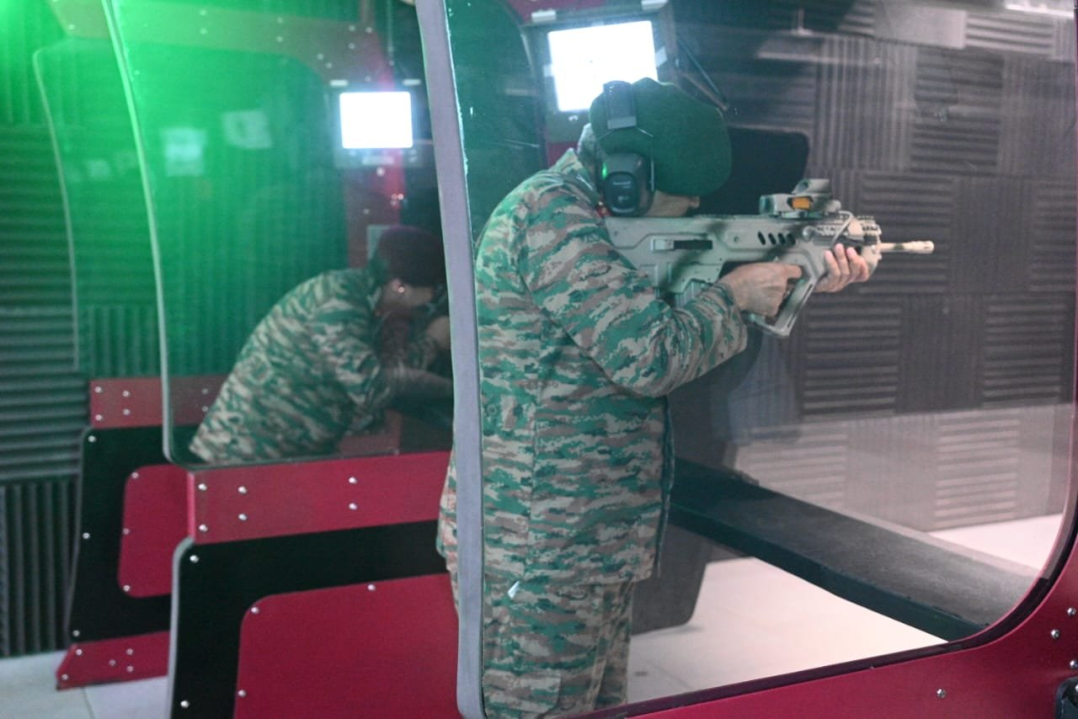
Its modular design is intended to provide flexibility for specialised firing practice while allowing troops to rehearse essential combat skills in a controlled setting. Such indoor infrastructure also supports more regular and predictable training cycles, unaffected by weather disruptions or limitations at outdoor ranges.
That capability carries particular value for airborne troops. Paratroopers may be called upon to operate deep inside contested areas, seize strategically important objectives, execute airborne assaults or undertake specialised missions in which speed, surprise and individual combat proficiency can have a direct bearing on operational outcomes. In such situations, the ability to react rapidly and fire accurately is not simply a training objective but a core operational requirement.
The new range therefore fits into the wider training needs of an airborne formation, where soldiers are expected to show initiative, tactical flexibility and a high level of confidence in weapon handling under pressure. Facilities focused on reflex shooting and realistic drills are intended to complement the brigade’s broader preparation for high-readiness missions.
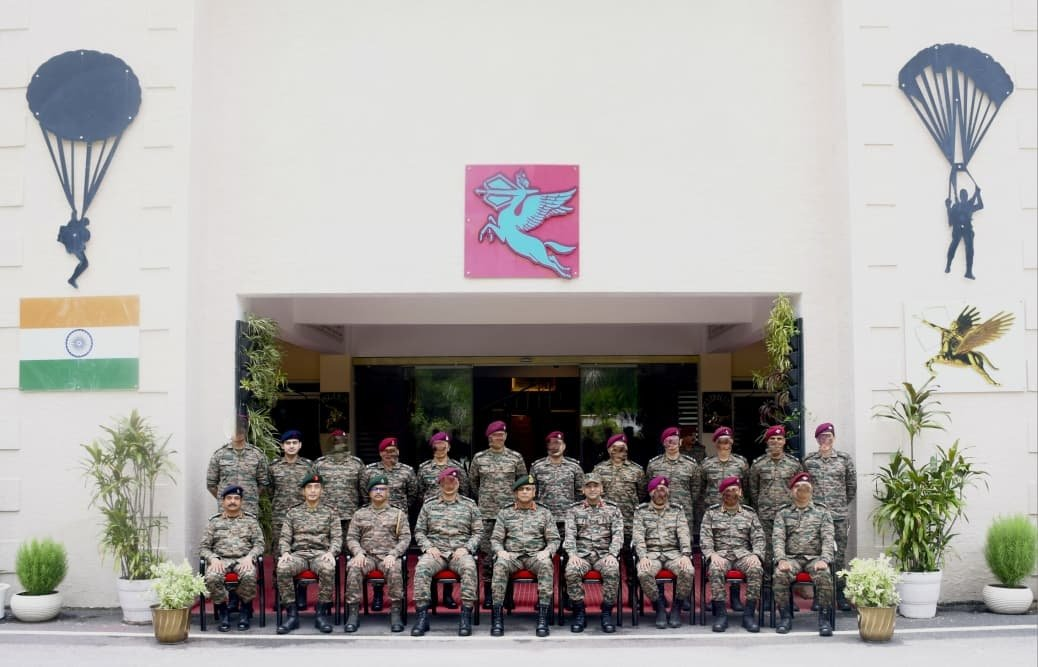
During his interaction with troops, Lt Gen Sengupta commended the paratroopers for their high morale, professionalism and mission-oriented approach. He urged all ranks to keep innovating and adapting while remaining prepared to dominate an increasingly complex and evolving battlespace.
His remarks echoed the Indian Army’s wider effort to combine traditional soldiering skills with technological capability and updated training methods. The review also highlighted the growing importance being attached to innovation at formation and unit level, where commanders and soldiers are being encouraged to identify practical solutions that can improve training, surveillance, logistics, mobility, battlefield awareness and overall operational effectiveness.
Focus on an elite airborne formation
The Shatrujeet Brigade is counted among the Indian Army’s premier airborne formations. Its personnel undergo specialised training for airborne tasks and high-readiness operations, and are expected to maintain exceptional standards of physical fitness, weapons proficiency, tactical awareness and operational readiness because of the demanding nature of their role.
Airborne formations offer commanders the ability to insert combat power rapidly and conduct operations at considerable distances from conventional ground forces. Sustaining that capability requires constant training across a wide spectrum, including airborne operations, small-team tactics, weapons handling, communications, navigation and coordinated battlefield manoeuvres.
Part of a wider modernisation push
Lt Gen Sengupta’s review comes as the Indian Army continues to modernise its training infrastructure and incorporate technology more deeply into operational preparation. The service has increasingly stressed the need for realistic training environments that mirror contemporary battlefield conditions and prepare troops to function effectively alongside new-generation surveillance platforms, drones, communication systems and other emerging capabilities.
Within that larger context, the new Modular Containerised Indoor Shooting Range represents another addition to the Army’s evolving training ecosystem, with a specific focus on strengthening fundamental combat shooting skills in a realistic and controlled environment.
The visit ultimately underscored how the Shatrujeet Brigade is seeking to blend rigorous airborne training, professional standards, high morale and the adoption of niche technologies to preserve rapid-response capability. For the Central Command, the review reinforced the brigade’s stated approach of staying “Airborne, Agile and Future-Ready” as it prepares its paratroopers for the expanding demands of modern warfare.


