
Indian Air Force Concludes Pitch Black, Udara Shakti 2026 Drills in Australia, Malaysia

The Indian Air Force has wrapped up a two-country overseas deployment after taking part in Exercise Pitch Black 2026 in Australia and Exercise Udara Shakti 2026 in Malaysia, a sequence of back-to-back drills that brought together combat aircraft, aircrew and support personnel in the Indo-Pacific.
The deployments were designed to deepen operational capability and strengthen defence cooperation with partner air forces in the region. By moving directly from one exercise to another, the IAF demonstrated its ability to sustain a high-tempo international presence while working in different operational environments and alongside multiple foreign air forces.
Exercise Pitch Black 2026, hosted by the Royal Australian Air Force, saw the IAF field its frontline Rafale fighters alongside air forces from more than 20 countries. The exercise is known for its demanding flying profile, and this edition offered the participating forces a chance to operate in a complex, high-threat and multi-domain setting while carrying out Large Force Employment missions.
Large Force Employment exercises are built around the coordinated use of multiple aircraft and formations in scenarios that test planning, execution and tactical decision-making at scale. For the IAF, participation in such an environment provided an opportunity to practise complex air operations, sharpen tactical coordination and gain exposure to the operational concepts used by other air forces.
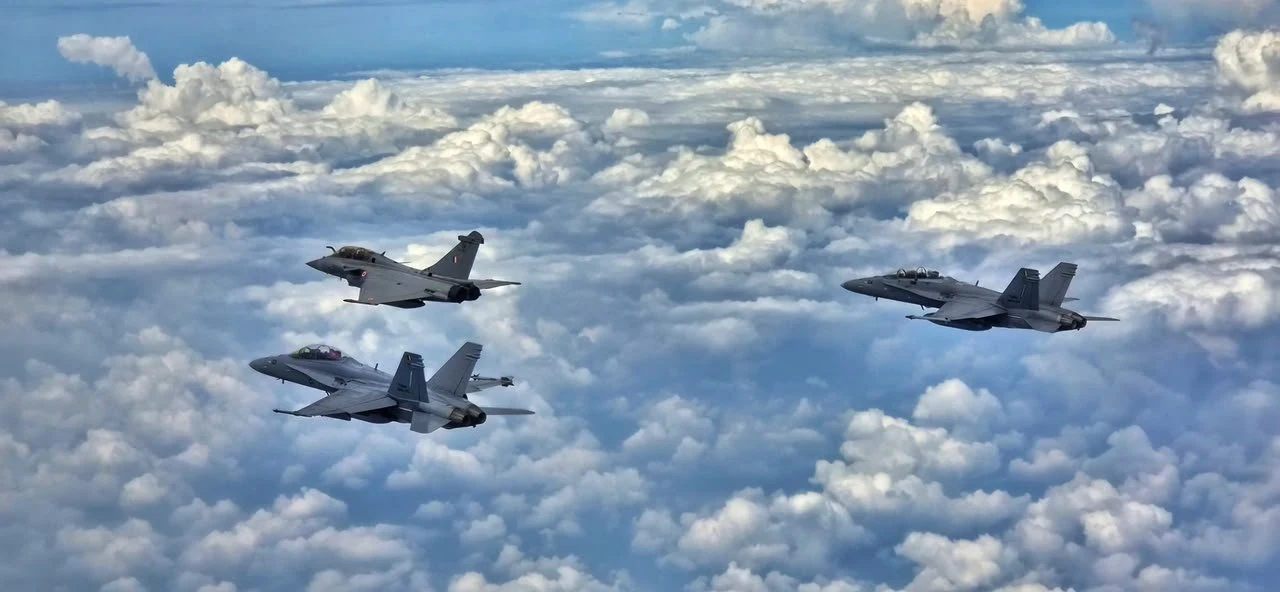
Beyond the flying itself, the multinational setting helped improve interoperability with partner air forces. Working in a mixed environment allowed the Indian contingent to exchange operational experience and better understand how different air forces approach planning, coordination and mission execution under demanding conditions.
After completing the Australia phase, the IAF contingent moved directly to Subang in Malaysia for Exercise Udara Shakti 2026, a bilateral drill with the Royal Malaysian Air Force. The exercise focused on high-intensity combat sorties, joint tactical manoeuvres and greater operational flexibility, extending the training value of the deployment into a second theatre.
During Udara Shakti, IAF aircrew flew missions alongside and against Royal Malaysian Air Force Su-30MKM and F/A-18 Hornet aircraft. That setup allowed both sides to refine air combat tactics and to build a better understanding of each other's platforms, procedures and tactical approaches in realistic training conditions.
The exercise was not limited to cockpit-level training. It also included subject matter expert exchanges, through which personnel from both air forces shared professional knowledge and discussed operational practices. Such interactions are intended to build confidence and familiarity between the two services, improving the prospects for effective cooperation in future operations or exercises.
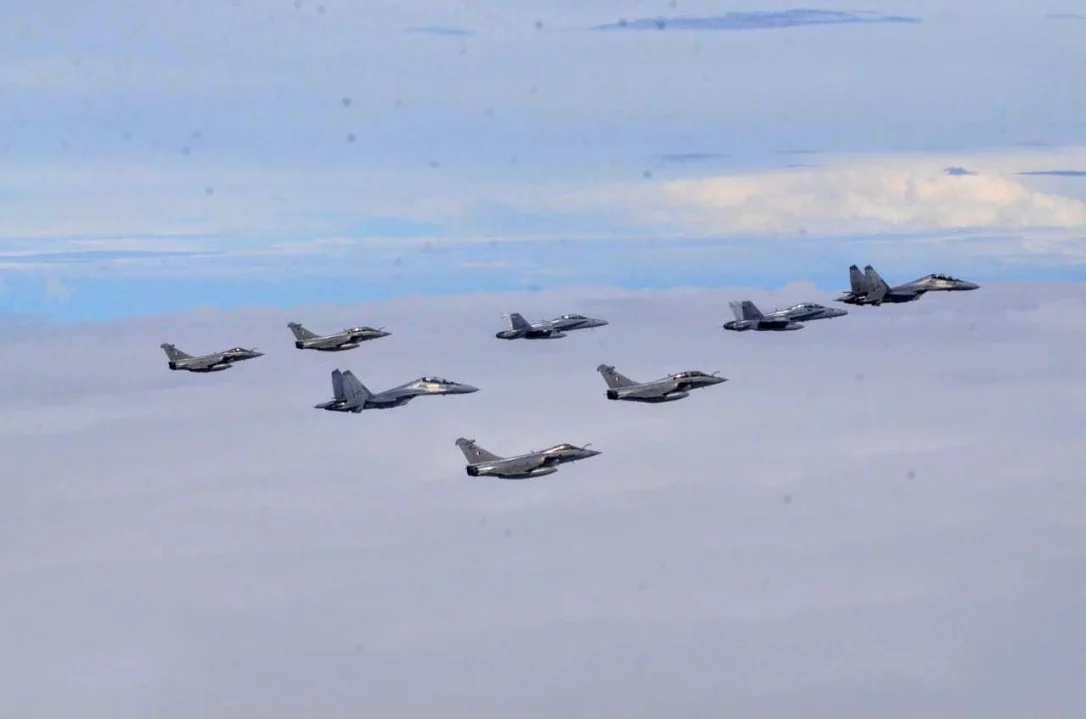
The collaboration extended well beyond the flying programme. Personnel from both sides also engaged in maintenance practices, mission planning exchanges and other professional activities, adding a ground-side dimension to the exercise that is often critical to operational effectiveness. Cultural interactions further helped build camaraderie and mutual understanding among the participants.
Taken together, the two exercises highlighted the IAF’s capacity to deploy and operate at short notice across geographically distinct environments while integrating with different partner air forces. They also reflected India’s continuing emphasis on defence engagement in the Indo-Pacific through regular, realistic and increasingly complex joint training.
The IAF has consistently used multinational and bilateral exercises as platforms to improve combat preparedness, exchange operational expertise and build interoperability. In doing so, it has sought to contribute to regional stability and collaborative security across the Indo-Pacific.


