
Dr Kajari Kamal Discusses Kautilya’s Arthashastra, India’s Soft Power at CDM Secunderabad

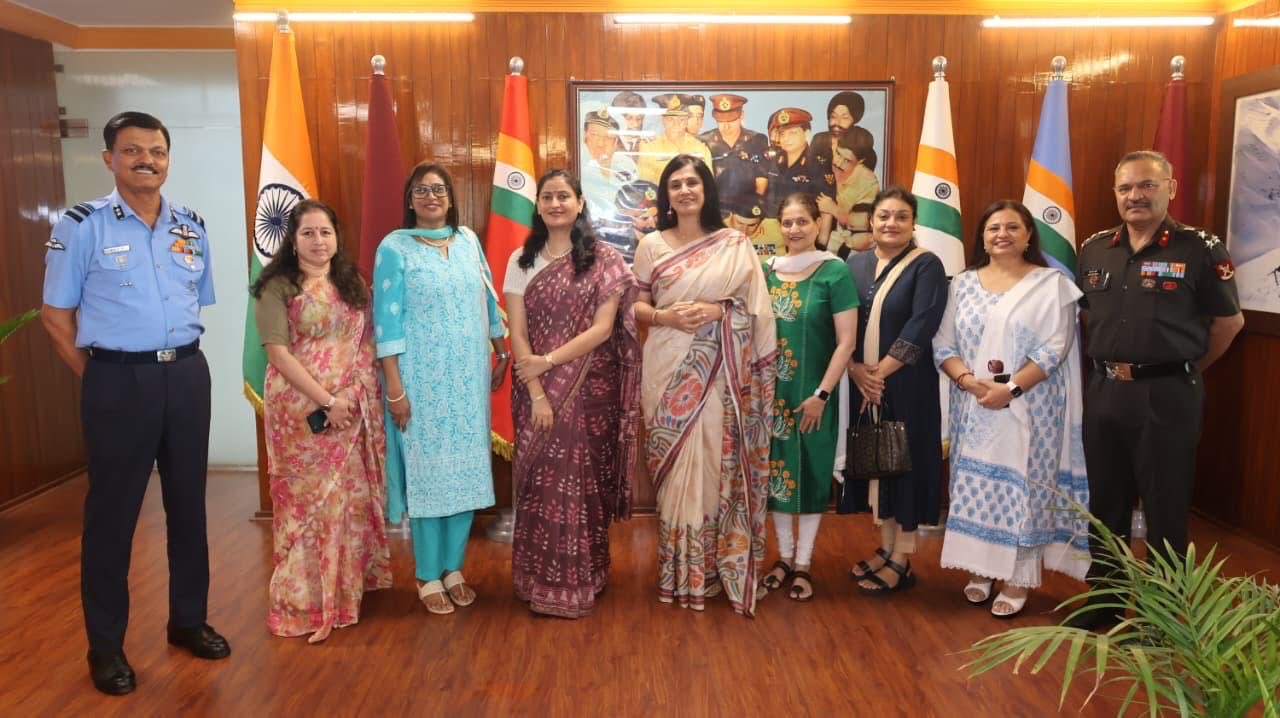
Ancient Indian strategic thought and its relevance to present-day national security formed the centrepiece of a recent engagement at the College of Defence Management (CDM) in Secunderabad, where Dr Kajari Kamal of the Takshashila Institution addressed participants of the Higher Defence Management Course (HDMC-22). Her interaction focused on Kautilya’s Arthashastra and India’s soft power, linking classical ideas of governance and statecraft with the demands of today’s strategic environment.
The discussion examined how concepts articulated centuries ago continue to offer usable insights for modern policy and military thinking. Dr Kamal’s address drew attention to the continuing relevance of ancient Indian political thought in areas such as diplomacy, governance, leadership, alliances, national power and strategic decision-making, at a time when the character of competition between states extends well beyond the battlefield.
The Arthashastra, traditionally attributed to Kautilya — also known as Chanakya or Vishnugupta — remains one of ancient India’s most important works on governance and statecraft. The text spans administration, economics, diplomacy, intelligence, security, warfare and the duties of political leadership. At CDM, the emphasis was not on treating it as a historical relic, but on reading it as a framework that can still inform contemporary strategic analysis.
A key theme of the interaction was Kautilya’s broad conception of state strength. In this view, national power is not defined by military capability alone. Governance, economic capacity, institutional competence, intelligence systems, diplomacy, leadership and the welfare of the population all form part of a state’s resilience and effectiveness. That perspective has particular resonance in the current strategic landscape, where military power remains important but is no longer the sole measure of influence.
Today’s competition between states increasingly involves economic leverage, technology, cyber capabilities, information operations, supply chains, diplomacy and strategic partnerships. Dr Kamal’s interaction encouraged participants to consider how Kautilyan thinking can help make sense of this wider environment, in which multiple instruments of national power often operate simultaneously.
The session also revisited Kautilya’s understanding of inter-state relations. His strategic outlook recognised that international relationships are shaped by interests, geography, relative power and changing circumstances, making alliances and rivalries fluid rather than permanent. That reading bears clear parallels with the contemporary international system, where states may cooperate in some domains while competing in others, and where partnerships evolve as geopolitical conditions and national priorities shift.
Another important strand of Kautilyan thought discussed during the interaction was the need for careful assessment before strategic action. Diplomacy, negotiation, alliances, strategic patience and the calibrated application of power were presented as instruments to be used according to circumstance and relative strength. Such adaptability is especially relevant in a period marked by geopolitical uncertainty, fast-moving technological change and blurred boundaries between peace, competition and conflict.
For modern governments and armed forces, this means operating in an arena where military deterrence can coincide with economic pressure, diplomatic outreach, technological restrictions, information campaigns and coalition-building. The ability to read the wider strategic environment and employ different levers of national power accordingly is increasingly central to both political and military decision-making.
Dr Kamal also turned to the relationship between India’s strategic traditions and its soft power. India’s civilisational inheritance includes philosophy, literature, spirituality, yoga, Ayurveda, Buddhism, democratic traditions and long-standing cultural exchanges with societies across Asia and beyond. Unlike coercive power, soft power depends on attraction, credibility, cultural influence and the ability to shape perceptions. In that context, India’s historical and civilisational links become an important part of how it engages the wider world.
The discussion highlighted that strategic culture cannot be understood only through military conflict or hard power. Intellectual traditions, values, narratives and cultural influence can also shape a country’s international standing and its ability to build durable relationships.
Beyond the Arthashastra: Panchatantra and strategic thought
In a separate interaction with the Forum on Indian Strategic Culture and Thought (FISCT), Dr Kamal explored another dimension of India’s intellectual heritage by examining the shared yet distinct ideas found in the Panchatantra and the Arthashastra. The session offered a broader look at the depth and diversity of Indian strategic traditions.
Although the two works differ significantly in structure and style, both engage with themes of leadership, relationships, alliances, conflict, judgement, decision-making and human behaviour. The Arthashastra approaches these questions in a systematic and analytical manner, addressing governance, diplomacy, economics, intelligence and security in a structured way. The Panchatantra, by contrast, communicates practical lessons through interlinked stories featuring human and animal characters.
Yet behind the Panchatantra’s accessible narrative form lie sophisticated observations on trust, friendship, deception, alliances, conflict and the consequences of poor judgement. Its stories have carried practical insights on behaviour and decision-making across generations and across cultures. Considered alongside the Arthashastra, it offers a different but complementary window into Indian thought: one rooted in political analysis, the other in analogy and storytelling, both alert to human motivations and the importance of understanding behaviour when making decisions.
The FISCT interaction also addressed the idea of Vasudhaiva Kutumbakam, commonly understood as “the world is one family.” The concept has increasingly featured in India’s articulation of its civilisational outlook and its approach to international engagement. Set beside the realism and pragmatism associated with Kautilyan statecraft, it reflects the range within Indian strategic thought: an intellectual tradition that accommodates national interest, prudence and power politics while also recognising cooperation, interconnectedness and a wider responsibility towards humanity.
Why the engagement matters at CDM
The significance of the engagement is amplified by the role of the College of Defence Management itself. Located in Secunderabad, CDM is responsible for preparing senior military officers for higher command, management and strategic responsibilities. Its professional military education is designed to help officers understand the increasingly complex relationship between defence management, national security and strategic decision-making.
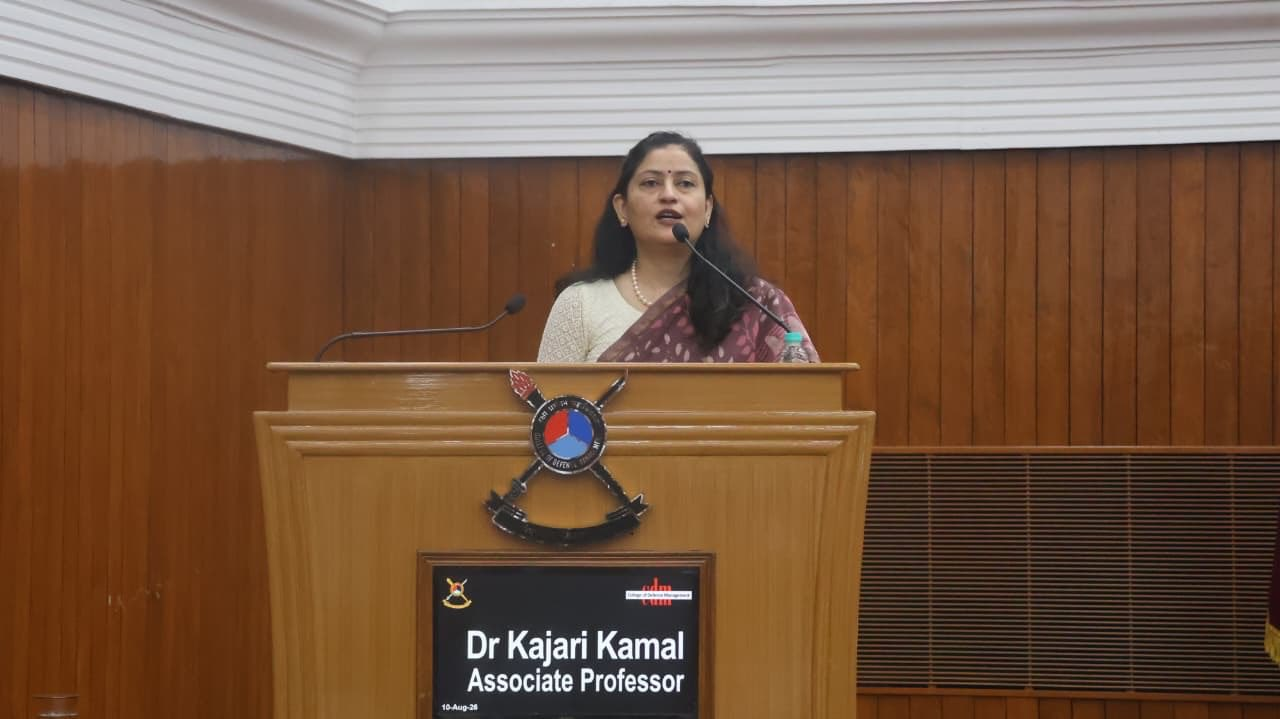
The Higher Defence Management Course exposes participants to subjects that go well beyond conventional military operations, including geopolitics, national security, leadership, resource management, technology and strategic affairs. Interactions with scholars working on Indian strategic culture can therefore provide officers with additional intellectual tools to interpret contemporary security challenges.
For decades, formal study of international relations and strategic affairs has been shaped heavily by Western intellectual traditions and historical experience. Greater engagement with thinkers such as Kautilya offers an opportunity to broaden that foundation by bringing Indian perspectives more fully into current strategic discussions. India possesses a substantial body of historical literature on governance, diplomacy, conflict, leadership and human behaviour; studying it alongside modern strategic theory can contribute to a more varied understanding of statecraft and national security.
That wider perspective may be especially useful for military leaders preparing to operate in an environment defined by geopolitical competition, technological disruption, economic interdependence and unconventional security challenges. In such conditions, the ability to view problems through multiple intellectual frameworks can be an operational and strategic asset.
Dr Kajari Kamal’s engagements at CDM and with FISCT ultimately showed how ancient Indian texts can still animate serious discussion on modern strategic questions. The world has changed profoundly since the period associated with Kautilya, but many underlying questions of statecraft remain familiar: how states protect their interests, assess partners and adversaries, build alliances, apply national power, manage competition and create room for cooperation. Bringing India’s own strategic and civilisational traditions into contemporary professional military education reflects a broader effort to draw on that heritage as the country navigates a complex and fast-changing global environment.


