
DGAFMS Surg Vice Admiral Arti Sarin Unveils Phoenix Foot Mk-I at Pune’s Artificial Limb Centre

Surgeon Vice Admiral Arti Sarin, Director General Armed Forces Medical Services (DGAFMS), visited the Artificial Limb Centre (ALC) in Pune on August 11, 2026, where she reviewed the institution’s rehabilitation infrastructure, indigenous prosthetic and orthotic innovations, and patient-care initiatives aimed at improving mobility and quality of life for amputees.
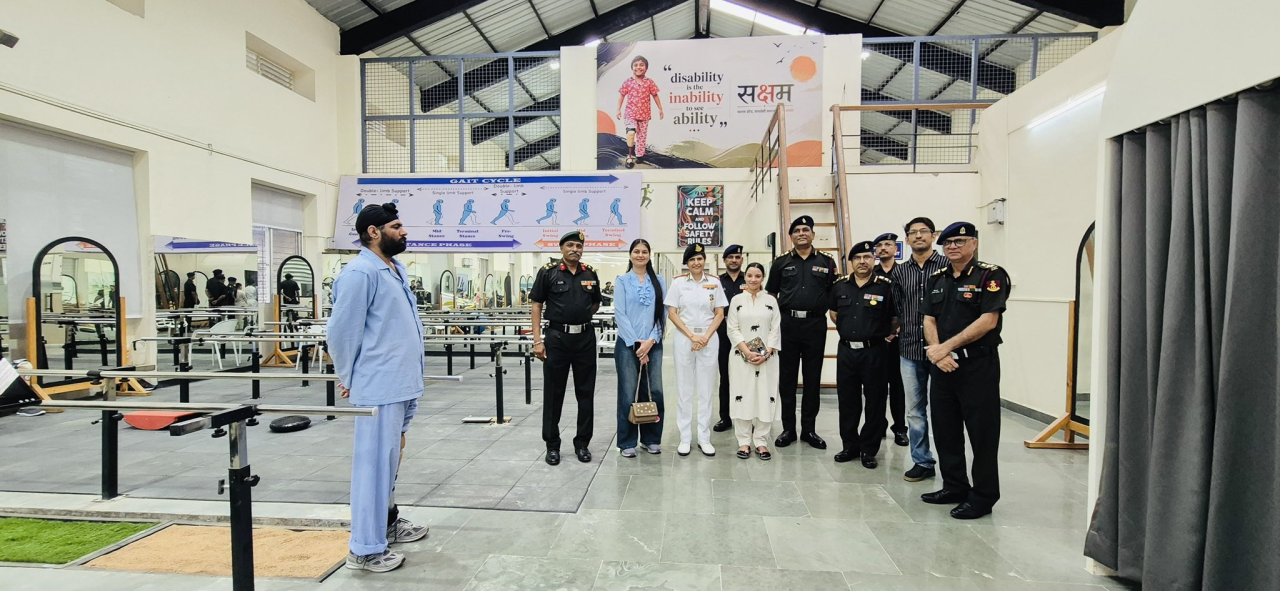
The visit focused on the Centre’s expanding role in comprehensive rehabilitation, with particular attention on “Saksham”, ALC’s Holistic Mobility Clinic that brings multiple rehabilitation disciplines together under one roof. Officials briefed the DGAFMS on how the model is designed to offer patients an integrated recovery pathway rather than fragmented treatment across separate services.
For amputees and others living with mobility-related disabilities, rehabilitation often depends on coordinated support spanning prosthetics, orthotics, physiotherapy, medical management and functional training. Saksham has been conceived around that requirement, seeking to provide a patient-centric framework in which these different forms of expertise are combined through a single, comprehensive system of care.
Surg Vice Admiral Arti Sarin appreciated the concept and functioning of the clinic, emphasising the value of comprehensive rehabilitation in helping patients recover mobility, independence and confidence.
Another key component of the visit was ALC Pune’s advanced 3D printing facility, where the DGAFMS was shown indigenous work being developed and applied in orthotics and prosthetics. The facility reflects a shift towards more customised rehabilitation solutions, with three-dimensional printing enabling components to be tailored to the anatomical and functional needs of individual patients.
Such technology has become increasingly relevant in rehabilitation medicine because it allows for precision, adaptability and faster development of customised assistive devices. Its use at the Artificial Limb Centre illustrates the broader integration of advanced manufacturing and modern medical technology within the Armed Forces Medical Services’ rehabilitation ecosystem.
The DGAFMS was also briefed on efforts under way to modernise customised footwear solutions at the Centre. Specialised footwear remains an important part of rehabilitation for many patients, particularly in improving stability, ensuring appropriate pressure distribution and addressing specific mobility needs shaped by injury, amputation or long-term disability.
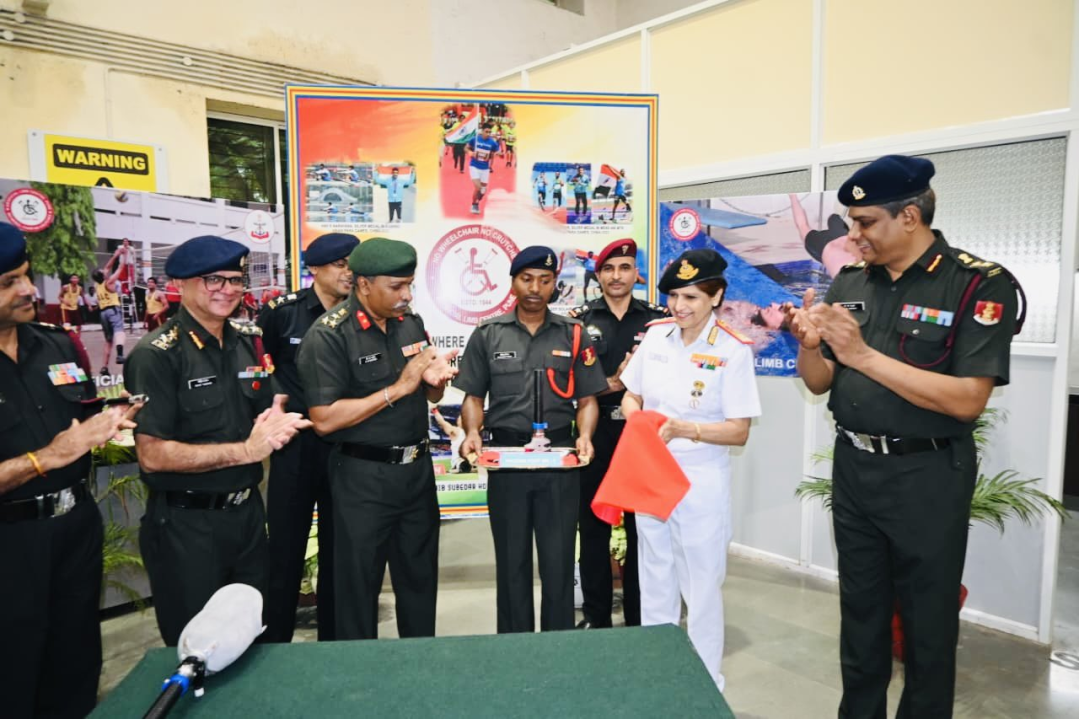
A major highlight of the programme was the unveiling of the Phoenix Foot Mk-I by Surg Vice Admiral Arti Sarin. Developed at the Artificial Limb Centre, the prosthetic innovation has been designed to help amputees negotiate diverse terrain and improve functional mobility in conditions that may be difficult to manage with conventional prosthetic options.
The Phoenix Foot Mk-I represents the Centre’s emphasis on indigenous solutions shaped by the practical demands of users. By drawing on clinical expertise, engineering capability and patient feedback, ALC Pune is working on prosthetic systems intended not just for controlled indoor use, but for real-world movement across varied environments. The objective is to give amputees greater confidence and independence in everyday mobility.
During the visit, the DGAFMS also interacted with patients undergoing treatment and rehabilitation at the Centre, as well as with their attendants. The interaction offered direct insight into patient experiences and into how the Centre’s medical support and technological interventions are affecting daily life during recovery and reintegration.
Surg Vice Admiral Arti Sarin also acknowledged the work of personnel who have shown exceptional dedication in their duties. She presented DGAFMS Appreciation Cards to deserving staff members in recognition of their contribution to patient care and rehabilitation services.
She commended Team ALC for its pursuit of excellence, innovation and compassionate care, and noted the Centre’s role in helping patients overcome mobility limitations and regain independence.
The Artificial Limb Centre in Pune has long held a specialised place in providing prosthetic, orthotic and rehabilitation support, particularly for serving and retired Armed Forces personnel who have suffered limb loss or mobility-related injuries. Its work combines medical rehabilitation with technology-driven solutions intended to restore function and help patients return to active, independent lives.
The DGAFMS visit highlighted a wider emphasis within the Armed Forces Medical Services on bringing indigenous technology, multidisciplinary healthcare models and advanced production methods into rehabilitation practice. In that context, initiatives such as Saksham, the use of 3D printing for customised devices, and the development of the Phoenix Foot Mk-I point to a rehabilitation approach that extends beyond the fitting of an artificial limb or assistive device.
The broader aim, as reflected in the Centre’s ongoing work, is to support individuals in regaining functional independence and adapting successfully to professional, social and everyday environments. Through a combination of innovation and compassionate medical care, Team ALC continues to pursue its mission of transforming disability into “SuperAbility”, helping patients move forward with greater mobility, dignity and confidence.


