
DGAFMS Surg Vice Admiral Arti Sarin Reviews AICTS Pune’s Advanced Cardiac Care, 3D Printing and VR Surgery Planning

Surgeon Vice Admiral Arti Sarin, Director General Armed Forces Medical Services (DGAFMS), visited the Army Institute of Cardio-Thoracic Sciences (AICTS) in Pune on August 11, 2026, to review the institute’s specialised cardiac and pulmonary care capabilities, with particular attention to its use of advanced technologies in complex treatment planning and its role in caring for Armed Forces beneficiaries.
During the visit, she interacted with doctors, nursing personnel, technicians, support staff and patients, and commended the AICTS team for what was described as exemplary commitment, professional excellence and dedication in delivering specialised care. Her review covered the institute’s broader clinical ecosystem, which brings together diagnosis, surgery, critical care and post-operative recovery within a dedicated cardiothoracic establishment.
AICTS is one of the Armed Forces’ premier institutions for the diagnosis and treatment of cardiovascular and thoracic conditions. In addition to advanced medical and surgical care, it contributes to training, research and the adoption of emerging technologies in military medicine, making it a key centre within the Armed Forces Medical Services’ specialised healthcare network.
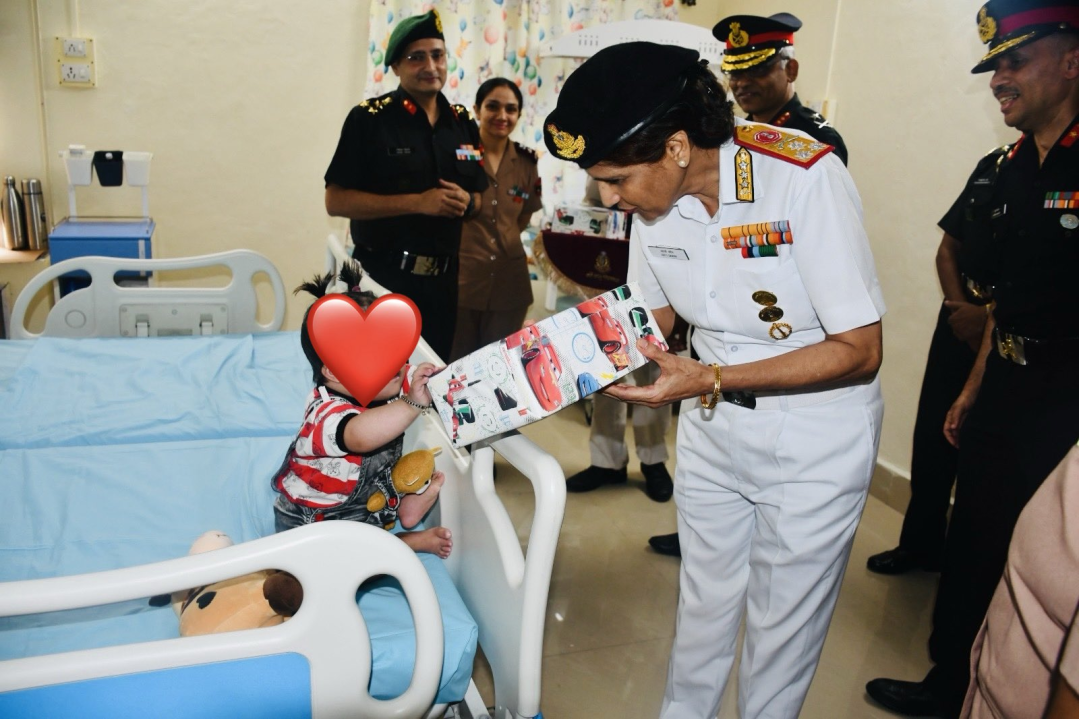
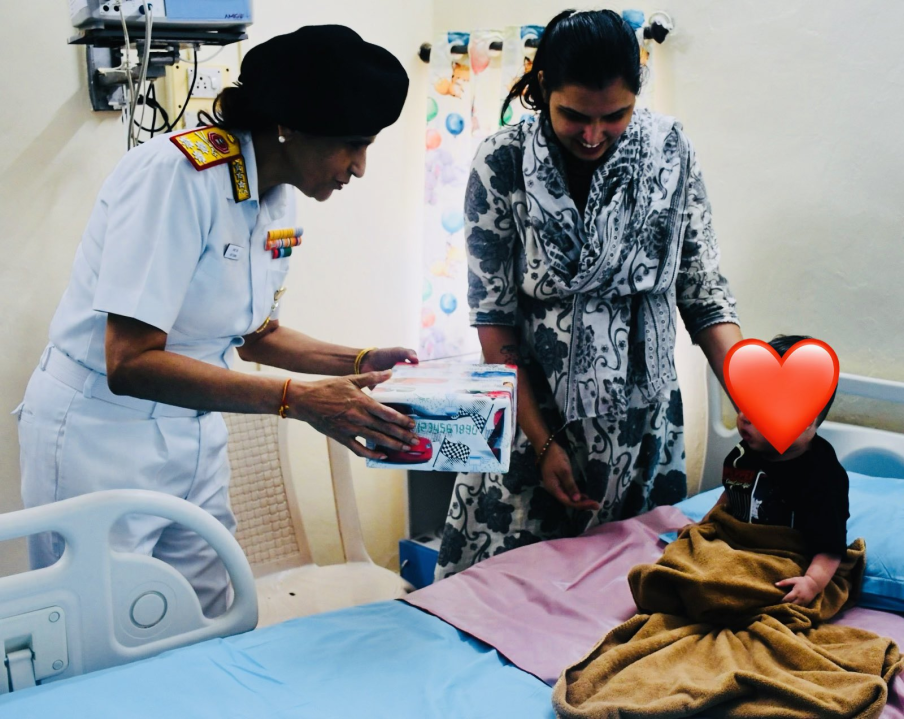
A major focus of Surg Vice Admiral Sarin’s visit was paediatric cardiac care. She met children who had successfully undergone complex cardiac surgeries at the institute and praised them for their courage, resilience and spirit through demanding procedures and recovery. The interaction brought attention not only to successful outcomes, but also to the highly specialised planning required in treating congenital and other complex heart conditions in children.
Paediatric cardiac surgery often presents distinctive challenges because of the small size of cardiac structures and the unique anatomy involved in individual cases. For that reason, detailed imaging and planning can be especially important before surgery. At AICTS, this has led to the incorporation of technologies such as 3D printing and Virtual Reality into pre-operative preparation for complex paediatric cardiac procedures.
Using 3D printing, anatomical data generated through medical imaging can be converted into physical models of complex cardiac structures. These models help specialists visualise abnormalities and better understand spatial relationships that may be difficult to fully interpret through conventional two-dimensional imaging alone. In difficult cases, that added clarity can support more precise planning before the patient enters the operating theatre.
Virtual Reality adds another layer to that process by allowing surgical teams to examine three-dimensional reconstructions of cardiac anatomy in an immersive environment. In particularly complicated cases, this can help surgeons study different operative approaches and gain deeper familiarity with the patient’s anatomy before undertaking the procedure itself.
The DGAFMS appreciated the institute’s effort to combine medical expertise with technological innovation, particularly in areas where careful pre-operative planning can influence the management of complicated cases. The use of 3D printing and Virtual Reality at AICTS also reflects a wider push within the Armed Forces Medical Services to employ advanced medical technologies to improve patient outcomes and integrate contemporary healthcare tools into routine clinical practice.
Her visit also highlighted the wider role of AICTS in sustaining a highly specialised healthcare system for Armed Forces personnel, their families and other authorised beneficiaries. Cardiac and pulmonary diseases frequently require coordinated treatment from multiple disciplines, including cardiologists, cardiothoracic surgeons, anaesthesiologists, intensivists, radiologists, nursing teams and rehabilitation specialists.
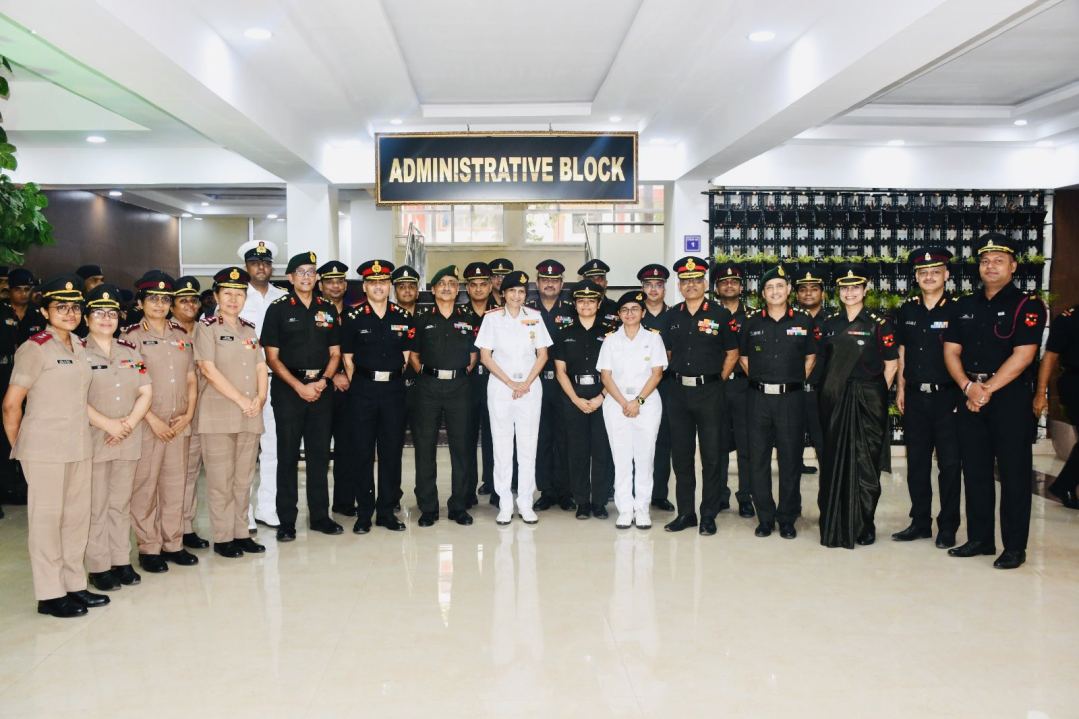
By concentrating these capabilities within a specialised institution, AICTS is able to provide coordinated care across the full treatment chain, from diagnosis and surgical intervention to intensive care support and recovery. Surg Vice Admiral Sarin’s interaction with the medical teams served as recognition of the people behind that system, underscoring that successful management of complicated cardiac and thoracic cases depends not just on surgeons, but on the coordinated work of numerous specialists and support personnel throughout a patient’s treatment journey.
Her meeting with children recovering from cardiac surgery also drew attention to the human side of advanced military healthcare. Alongside sophisticated equipment and complex surgical techniques, such treatment demands sustained nursing care, rehabilitation and emotional support for both patients and their families.
As DGAFMS, Surg Vice Admiral Arti Sarin heads the Armed Forces Medical Services and oversees the medical support system serving the Indian Army, Indian Navy and Indian Air Force. Her visit to AICTS formed part of the continuing focus on maintaining high standards in specialised healthcare, encouraging medical innovation and acknowledging the contribution of healthcare professionals across the three services.
The AICTS visit took place on the same day as her engagement with the Artificial Limb Centre in Pune, where she reviewed rehabilitation facilities and indigenous innovations in orthotics and prosthetics. Taken together, the two visits highlighted the breadth of specialised capabilities within the Armed Forces Medical Services, spanning advanced cardiothoracic surgery on one hand and rehabilitation and assistive technologies on the other.
The integration of 3D printing and Virtual Reality into paediatric cardiac surgery planning at AICTS is part of a broader transformation in modern military medicine, where technologies that improve precision, visualisation and personalised treatment planning are becoming increasingly important in handling difficult clinical cases. With its combination of specialised infrastructure, experienced medical personnel and advanced planning tools, AICTS continues to strengthen its role as an important centre for cardiac and pulmonary healthcare within the Armed Forces.
Surg Vice Admiral Sarin’s visit brought together both sides of that mission: the pursuit of clinical and technological excellence, and the emphasis on compassionate, patient-centred care for those undergoing complex and life-changing treatment.


