
Admiral Krishna Swaminathan Addresses Naval Higher Command Courses at Goa War College

Chief of the Naval Staff Admiral Krishna Swaminathan visited the Naval War College in Goa on August 24, 2026, where he addressed officers undergoing the 39th Naval Higher Command Course and the maiden Foreign Higher Command Course.
The interaction came as the Indian Navy continues to shape its senior leadership for a more complex maritime security environment. Speaking to the participants, Admiral Swaminathan said the Navy remains focused on national security and the protection of India’s maritime interests, while also undergoing a deliberate and continuous transformation to stay prepared for future challenges.
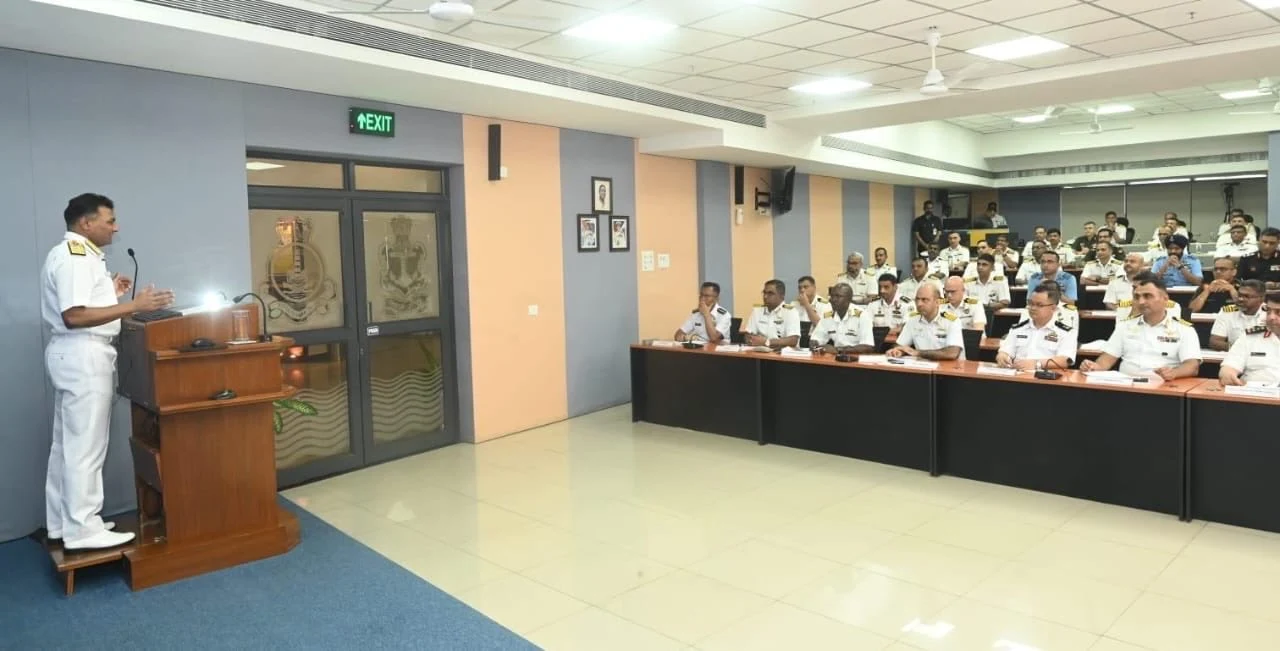
He told the officers that future naval leaders must be ready to understand emerging operational problems and adapt to the changing nature of warfare. At the same time, he urged them not to lose sight of their present responsibilities, stressing that professional development for future operations must go hand in hand with a strong grip on core tasks.
In a concise set of leadership priorities, the CNS asked the officers to “Focus on Core, Train for Future, Fight Integrated, Lead by Example, and be Outcome Oriented.” Those principles, as conveyed during the address, framed the Navy’s expectations from officers preparing for higher command responsibilities.
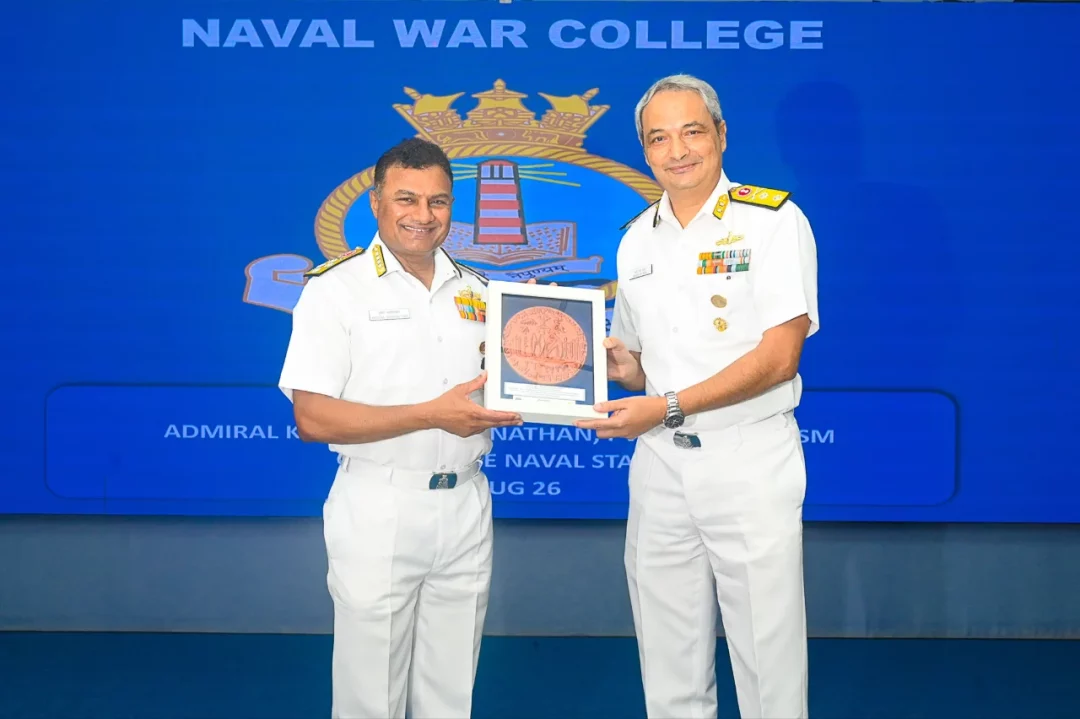
Much of the discussion also centred on integrated operations, which the Navy sees as increasingly important in contemporary warfare. The officers were encouraged to build a wider operational outlook and improve their ability to work across domains and services, reflecting the growing emphasis on jointness and coordinated use of military capabilities.
Admiral Swaminathan also underlined the importance of leadership by example. He pointed to professional competence, integrity and personal conduct as essential qualities that shape effective military leadership, especially at senior levels where decisions and behaviour set the tone for the force.
The maiden Foreign Higher Command Course gave the engagement an international dimension. According to the interaction described, it offered participating foreign officers an opportunity to exchange perspectives and gain insight into India’s maritime security outlook as well as its approach to professional military education.
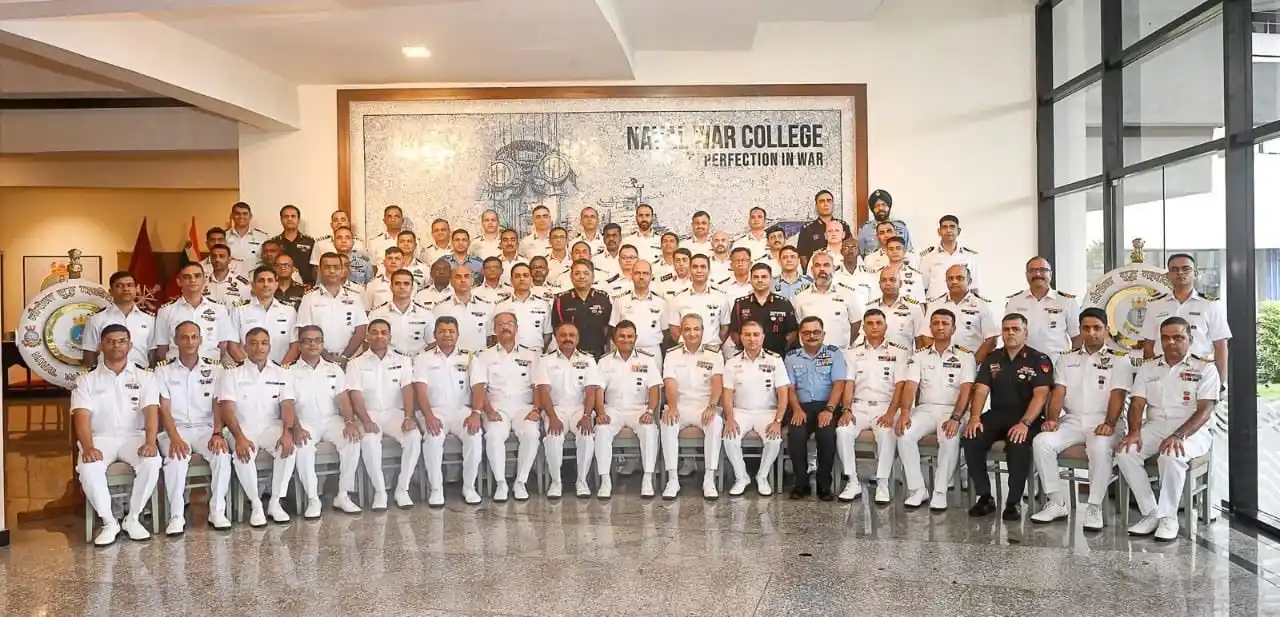
The visit also reaffirmed the Naval War College’s role in preparing senior officers for higher command and in developing the strategic thinking required for maritime security decision-making. By engaging with both the 39th Naval Higher Command Course and the first Foreign Higher Command Course, the Chief of the Naval Staff highlighted the Navy’s focus on building leaders who can combine operational proficiency, strategic judgement, integrated warfighting and decisive command in support of India’s maritime interests.


