
Lt Gen Rajesh Pushkar Evaluates Battle Axe Division's Preparedness, Honors 1971 War Heroes at Longewala

Lieutenant General Rajesh Pushkar, AVSM, VSM, who commands the Southern Command, conducted a visit to the Jaisalmer Military Station. The purpose was to assess the operational readiness, technological advancements, and capability enhancement initiatives of the Battle Axe Division. This visit underscores the Indian Army's persistent focus on enhancing combat readiness by incorporating technological innovations, modern training methods, and infrastructure improvements, while also honoring the legacy of its battlefield heroes.
During his visit, the Army Commander received an in-depth overview of the division's operational duties, preparedness, and ongoing initiatives to boost combat capabilities. Senior commanders elaborated on the strategies implemented to ensure high levels of operational readiness through realistic training, ongoing capability development, and integrating advanced technologies into military operations.
Lt Gen Rajesh Pushkar examined several vital operational facets of the formation, which included innovative training methodologies aimed at preparing troops for modern warfare's evolving landscape. The briefing highlighted how the Battle Axe Division has embraced technology-driven learning, simulation exercises, and mission-oriented training to enhance the operational skills and decision-making abilities of its personnel.
The Army Commander also evaluated the ongoing infrastructure development projects across the division. These efforts aim to improve operational efficiency, troop welfare, and training facilities, forming part of the Indian Army's broader modernization strategy to keep frontline formations agile, self-reliant, and responsive to emerging security threats.
A significant element of the visit was Lt Gen Pushkar's inspection of the formation's Centre of Excellence and Drone & Robotics Lab. These facilities lead the Army's initiatives to integrate emerging technologies into military operations, offering soldiers exposure to unmanned systems, robotics, AI-enabled applications, and modern battlefield innovations.
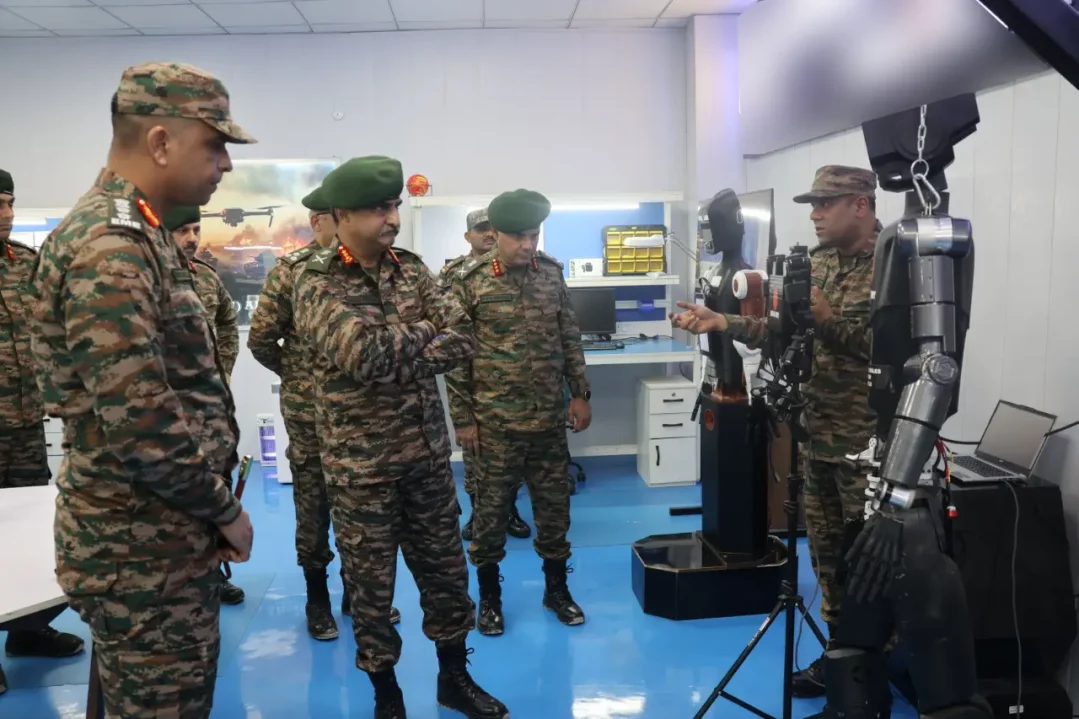
The Army Commander praised the division's adoption of technology as a force multiplier and advocated for continuous refinement of modern warfare capabilities. He emphasized that future battlefields will increasingly be defined by technological superiority, rapid adaptation, and the effective integration of autonomous systems, making innovation crucial for operational success.
Stressing the importance of ongoing learning and experimentation, Lt Gen Pushkar urged commanders and troops to remain committed to adopting new technologies that improve situational awareness, operational flexibility, and combat effectiveness. He observed that investments in drone technology, robotics, and advanced training infrastructure will greatly enhance the Army's readiness for multidomain operations.
During his Jaisalmer visit, the Army Commander also honored the brave soldiers of the historic Battle of Longewala from the 1971 Indo-Pak War. At the Longewala Yudh Sthal, he paid tribute to the Bravehearts whose courage and determination became a defining chapter in India's military history.
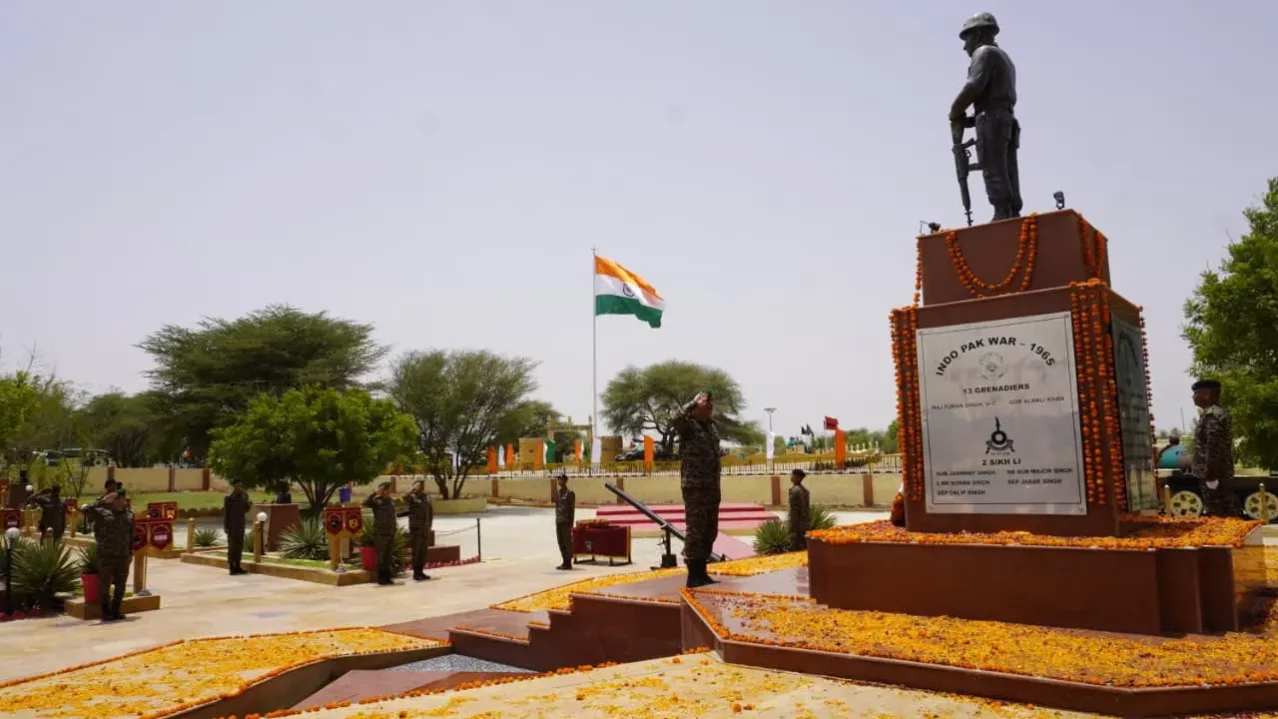
The Battle of Longewala stands as one of the Indian Army's most celebrated triumphs, where a small contingent of Indian soldiers successfully defended a vital post against a much larger Pakistani armored force. Their extraordinary bravery, alongside timely air support from the Indian Air Force, played a critical role in securing India's western frontier during the 1971 conflict.
In remembrance of the sacrifices made by these Bravehearts, Lt Gen Rajesh Pushkar saluted their unparalleled bravery and selfless service, noting that their legacy continues to inspire generations of soldiers. He emphasized that the values of courage, duty, and sacrifice demonstrated during the Battle of Longewala are deeply embedded in the Indian Army's ethos.
Interacting with officers, Junior Commissioned Officers, and soldiers of the Battle Axe Division, the Army Commander commended their professionalism, dedication, and commitment to maintaining high operational standards. He acknowledged the formation's sustained focus on technological innovation, capability enhancement, and mission-oriented training, which collectively bolster combat effectiveness.
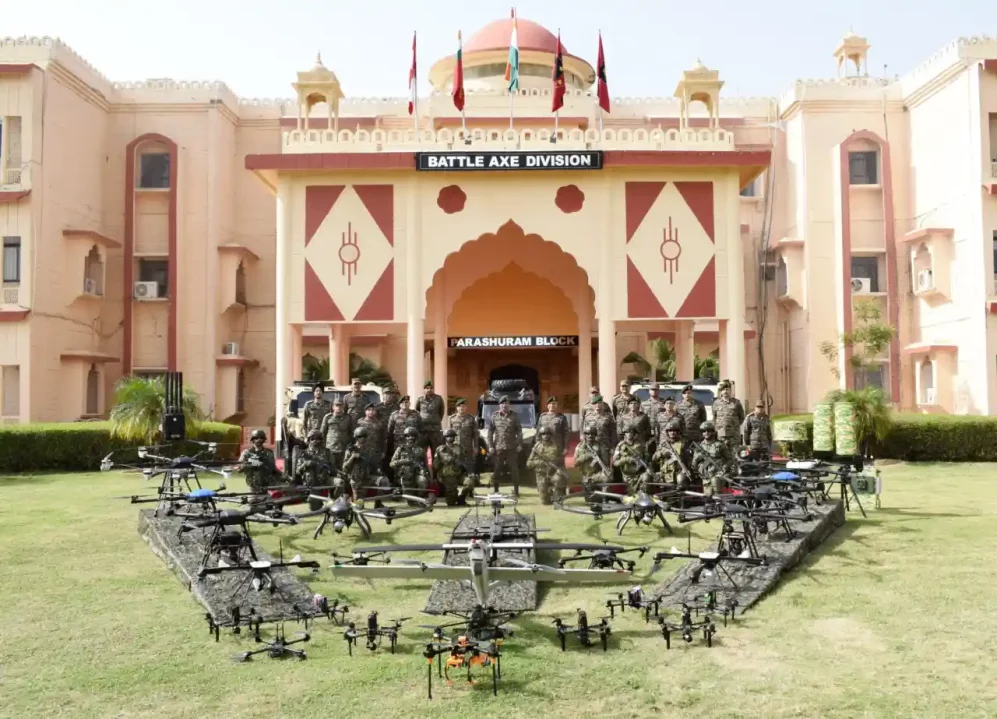
Recognizing exceptional performance, Lt Gen Pushkar presented On-the-Spot Commendations to select personnel for their exemplary service and contributions. These commendations reflected the Army's tradition of acknowledging excellence and encouraging soldiers who consistently exhibit exceptional dedication to duty.
In his address to the troops, the Army Commander encouraged all ranks to embrace emerging technologies, innovation, and modern force multipliers to effectively address contemporary warfare's evolving challenges. He stressed that future military success will rely on not only physical endurance and tactical skills but also technological adaptability, continuous learning, and professional excellence.
The visit reaffirmed Southern Command's commitment to developing a technologically advanced, operationally agile, and future-ready force capable of addressing both conventional and emerging security threats. By combining state-of-the-art technological innovation with realistic training, infrastructure modernization, and the enduring legacy of its military heritage, the Battle Axe Division continues to stand as a highly capable and combat-ready formation within the Indian Army.


