Lieutenant Colonel Amol Todkar Leads MCTE Team to Victory at International Resilient AI Challenge in Geneva

A team from the Military College of Telecommunication Engineering, under the leadership of Lieutenant Colonel Amol Todkar, has achieved global recognition for the Indian Army by winning the International Resilient AI Challenge.
The MCTE team excelled in the Audio-to-Text Model Compression track by developing a superior compressed version of a Mistral AI model. Their solution effectively balanced energy efficiency and accuracy, surpassing submissions from participants worldwide.
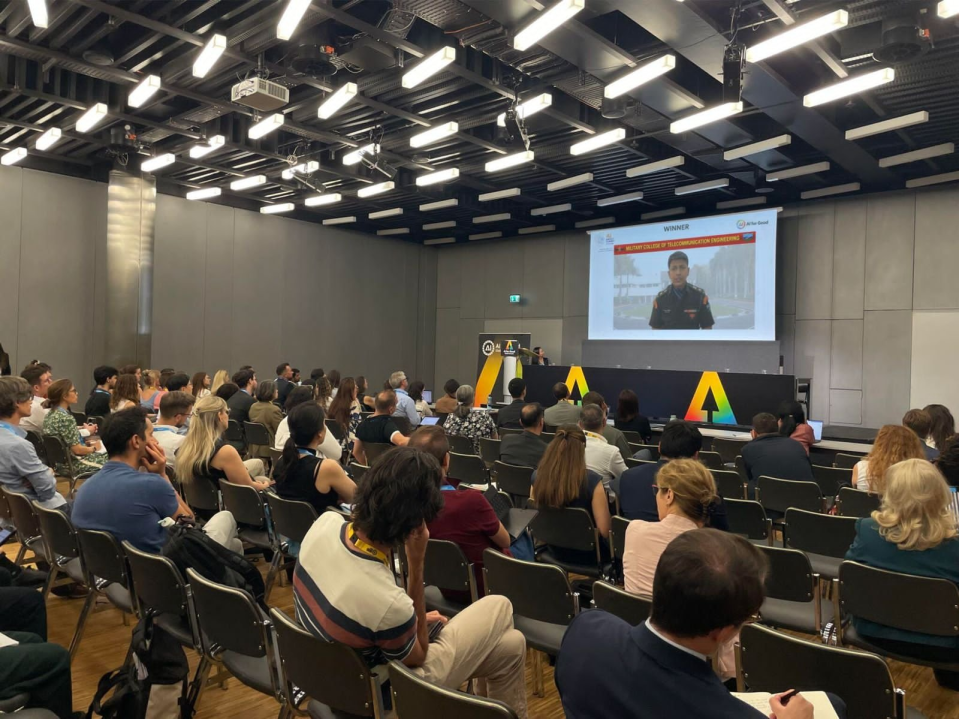
The announcement of the winners took place during a ceremony in Geneva, Switzerland, on July 8, 2026, as part of the AI for Good Global Summit. This international summit, organized by the International Telecommunication Union in collaboration with over 50 United Nations partners, was hosted by the Swiss Confederation at Geneva’s Palexpo convention centre from July 7 to 10.
In the Audio-to-Text Model Compression category, the MCTE team faced the challenge of reducing the size and energy consumption of an AI model while maintaining its ability to accurately transcribe spoken audio into text.
The Indian Army team successfully produced the most efficient compressed Mistral AI model in the competition, proving that advanced AI systems can be optimized to use fewer resources without sacrificing performance.
According to the Army Training Command, the team, led by Lieutenant Colonel Amol Todkar, emerged as the global winner in their competition track.
This achievement is particularly noteworthy as large AI models typically require significant computing power, memory, and electricity. Compressing such models allows them to function on devices and systems with limited processing capabilities, such as mobile platforms and edge-computing systems in remote or resource-limited environments.
By reducing the size and computational demands, developers can decrease an AI model's energy consumption, enhance processing speed, and broaden its accessibility.
The International Resilient AI Challenge gathered participants aiming to innovate ways to make AI systems more sustainable, efficient, and accessible.
This initiative was jointly organized by the governments of India and France, the United Nations, and the IndiaAI Mission, with support from technology organizations, including Google, Mistral AI, and Sarvam AI.
The competition addressed the growing need to lower the environmental and computational costs of powerful AI systems.
Participants were tasked with optimizing selected AI models while maintaining high accuracy and performance. The challenge highlighted that AI development should focus not only on increasing model sizes but also on efficient resource utilization.
The MCTE team's winning solution achieved the best balance between energy efficiency and model accuracy in the Audio-to-Text Model Compression track.
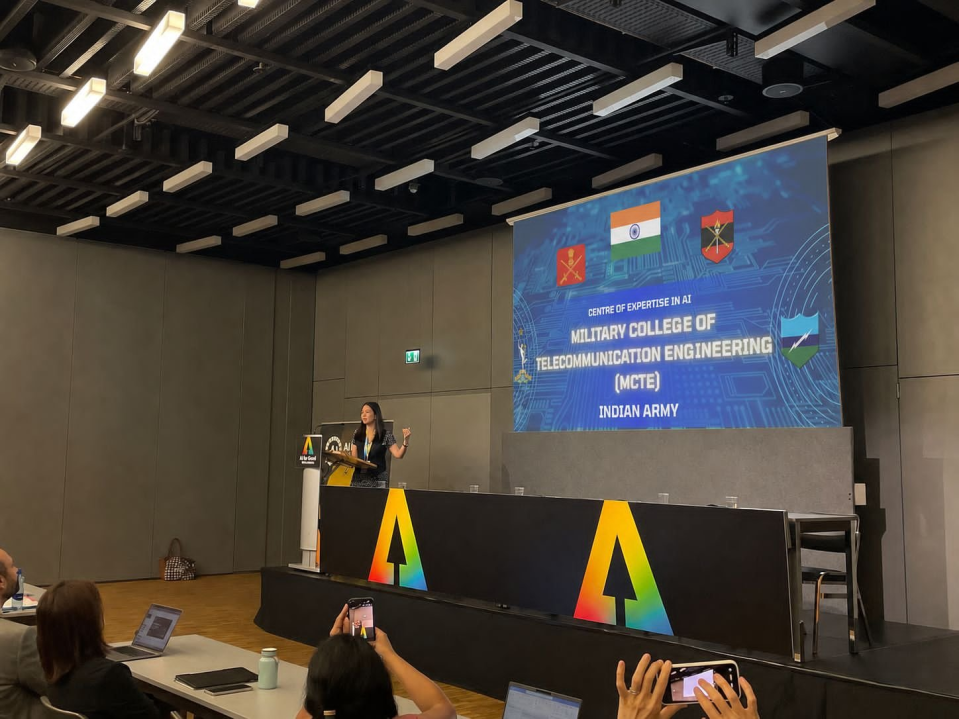
The winners were celebrated at the AI for Good Global Summit in Geneva, a leading platform within the United Nations system for discussions on the responsible use of artificial intelligence.
The summit, spearheaded by the International Telecommunication Union, brings together representatives from governments, industry, academia, civil society, and the international technical community to explore AI’s role in sustainable development and global problem-solving.
Three teams from India, France, and China were recognized among the winners of the Resilient AI Challenge:
| The Wavestone Wavelets from France |
| The MCTE Team from India |
| Team LiteMind from China |
Their solutions showcased varied approaches to enhancing the energy efficiency of AI models while ensuring robust operational performance.
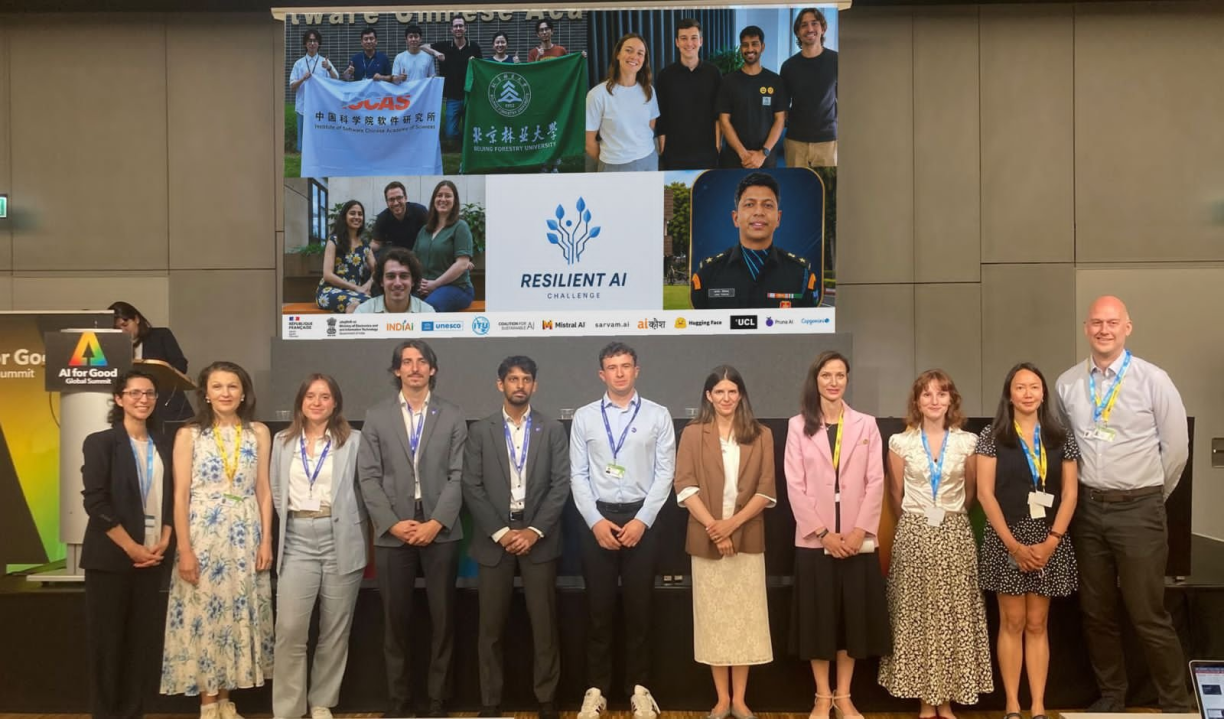
The global victory represents a significant technological milestone for the Indian Army, highlighting an increased focus on artificial intelligence, machine learning, communication systems, and emerging defense technologies.
The Military College of Telecommunication Engineering, one of the Indian Army's premier technical training institutions located in Mhow, Madhya Pradesh, educates personnel in military communications, IT, electronic warfare, cyber operations, and other advanced technological areas.
MCTE also plays a crucial role in studying and developing emerging technologies to meet the Army's future operational needs.
The institution’s triumph in an international AI competition demonstrates that military technical establishments are not only adopting new technologies but are also contributing to their development and optimization.
This achievement is particularly relevant as modern armed forces increasingly rely on AI-enabled systems for intelligence analysis, communications, surveillance, logistics, decision support, and autonomous platforms.
The rapid advancement of artificial intelligence has resulted in the creation of larger, more complex models that, while capable of complex tasks, require powerful infrastructure and consume significant energy.
Model compression aims to tackle this challenge by minimizing an AI system's size and complexity while retaining as much original performance as possible.
Compressed models require less memory, deliver faster results, and can function on smaller devices. They can be used in environments where large data centers or high-capacity networks are unavailable.
For military organizations, such capabilities support the deployment of AI systems in forward areas, mobile command centers, tactical platforms, and locations with limited computing or communication infrastructure.
Audio-to-text systems, specifically, can facilitate tasks like transcription, voice-enabled interfaces, multilingual communication, information processing, and converting spoken operational inputs into searchable digital records.
The MCTE team’s solution demonstrated the efficiency of such a model while maintaining the necessary accuracy for practical application.
India's victory arrives as the country expands its role in global discussions on responsible and inclusive artificial intelligence.
Through initiatives like the IndiaAI Mission, India seeks to bolster AI research, infrastructure, innovation, skills, and applications for national needs.
International collaborations involving governments, tech companies, and UN institutions are expected to ensure AI systems are powerful, sustainable, accessible, and capable across diverse environments.
The Resilient AI Challenge aimed to encourage efficient AI development rather than simply creating larger models.
The success of Lieutenant Colonel Amol Todkar’s team is a testament to MCTE’s history of technological education and innovation.
Securing the top position against international competitors, the team demonstrated expertise in model optimization, artificial intelligence, and energy-efficient computing.
The achievement reflects the Indian Army's broader transformation as it enhances its capabilities in digital technologies, cybersecurity, communications, and AI.
The team’s performance in Geneva underscores the importance of providing military personnel with advanced technical education and opportunities to engage in international innovation platforms.
Thus, the MCTE team’s global victory is more than just a competition result. It marks India’s growing contribution to developing smarter, more sustainable, and accessible artificial intelligence.
By delivering the top-performing compressed model in its category, Lieutenant Colonel Amol Todkar and his team have gained international acclaim while showcasing the technological prowess of the Indian Army on a global stage.