Indian Army's Strategic Use of Bactrian Camels in High-Altitude Operations

The Bactrian camel, identified by its two humps, is a striking example of evolutionary adaptation to harsh climates. Indigenous to the cold and arid regions of Central Asia, this species has been utilized by humans for thousands of years, serving various purposes from transportation to resource provision. In modern times, the Bactrian camel has gained a unique role in military settings, particularly with the Indian Army. This article delves into the biological and ecological features of the Bactrian camel, while also exploring the strategic reasons for its use by the Indian Army in high-altitude border zones.
Characteristics and Biology of the Bactrian Camel
The Bactrian camel (Camelus bactrianus), also known as the Mongolian camel or domestic two-humped camel, is a large even-toed ungulate in the Camelidae family. It differs from the single-humped dromedary camel in both structure and habitat preference. Adult Bactrian camels typically measure between 2.25 and 3.45 meters in length, with a tail length of 0.35 to 0.55 meters, and stand around 2.13 meters tall at the shoulder. Their weight ranges between 650 and 1,500 pounds, with males generally being larger.
One of their key features is the pair of humps, which store fat reserves rather than water, providing energy during times of scarcity. These humps allow the camel to survive long periods without food by converting stored fat into metabolic water and energy. Their thick, woolly coat provides insulation against extreme temperature changes, from summer heat over 38°C to winter cold below -40°C. Additional adaptations include closable nostrils, bushy eyebrows, and long eyelashes to protect against sand, as well as broad, padded feet designed for moving over soft ground. Uniquely, Bactrian camels have oval-shaped red blood cells, which aid blood circulation during dehydration.
Bactrian camels are herbivores, feeding primarily on grasses, leaves, and shrubs, and can drink saline water that other animals avoid. Their unique gait, moving both legs on one side simultaneously, gives them a characteristic swaying motion, earning them the nickname "ships of the desert." In the wild, the critically endangered wild Bactrian camel (Camelus ferus) is found in remote areas of Mongolia and China, while the domestic variant is widely used for wool, meat, milk, and as a pack animal.
Habitat and Historical Domestication
Originating from the steppes and deserts of Central Asia, including regions like Mongolia, Kazakhstan, and parts of China, the Bactrian camel is well-suited to environments with low rainfall and extreme climate variability. Domesticated approximately 4,000 years ago, these camels facilitated trade along the ancient Silk Road by transporting goods across extensive, inhospitable distances. Today, domestic populations are primarily found in Asia, where they continue to support pastoral economies through their resilience and minimal maintenance needs.
The Indian Army's Utilization of Bactrian Camels
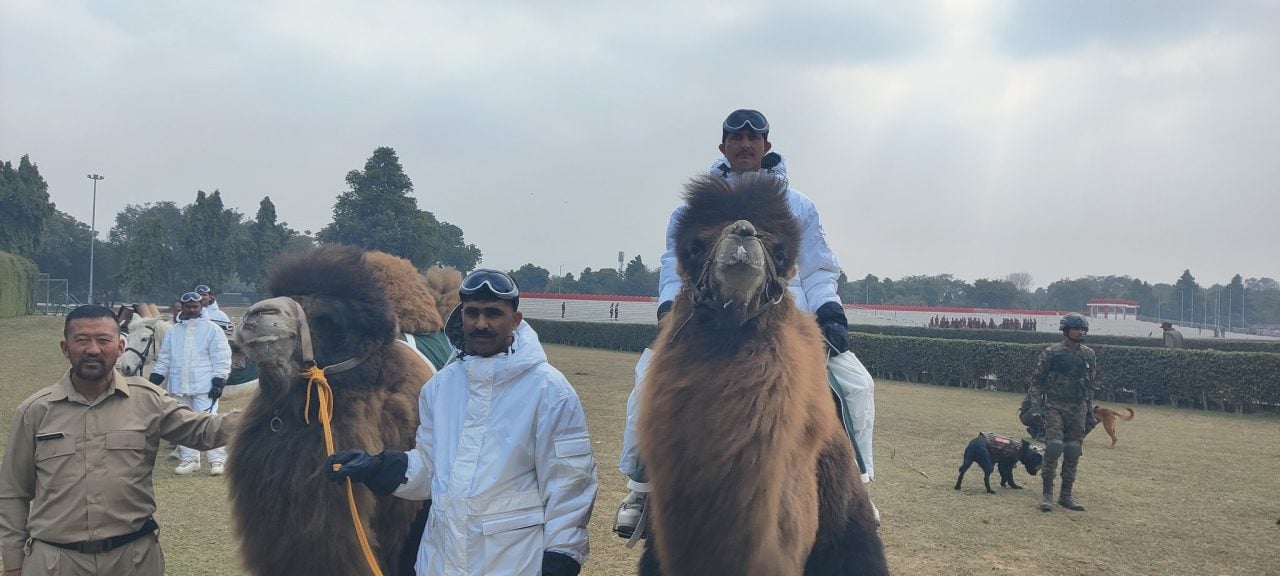
The Indian Army has incorporated Bactrian camels into its operations, especially in the demanding terrains of Ladakh and Eastern Ladakh along the Line of Actual Control (LAC) with China. This strategy addresses the logistical challenges of high-altitude warfare, where conventional vehicles struggle with the rugged terrain, thin air, and extreme weather conditions.
Exceptionally suited for these conditions, Bactrian camels can operate at elevations up to 14,000 feet while carrying loads of 150 to 200 kilograms. Their ability to traverse sandy, snowy, or uneven ground with minimal environmental impact makes them ideal for "last-mile delivery" of essential supplies, including food, ammunition, medical kits, and surveillance equipment. Unlike mechanized transport, camels do not require fuel and their dung can be used as an eco-friendly fuel source, aligning with sustainable military practices in delicate ecosystems.
The initiative began with trials in the early 2020s, leading to their official induction by the Army's Remount Veterinary Corps in 2025. Camels are trained for mounted patrols, enhancing border security in areas where human endurance is challenged by hypoxia and cold. Drawing from historical precedents like their use in Silk Road caravans, they are now adapted for modern defense needs. Notably, Bactrian camels will be featured in India's Republic Day parade in 2026, highlighting their elite status within the Army's animal contingent.
Conclusion
The Bactrian camel stands as a testament to nature's ability to adapt to adversity, with its physical characteristics enabling survival in some of the world's harshest habitats. For the Indian Army, these qualities translate into a strategic advantage, enhancing operational effectiveness in high-altitude regions. As geopolitical tensions continue in areas like Ladakh, the sustained use of Bactrian camels highlights the importance of combining traditional resources with modern military strategies to ensure resilience and sustainability in defense operations.