
Indian Army Specialists Conduct Life-Saving Bronchoscopy on Infant to Remove LED Bulb from Lung in Pune

Pune, May 29, 2026 — In a standout example of medical expertise and emergency intervention, doctors at the Army Institute of Cardio-Thoracic Sciences (AICTS) in Pune successfully performed a lifesaving procedure on a nine-month-old infant. The team expertly extracted a dangerous LED bulb with corrosive wires from deep within the child's left lung airway.
The intricate bronchoscopic technique not only stabilized the child's breathing but also averted the necessity for extensive lung surgery. The Southern Command of the Indian Army stated that the foreign object posed a significant threat, lodged in the left lung airway, with the potential risk of airway collapse and fatal complications.
It was reported that the infant had accidentally ingested the small red LED bulb, a seemingly harmless household item that turned perilous once inside the airway. The bulb's attached corrosive wires heightened the hazard, threatening tissue damage, infection, breath obstruction, and potential lung collapse.
In infants, foreign-body aspiration is particularly critical due to their narrow airways and limited breathing reserves. Even minor obstructions can quickly escalate to wheezing, coughs, respiratory distress, infections, or lung damage. The LED bulb had moved deep into the left bronchial passage, making timely intervention crucial.
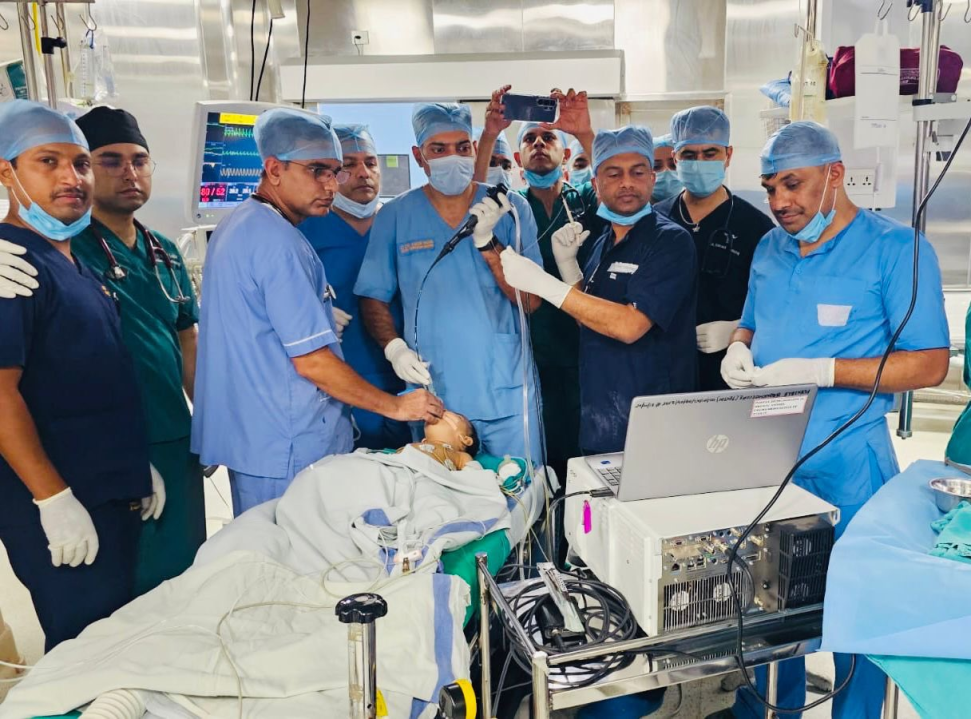
The AICTS medical team, part of the Armed Forces Medical Services, promptly chose bronchoscopy, a minimally invasive method to address airway conditions. This procedure involves passing a slim tube with a camera through the nose or mouth to visualize and retrieve obstructions without surgical intervention.
The procedure was notably challenging given the infant's small airway size, the location of the object, and the risk of the corrosive wires causing tissue damage during removal. Any mishandling could have exacerbated the situation, leading to obstruction or airway trauma.
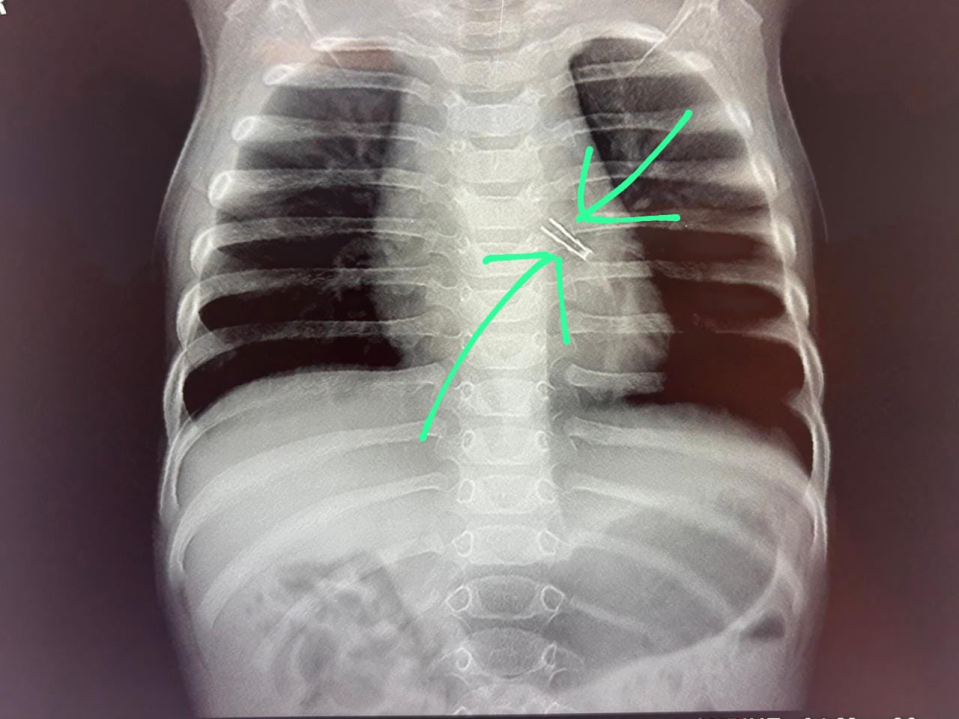
Despite the complexities, the medical team successfully extracted the LED bulb and wires with precision. Subsequent examinations confirmed the complete removal of the object, with no immediate complications observed. The infant's breathing returned to normal, marking a successful resolution to a potentially deadly situation.
The Indian Army released radiographic images before and after the procedure, alongside a photo of the retrieved LED bulb, earning accolades for the medical team's skill and prompt action. The Army's efforts in saving the child's life were widely acknowledged on social media.
This incident underscores the need for vigilance among parents and caregivers. Small objects like toy parts, coins, and items with wires can pose severe threats to young children. Infants and toddlers often explore by mouthing objects, making constant supervision crucial.
Experts advise that items containing batteries, chemicals, or sharp edges are especially hazardous, as they can cause rapid internal damage. In suspected cases of choking, sudden coughing, or breathing difficulties after handling such objects, immediate medical intervention is imperative.
The successful procedure at AICTS Pune highlights the critical role of specialized pediatric bronchoscopy and the advanced medical capabilities available through the Armed Forces Medical Services. It reaffirms AICTS's status as a leader in addressing complex thoracic emergencies.
What began as a terrifying household accident concluded as a testament to medical proficiency, teamwork, and swift action. For the infant and their family, the expertise of the AICTS Pune doctors turned a potentially tragic situation into a recovery success story.


