Indian Air Force to Survey Officer Interest in Civil Services Exam Support

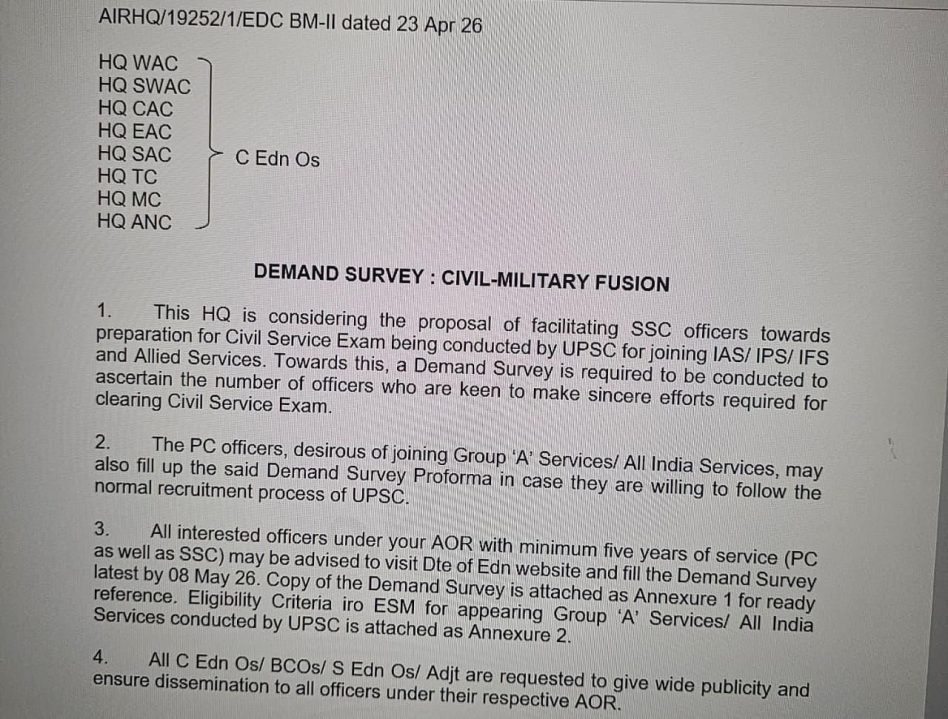
New Delhi, May 5, 2026 — The Indian Air Force has initiated a survey to evaluate the interest among its officers in preparing for the Union Public Service Commission (UPSC) Civil Services Examination, marking a step towards supporting those aspiring to transition into civil services.
A letter distributed to all Air Force commands has directed a thorough survey to gauge the interest of officers, specifically those with a minimum of five years of service, in preparing for the examination that recruits for the Indian Administrative Service (IAS), Indian Police Service (IPS), Indian Foreign Service (IFS), and other Group ‘A’ services. This initiative represents a notable shift in institutional mindset, acknowledging that many officers might opt for second careers in administration after their military service.
Sources within the Air Force confirm consideration of a proposal to provide targeted facilities to Short Service Commission (SSC) officers for UPSC preparation. The main aim is to support those intending to pursue careers in civil administration following their military service. Permanent Commission officers are also encouraged to participate in the survey, although they would need to pass the UPSC examination through the standard recruitment process applicable to all candidates.
The survey form, which officers have been requested to fill out, aims to assess the level of interest and potential demand. Specific facilities such as study leave, coaching access, library resources, or dedicated preparation time have not yet been announced. Decisions regarding the type and extent of support will be made after analyzing the survey results. This approach allows the Air Force to tailor future policy to actual needs without affecting operational commitments.
This initiative comes at a time when transitioning between armed forces and civil services is becoming more accepted. SSC officers in the Indian Air Force generally serve a tenure of 10 to 14 years, after which many seek long-term opportunities outside of military service. The Civil Services Examination is a respected career path in India, offering administrative roles, policy influence, and structured career progression.
UPSC regulations already offer certain relaxations for ex-servicemen, such as age concessions up to five years under specific conditions and additional attempts in certain categories. By exploring preparatory support while officers are still in service, the Air Force aims to alleviate the personal and financial strains associated with competitive exam preparation and facilitate smoother career transitions.
This development also highlights the recognition that retaining talent and maintaining morale requires offering robust post-service options. Officers with leadership, discipline, crisis management, and expertise in fields like aviation and logistics could bring valuable insights to civil administration.
If implemented, the proposed facilities might include study leave, access to coaching, curated study material, and potentially reduced operational duties during critical preparation phases. These measures would emulate successful models adopted by state governments and public sector organizations supporting employees preparing for competitive exams.
For current officers, this initiative provides an opportunity to plan their careers with greater clarity. Those who pass the UPSC examination might join the civil services with the added advantage of prior leadership experience, potentially enhancing civil-military synergy in governance.
Organizationally, the Air Force could benefit from improved retention among officers who feel their long-term career aspirations are acknowledged. However, the service will need to balance any preparatory support with maintaining operational readiness. The survey outcomes will be crucial in determining whether the demand justifies dedicated resources without compromising military functions.
The demand survey is an initial step that could evolve into a formal policy framework. If substantial interest is shown, Air Force Headquarters is expected to draft detailed guidelines in consultation with stakeholders. The timeline for any final decision will depend on the survey findings and internal discussions.
This development highlights the changing nature of career paths within India’s defense services. As the armed forces focus more on talent management and officer well-being, initiatives supporting diverse post-service aspirations are likely to gain momentum.
Officers interested in participating should complete the survey forms distributed through official channels promptly. For updates, personnel are encouraged to consult official Air Force communications.
The Indian Air Force’s effort to explore structured support for civil services preparation indicates a progressive approach balancing institutional priorities with individual career ambitions. As the survey unfolds, it will be closely monitored by serving officers, defense aspirants, and policy observers for its potential to set a precedent across the armed forces.