
Heroic Aviation Crisis Management: Group Captain Abhimanyu Singh's Gallant Response to Su-30MKI Emergency

In military aviation, emergencies can arise in moments, requiring quick and composed decision-making from the flight crew. An incident on the night of November 21, 2024, put this to the test when Wing Commander Abhimanyu Singh, now Group Captain, faced a critical in-flight emergency while piloting a Su-30MKI fighter jet for the Indian Air Force.
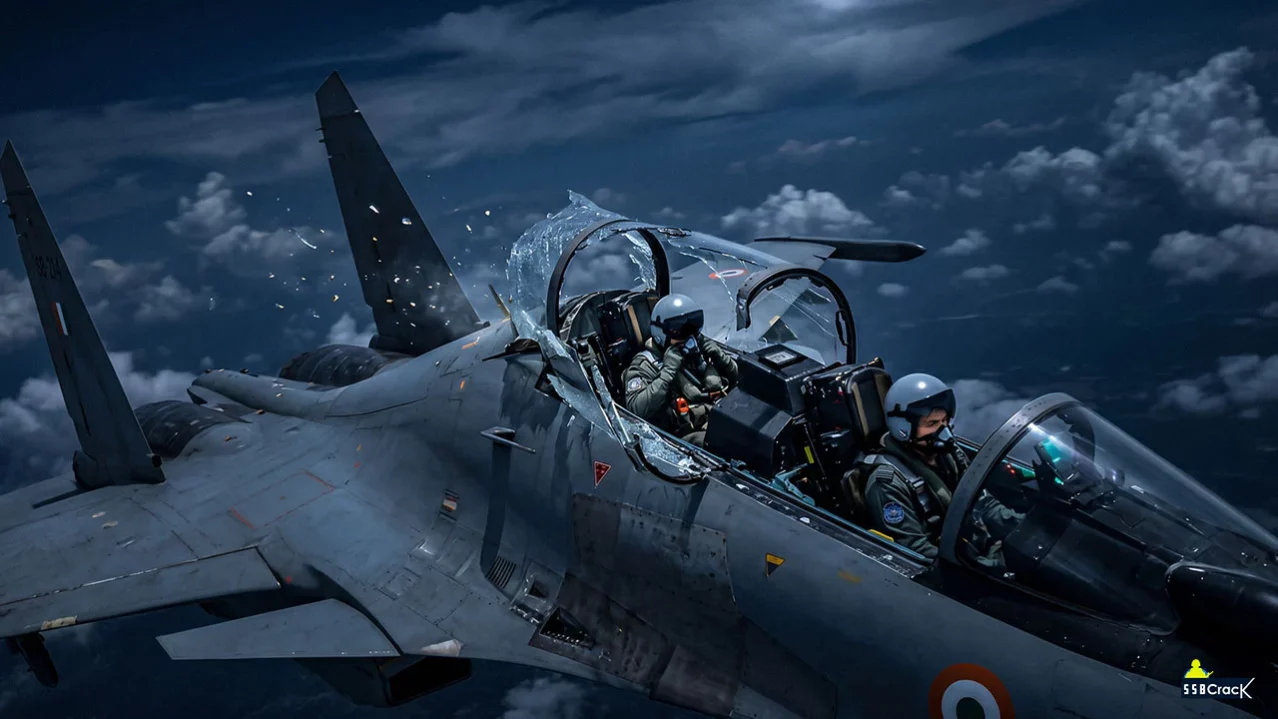
During this night training mission, the aircraft's rear canopy shattered, causing a sudden and violent decompression in the cockpit. Despite being injured by the fragments and experiencing bleeding, Singh managed to maintain control of the aircraft, ensure the trainee pilot's safety, and safely bring the damaged fighter back to base.
His actions earned him the Shaurya Chakra, India’s third-highest peacetime gallantry award, recognizing his bravery, flying proficiency, and dedication to duty.
A Night Training Sortie That Turned Into an Emergency
On November 21, 2024, Wing Commander Abhimanyu Singh was tasked as the captain for a training flight aimed at evaluating a trainee pilot. The mission involved flying the Su-30MKI, a key multirole fighter aircraft of the Indian Air Force.
Night flying is one of the most challenging aspects of fighter operations, requiring intense concentration, proficiency in instrument flying, and seamless crew coordination. During this sortie, the situation escalated unexpectedly as the trainee attempted a complex maneuver.
The rear canopy of the Su-30MKI fractured, leading to an explosive decompression, creating a hazardous emergency for both pilots aboard.
Injured by Canopy Fragments
The breaking canopy sent fragments into the cockpit, injuring Singh with physical trauma and causing bleeding. This environment posed multiple challenges, with communication potentially hindered and control of the aircraft more difficult, all heightened by the nighttime conditions.
Yet, despite these challenges, Singh remained focused, assessing the situation quickly and acting decisively to handle the emergency.
Taking Manual Control of the Aircraft
With the canopy compromised, Singh took manual control of the Su-30MKI, prioritizing stabilizing the aircraft and ensuring the trainee pilot's safety. Managing a damaged fighter jet requires both technical expertise and practical flying skills, as the pilot must evaluate the aircraft's condition, control its descent, and avoid hazardous areas.
Singh demonstrated his professional competence and presence of mind, managing these tasks despite his injuries.
Saving the Trainee Pilot and the Aircraft
Singh's prompt response was crucial in saving the trainee pilot's life and safely recovering the aircraft. Given the Su-30MKI's importance in the Indian Air Force's fleet, his actions also prevented the loss of a significant national asset.
Additionally, his adept handling of the situation minimized risk to civilians on the ground, demonstrating the broader implications of his actions beyond just the cockpit.
Awarded the Shaurya Chakra
For his bravery and commitment to duty, Singh was honored with the Shaurya Chakra, awarded for acts of gallantry not involving direct combat. His name featured in the official gallantry awards list sanctioned by the President of India in August 2025, and the award was presented by President Droupadi Murmu during the Defence Investiture Ceremony in 2026.
The award citation highlighted his calm, skilled, and decisive response in a life-threatening situation.
Importance of Calm Decision-Making in Fighter Aviation
This incident underscores the critical role of discipline, training, and swift decision-making in fighter aviation. Pilots frequently operate in high-stakes environments where emergencies can occur unexpectedly.
The outcome often hinges on the pilot's ability to remain composed and effectively apply their training under pressure, as exemplified by Singh's professional management of the crisis.
His response was not only an act of individual bravery but also reflected his responsibility to the trainee, the aircraft, and the safety of those on the ground.
A Professional Example for Young Officers
Group Captain Abhimanyu Singh's experience serves as an essential example for young officers and defence aspirants, illustrating that courage in the armed forces extends beyond combat scenarios. It manifests in emergencies requiring an officer to take decisive action and responsibility.
On November 21, 2024, faced with a critical emergency in a damaged Su-30MKI, Singh remained composed, took command, and ensured a safe return.
The Shaurya Chakra acknowledges his courage, skill, and dedication, highlighting the professionalism of Indian Air Force pilots who operate under demanding conditions daily.
Conclusion
Group Captain Abhimanyu Singh's actions during the Su-30MKI emergency exemplify calmness under pressure. Despite being injured by canopy fragments and encountering explosive decompression, he effectively controlled and safely recovered the aircraft.
His efforts saved a trainee pilot, preserved a crucial fighter aircraft, and averted potential ground hazards, meriting the award of the Shaurya Chakra.


