
Ex-Army Major Rohit Chaudhary Transforms Uttarkashi Hill School, Enrolment Rises to 180

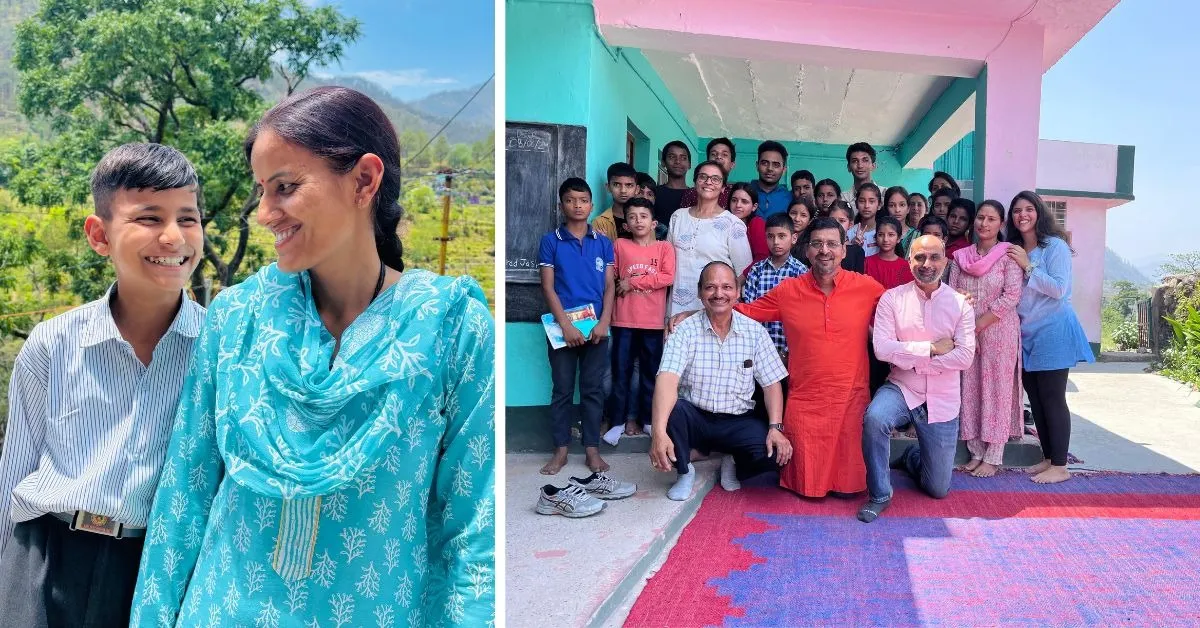
Retired Army Major Rohit Chaudhary is leading an unusual education experiment in the hills of Uttarakhand, where a once-struggling rural school has grown from about 30 students to nearly 180 and is now trying to offer children far more than conventional classroom instruction. At Happy By Nature School in Dunda, Uttarkashi, the focus is on academics, but also on technology, environmental learning, creativity, teamwork and exposure to experiences that children in remote mountain communities rarely get access to.
For Chaudhary, the effort is rooted in a larger idea: children should not be limited by the geography of their birth. He wants them to build confidence, think independently, communicate clearly, discover their abilities and see futures that are wider than the narrow options often available in hill villages.
A School Rebuilt Around a Different Idea of Learning
Happy By Nature School, located in Dunda at an elevation of around 1,158 metres above sea level, provides education from nursery to Class 8 under the NCERT pattern. Chaudhary, now 56, joined the Ganga Valley Educational Trust (GVET) as Managing Trustee in 2022, but his association with the school began much earlier, when he first visited the institution several years ago.
What he found then was a school in poor shape. Student strength was low, furniture was inadequate, learning material was limited and there were too few teachers. Children were reportedly reusing textbooks and notebooks, and the school’s future appeared uncertain. Yet the students themselves made the deepest impression on him. They were energetic, curious and eager to learn, asking questions and participating with enthusiasm. That combination of hardship and potential stayed with him.
From the Army and Corporate World to Rural Education
Chaudhary’s own career has moved across three very different settings: the Indian Army, the corporate sector and now education. He served in the Army from 1990 to 2004 and later worked in the corporate world until 2021. He grew up in Dehradun and studied at the Rashtriya Indian Military College, where he absorbed lessons on discipline and responsibility that would later shape his approach to teaching and school leadership.
But in his view, discipline is only one part of education. He wants students to combine it with curiosity, independent thought and a sense of responsibility towards society. His move into education was not a planned career shift so much as a response to what he saw at Happy By Nature School and to a growing conviction that children in remote regions should not be denied opportunity because of where they live.
That belief strengthened after the COVID-19 pandemic. Reflecting on his own life and on the impact of limited access to schooling, Chaudhary became more conscious of how quickly a lack of educational opportunity can shrink a child’s ambitions. For children in isolated mountain communities, the absence of quality schooling can become a barrier long before they are able to discover what they might achieve. Eventually, he left his corporate career and committed himself fully to the school.
Learning Through Experiments, Not Just Examinations
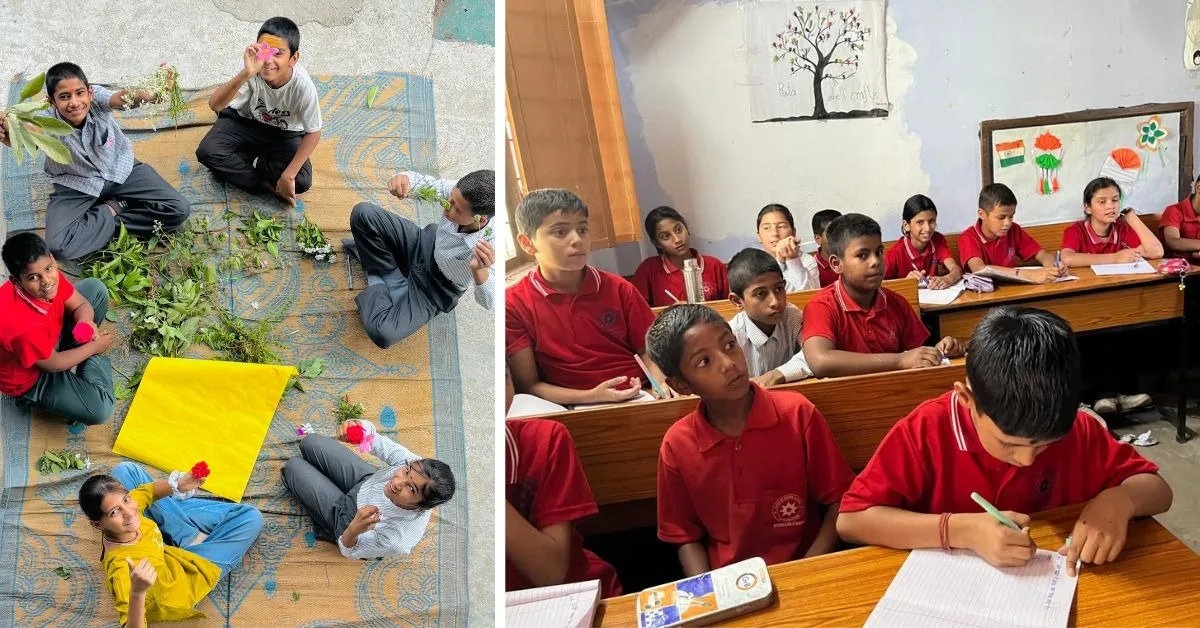
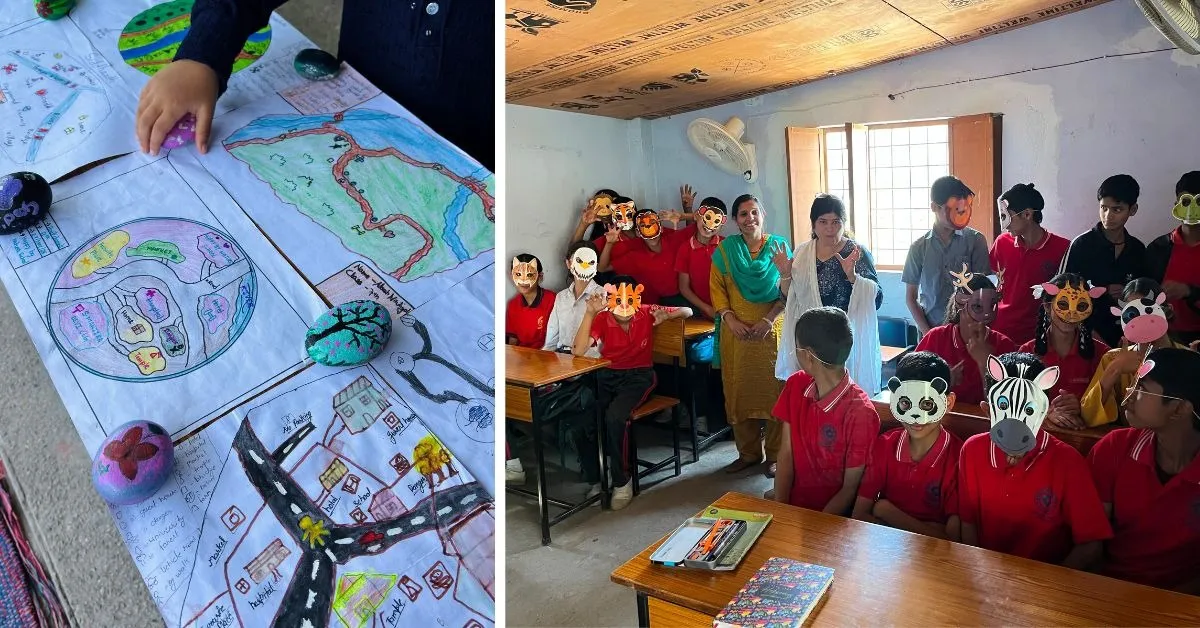
The school’s teaching model is built on the idea that education should not stop at books and tests. Students are encouraged to learn through experiments, activities, discussions and direct experience. In science, for instance, teachers try to move beyond theory and make concepts tangible through practical work. Children create their own notes as they work through ideas, rather than depending only on memorisation.
That approach has left an impression on former students as well. Anushka Nautiyal, who studied at Happy By Nature School before moving to another institution for Class 9, recalled that science lessons involved experiments rather than rote learning. The method, according to the school’s experience, has helped children become more comfortable asking questions and finding answers on their own.
Technology and Electronics Reach the Hills
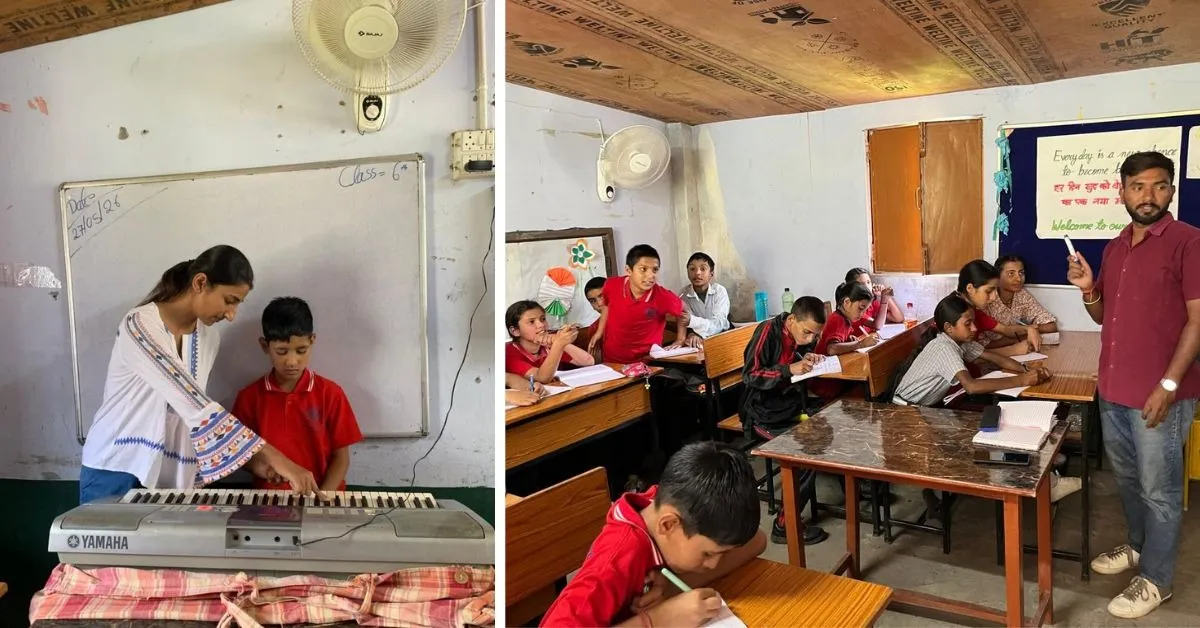
Technology has also been woven into the school’s learning environment. During one summer programme, volunteers introduced students to basic ideas around Arduino, LEDs and electronic networks. Some of them said they were surprised by how quickly the children understood the concepts and responded to the lessons, challenging assumptions about what rural students can be exposed to or absorb.
Chaudhary sees such exposure as essential. A child cannot realistically imagine becoming an engineer, designer, scientist or technology professional without first encountering the field in some form. In that sense, access itself becomes an educational opportunity, especially in places where technology-based learning is far less available than in urban schools.
Music, Art and the Search for Hidden Talents
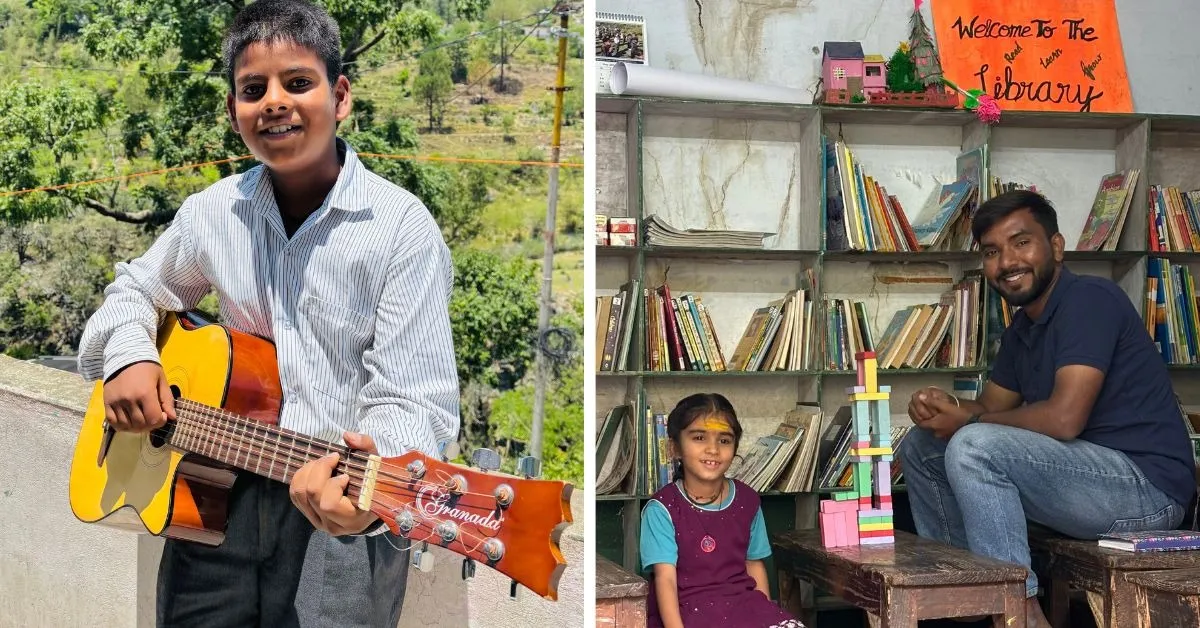
The school is also trying to identify abilities that traditional examinations may never reveal. Music has become one such area. During the summer school, children were introduced to keyboard playing and taught local Pahadi songs, opening up a space where students could explore interests beyond their regular syllabus.
The wider aim is to ensure that children are not judged only by marks. Art, music, technology, sports and practical activities can reveal strengths that conventional classroom assessments often miss. The school’s approach is to create enough room for those abilities to emerge.
Teaching Children to Read Their Own Landscape
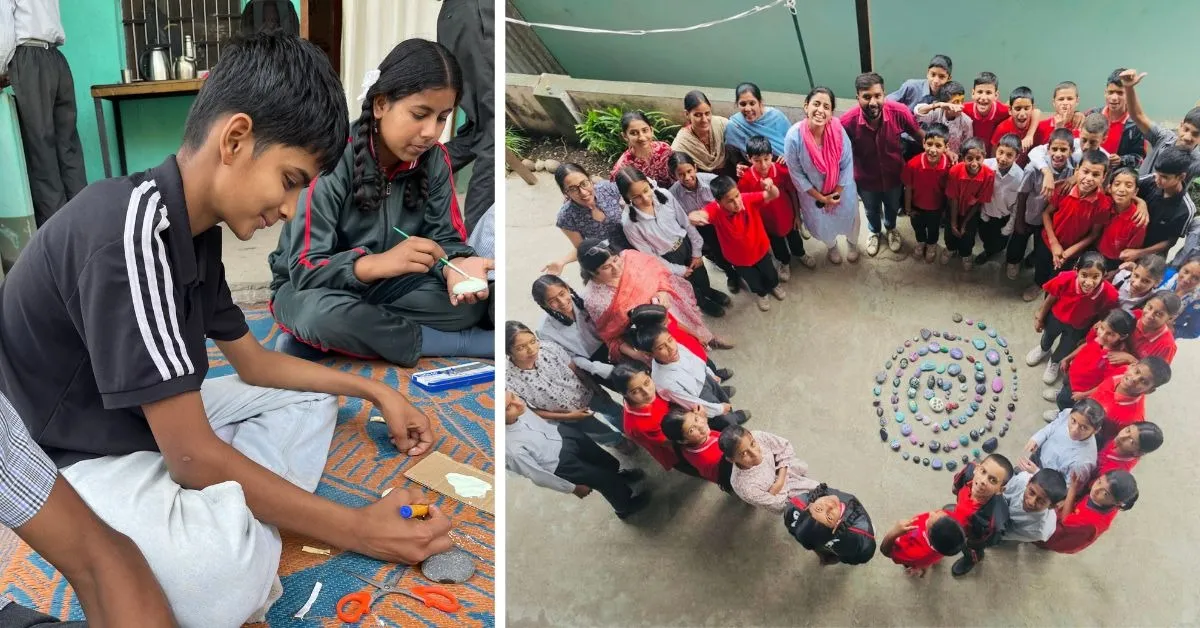
Environmental education forms another major part of the school’s work. Students have taken part in afforestation drives, biodiversity activities, nature walks and food forest initiatives. In the mountains of Uttarakhand, this is not an abstract theme. Forests, water sources, agriculture and biodiversity are part of daily life, and the school tries to connect classroom learning with the landscape around it.
Children are encouraged to observe their surroundings and understand how human activity affects the natural resources on which mountain communities depend. The intention is to build not only environmental awareness, but also a more grounded understanding of the relationship between a community and its ecosystem.
Summer Programmes Bring the Outside World In
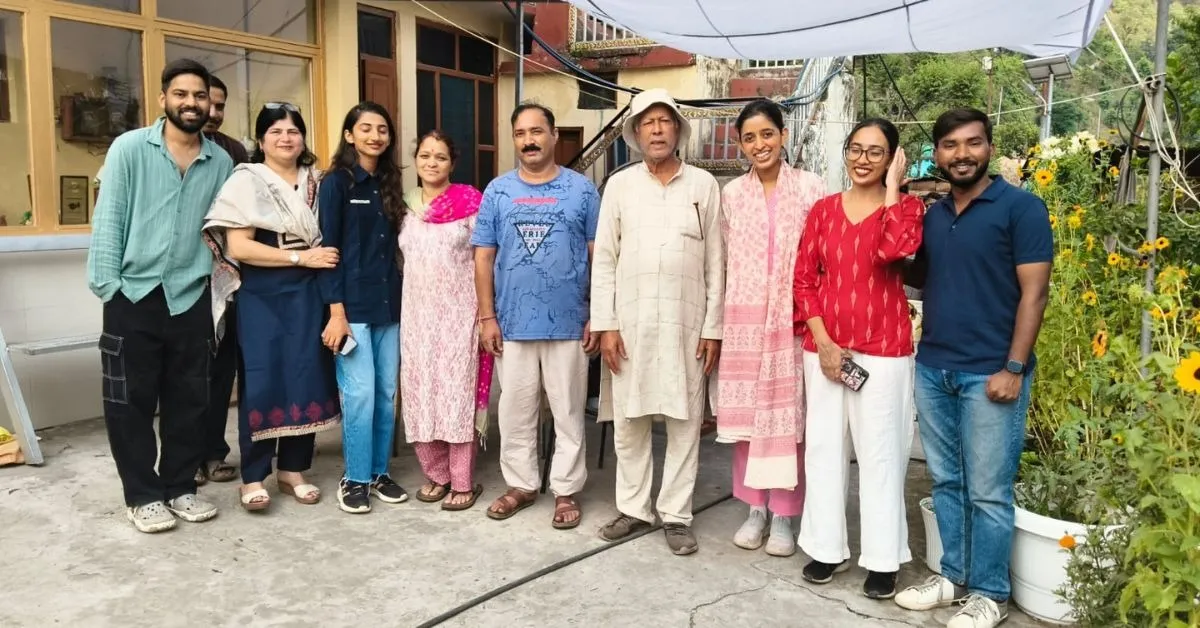
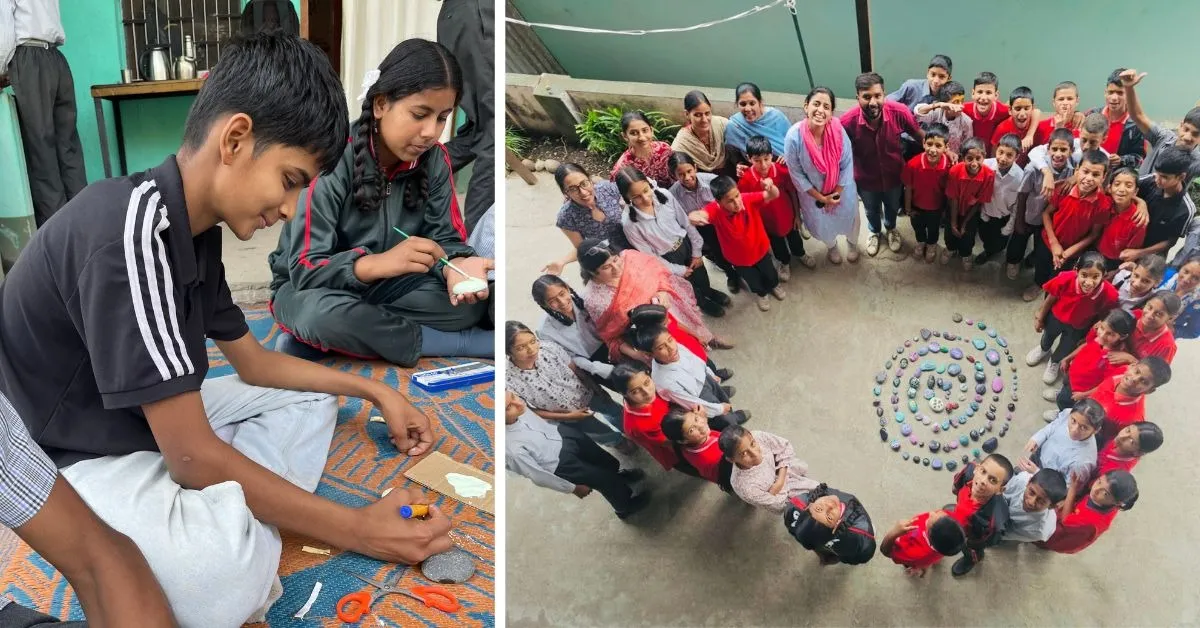
Summer programmes have widened the school’s reach even further. Volunteers from across India have travelled to Dunda to share knowledge in psychology, early childhood education, music, technology, farming, art and crafts. The exchange has not been one-way. Several volunteers have said they came expecting to teach but left having learned from the children’s resilience, enthusiasm and appreciation for opportunities that many urban students take for granted.
For the children, these visits expand the world beyond the village and the school campus. Meeting people from different parts of the country introduces them to new ideas, new careers and new possibilities.
Why Schooling in the Hills Remains Difficult
Getting to school is itself a challenge for many children in mountain villages. Some travel several kilometres on steep, winding roads, and the journey becomes harder in heavy rain or cold weather. Even so, attendance at Happy By Nature School has remained strong.
That matters in a region where migration and difficult geography have contributed to falling enrolments in many schools. Across several hill districts of Uttarakhand, government and rural schools struggle with very small student populations. Happy By Nature School has tried to respond by becoming a place children want to attend and parents believe can offer meaningful opportunities. Its rise from about 30 students to roughly 180 reflects that response.
Parents as Partners in the Process
Chaudhary’s model extends well beyond the classroom. The school holds structured parent-teacher meetings, informal “chai pe charcha” sessions and parent association interactions. These conversations are not limited to academic performance. They also cover cleanliness, sanitation, community participation and other issues that affect children’s development.
In cases where children face difficult circumstances at home, the school tries to provide counselling and support while handling sensitive family situations carefully. That kind of engagement is especially important because many of its students are first-generation learners. Their parents may not have had much formal education themselves, but they are deeply invested in creating better futures for their children. The school treats them as partners rather than simply as recipients of report cards and updates.
An Effort to Build Inclusion and Confidence
The school also tries to create an environment where children experience equality and inclusion. Students have discussed social issues such as caste discrimination and compared them with the sense of equality they feel inside the school.
For Chaudhary, this is part of what education should do. A school should not only teach what is written in a textbook; it should also help children understand how to treat others, how communities function and what responsible citizenship means.
A Higher Secondary School Is Coming Up
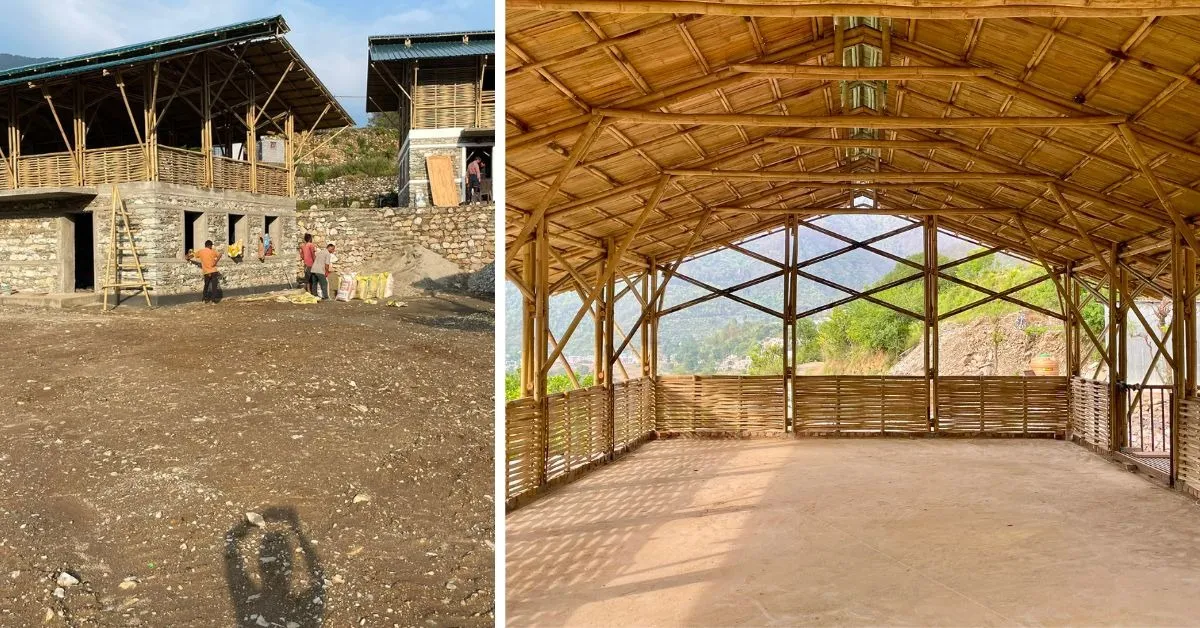
The initiative is also expanding beyond Class 8. A higher secondary school is under construction in Singuni village to take students up to Classes 9 to 12.
The proposed institution is expected to accommodate about 520 students and is being supported through nonprofit contributions raised in India and abroad. Planned across roughly 20,000 square feet, it is intended to have modern infrastructure and facilities. For children currently at Happy By Nature School, it could mean the chance to continue their education locally rather than leaving their communities immediately after Class 8.
That is especially important in mountain regions, where the absence of nearby secondary and senior secondary schools often pushes families to move or send children away for study. Chaudhary’s larger ambition is to show that quality education can be delivered in a remote Himalayan setting and that families need not be forced out of their villages simply because schooling options stop too early.
Children Are Starting to Dream Differently
Some students are already reflecting that change in their ambitions. Angana Uniyal, who has studied at Happy By Nature School since nursery, says she dreams of becoming an IAS officer and serving the nation.
Her aspiration reflects the school’s broader purpose. A child in a mountain village should be able to imagine becoming an administrator, scientist, entrepreneur, musician, engineer or teacher. The school cannot guarantee any particular future, but it can give children enough confidence, exposure and support to believe that such futures are possible.
A Model Still in the Making
The transformation at Happy By Nature School is still ongoing. Teacher development, technology exposure, environmental education, music, sports, practical learning and community engagement remain central to the school’s direction. The planned higher secondary school in Singuni could extend that vision and create a longer educational pathway for students in the hills.
From a school with limited resources and around 30 students to one serving about 180 children, the institution now stands as an attempt to show what sustained attention, community participation and a broader definition of education can accomplish. Chaudhary’s central belief is simple: geography should not decide the quality of a child’s education or the size of their dreams.
In Uttarkashi, Happy By Nature School is trying to prove that a rural school can be more than a place where children learn from textbooks. It can also be a place where they discover technology, understand their environment, develop their talents, work with others and begin to imagine a future much larger than the limits of their village.


