
Bhairav Special Forces Battalion: Enhancing Indian Army's Hybrid Warfare Capabilities

Bhairav battalions, initiated in 2025, are part of the Indian Army's modernization initiative. With around 15 units already established and plans to expand to 25, these units aim to bridge the gap between regular infantry and elite Para Special Forces. They are primarily focused on rapid cross-border operations, reconnaissance, and disruption missions.
Each battalion consists of approximately 250 personnel, drawn from various military branches such as air defense, artillery, and signals, and is led by a colonel. The training regimen is rigorous, emphasizing modern technologies including drone operations. Personnel selection follows a "son of the soil" approach to ensure adaptability to local terrains.
Deployment is strategic, focusing on border areas with China and Pakistan, enhancing the Army's capabilities in hybrid warfare scenarios.
Overview
The Bhairav Special Forces Battalions signify a strategic evolution in the Indian Army, designed to counter contemporary threats along sensitive borders. These units incorporate advanced technologies like drones, offering commanders agile and tech-savvy options for tactical engagements. Though they are not as specialized as traditional Special Forces, they provide a robust balance that allows Para SF to concentrate on high-stakes strategic roles.
Significance
These battalions demonstrate the Indian Army's shift towards multi-domain warfare by blending manpower with unmanned systems. The inclusion of over 100,000 drone operatives, including those in Bhairav units, aims to enhance precision strikes and intelligence gathering. This reflects a proactive stance against hybrid threats, potentially altering border dynamics with neighboring countries.
The Bhairav Special Forces Battalions represent a pivotal advancement in military modernization, emerging from strategic needs to address evolving warfare paradigms. Established in late 2025, these units integrate cutting-edge technologies with traditional combat prowess, inspired by global conflicts and India's border experiences. Named after Bhairav, a fierce form of Lord Shiva, they are positioned as elite light commando forces, distinct yet complementary to the existing Para Special Forces.
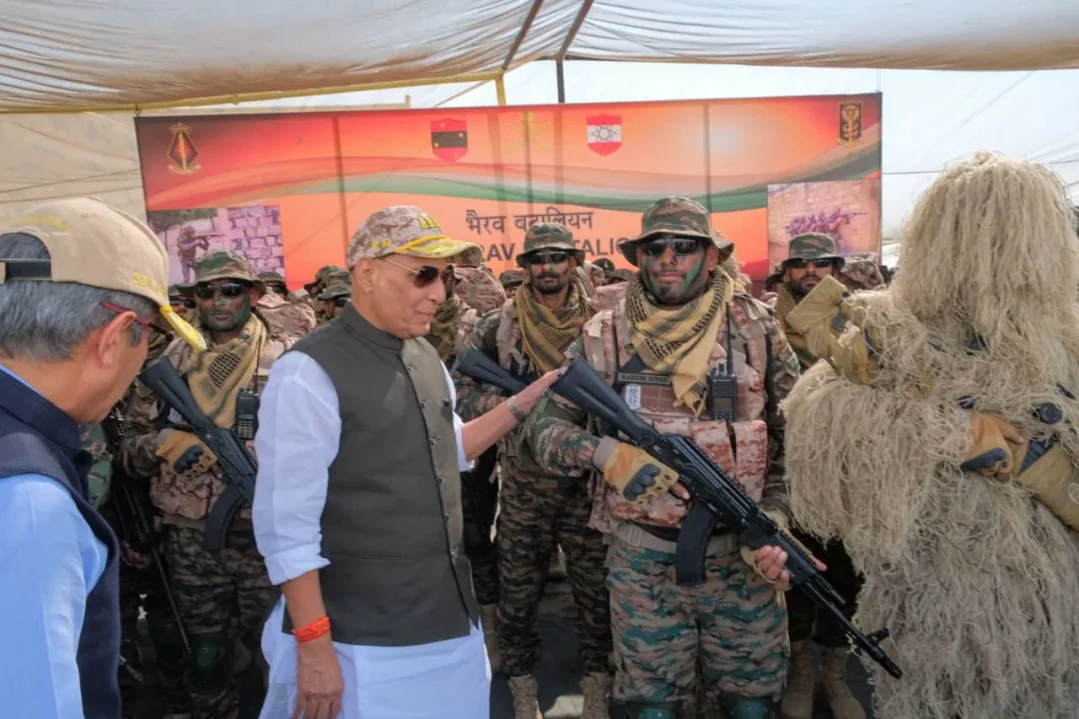
Historical Context and Formation
The creation of the Bhairav battalions resulted from a thorough review by Army Headquarters, drawing lessons from conflicts in Ukraine and the Middle East, where drones and hybrid tactics were decisive. As of early 2026, about 15 battalions have been raised: five are fully operational, four are forming, and plans are in place to operationalize an additional 16 within six months, culminating in a total of 25 units. This rapid expansion underscores the urgency of enhancing offensive capabilities along contested borders.
The formation adopts a "Sons of the Soil" strategy, particularly in desert-based units under Southern Command, where personnel are predominantly recruited from Rajasthan. This strategy leverages familiarity with local terrain, climate, language, and cultural nuances, fostering unit cohesion and resilience. Unlike the Nepalese Army's unconnected Bhairavnath Battalion, which focuses on airborne operations, India's Bhairav units are tailored for tech-integrated ground-based missions.
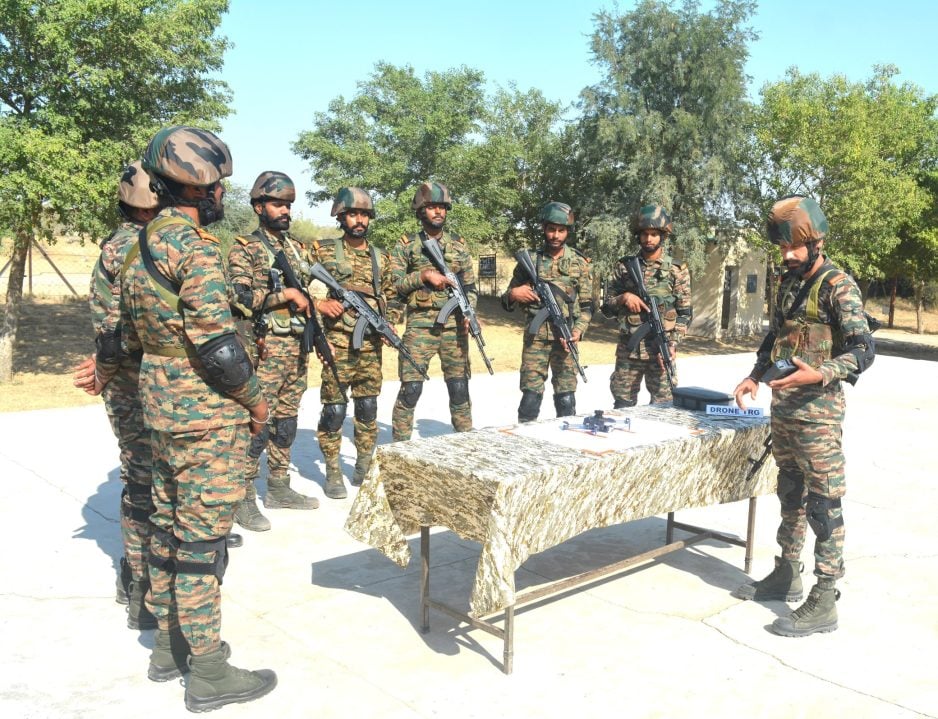
Structure and Composition
Each Bhairav battalion consists of about 250 soldiers, commanded by a colonel. These units integrate personnel from diverse arms, including five from air defense, four from artillery, and two from signals, ensuring multifaceted operational capabilities. They operate in small autonomous combat groups equipped with independent intelligence, surveillance, and reconnaissance (ISR) systems, integrated drones, and electronic warfare tools.
Unlike Ghatak platoons—elite assault teams within regular infantry battalions—the Bhairav units serve as a scalable bridge, enabling operations behind enemy lines without overcommitting Special Forces resources. Their hybrid nature allows for tasks ranging from reconnaissance to suicidal missions in battery scenarios, emphasizing all-weather fighting proficiency.

Roles and Operational Focus
Bhairav battalions are primarily tasked with conducting cross-border operations, deep reconnaissance, and disruption missions along borders with Pakistan and China. They act as agile offensive forces, capable of Special Forces-type engagements, thus allowing Para Special Forces to focus on more strategic assignments. In hybrid warfare contexts, they augment infantry's core competencies in both offensive and defensive operations across varied terrains.
A major emphasis is placed on drone-centric combat, with every operative trained to deploy drones for targeting enemy bases deep in hostile territories. This integration enhances precision strikes and ISR, aligning with broader Army restructuring efforts, including Rudra Brigades that combine infantry, mechanized units, armor, artillery, and logistics. The battalions' war cry, "Raja Ramchandra ki Jai," as demonstrated by the 2 Bhairav Special Forces Battalion, underscores their motivational ethos.
Training and Readiness
Training for Bhairav personnel is conducted in two phases: initial preparation at Infantry Regimental Centres, followed by advanced instruction at Special Forces training centers. Over the past five months leading into 2026, units have undergone rigorous training incorporating unmanned systems and cutting-edge technologies. Their operational readiness was validated during Exercise Akhand Prahar, observed by Lt Gen Dhiraj Seth, showcasing speed, coordination, and precision in simulated combat scenarios.
The training curriculum emphasizes drone operations, with the Army boasting over one lakh trained drone operatives, including those in Bhairav units, to meet modern warfare challenges. This focus ensures adaptability to multi-domain threats, including proxy wars along the Line of Control and hinterland operations.
Equipment and Technological Integration
Bhairav battalions are equipped for close-quarters and anti-armor engagements. Plans include the induction of 4.25 lakh Close Quarter Battle (CQB) carbines in 5.56 x 45mm caliber, suited for urban and counter-terrorism operations, supplied by Bharat Forge and PLR Systems. Additionally, 104 Javelin anti-tank guided missiles and 12 launchers are slated for emergency procurement, providing man-portable, infrared-guided firepower against armored targets.
Modernization extends to Ashni platoons within units, consisting of roughly 20 personnel equipped with drones for ISR and loitering munitions. A shift to 7.62 mm caliber weapons reflects a "shoot to kill" philosophy, enhancing lethality. These enhancements prioritize self-reliance, mobility, survivability, and flexibility.
Deployment and Strategic Placement
Deployments are strategically focused on high-threat areas. Under Northern Command, three units are stationed: one each with 14 Corps in Leh, 15 Corps in Srinagar, and 16 Corps in Nagrota. The remaining units cover desert and hill sectors along western and eastern borders, ensuring rapid response to incursions. This positioning addresses threats from Pakistan post-Kargil and Chinese troop buildups, emphasizing reactive and proactive measures in limited wars.
| Aspect | Details |
|---|---|
| Number of Battalions | 25 planned (5 operational, 4 raising, 16 in six months) |
| Personnel per Battalion | Approximately 250, integrated from air defense (5), artillery (4), signals (2) |
| Key Equipment | CQB carbines (4.25 lakh), Javelin ATGMs (104 missiles, 12 launchers), drones for ISR and loitering munitions |
| Deployment Locations | Northern Command (Leh, Srinagar, Nagrota); desert and hill sectors on western/eastern borders |
| Training Focus | Drone operations, unmanned systems; validated in Exercise Akhand Prahar |
| War Cry | "Raja Ramchandra ki Jai" (e.g., 2 Bhairav Battalion) |
Future Prospects and Broader Implications
Set to debut in the 2026 Army Day Parade in Jaipur, the Bhairav battalions symbolize India's push toward technological self-sufficiency and adaptive doctrine. As part of infantry modernization, they reinforce the "queen of the battle" role, ensuring ground-holding predominance amid shifting global security landscapes. While debates exist on their classification as "Special Forces" versus "light commandos," their integration of drones and rapid-strike capabilities positions them as a force multiplier in potential conflicts. This development not only bolsters border security but also signals India's strategic evolution in an era of hybrid and limited warfare.


