Army Doctor Captain Saurabh Salunkhe Helps 8-Year-Old Regain Speech in Jammu and Kashmir

In a secluded village in Jammu and Kashmir, an eight-year-old boy who had struggled with speech finally found his voice. This life-changing event for Akshay Sharma, a third-grade student from Duggan village in Kathua district, was made possible through the compassion and dedication of Captain Saurabh Salunkhe from the Indian Army Medical Corps.
Captain Salunkhe, who holds the position of Regimental Medical Officer in the 7 Sikh Light Infantry, extended his duties beyond traditional medical care to assist the young boy in overcoming his silence. His commitment not only transformed Akshay's life but also showcased the humanitarian efforts of the Indian Army in remote border regions where specialized medical care is scarce.
Akshay was born with a cleft lip and palate, a congenital condition affecting the development of the lip or mouth. Undergoing corrective surgery at Pathankot Civil Hospital between the ages of three and three-and-a-half addressed the physical defect but left unresolved speech challenges. Children with this condition typically require ongoing speech therapy post-surgery, a resource unavailable to Akshay’s family.
His father, Kulwant Sharma, a laborer working with the Indian Army, could not afford to seek costly therapy in distant cities. Living in the remote Duggan area meant medical options were extremely limited, and as a result, Akshay grew up unable to speak despite being otherwise healthy and capable.
The family endured years of silence, hoping Akshay would speak naturally over time, but at eight years old, he still had not spoken his first words to his parents.
The pivotal moment occurred in mid-June 2025 during an Army medical camp in Duggan village. As part of the Army's efforts to provide medical care in remote areas, Captain Salunkhe examined Akshay and saw potential for speech development through proper training and therapy.
However, the absence of a nearby speech therapist posed a significant challenge. Rather than referring the family to a distant facility, Captain Salunkhe decided to personally oversee Akshay’s therapy.
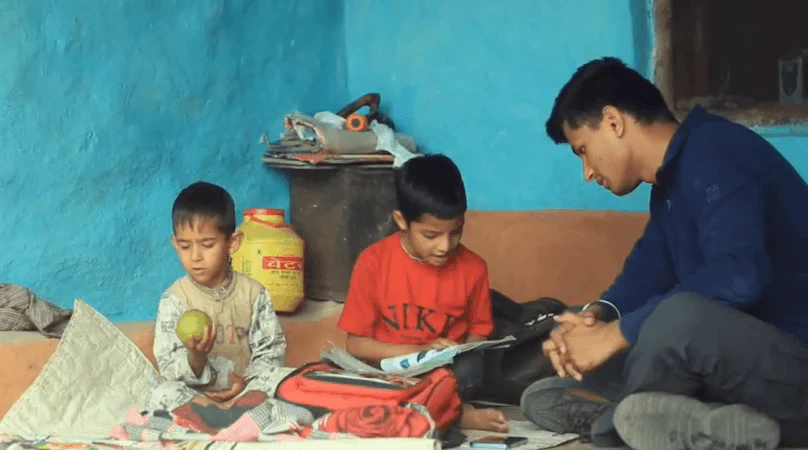
Although not a practicing speech therapist, Captain Salunkhe used his basic knowledge of speech therapy from medical training as a foundation. He researched and developed a simple, structured plan tailored to Akshay’s needs, relying on patience, consistency, and daily practice rather than costly equipment.
Over nearly two months, Captain Salunkhe dedicated two to three hours each day to Akshay, starting with fundamental exercises and progressing to complex speech formations. Initial sessions involved gargling exercises to enhance vocal tract stimulation and oral awareness, followed by controlled tongue and jaw movements to properly utilize the mouth and palate.
As Akshay advanced, the therapy introduced different sound categories, teaching him to differentiate between nasal and oral sounds, and later practicing labial, palatal, and throat sounds, alphabets, syllables, words, and eventually short sentences.
The process demanded persistence from the doctor, trust from the child, and hope from the family.
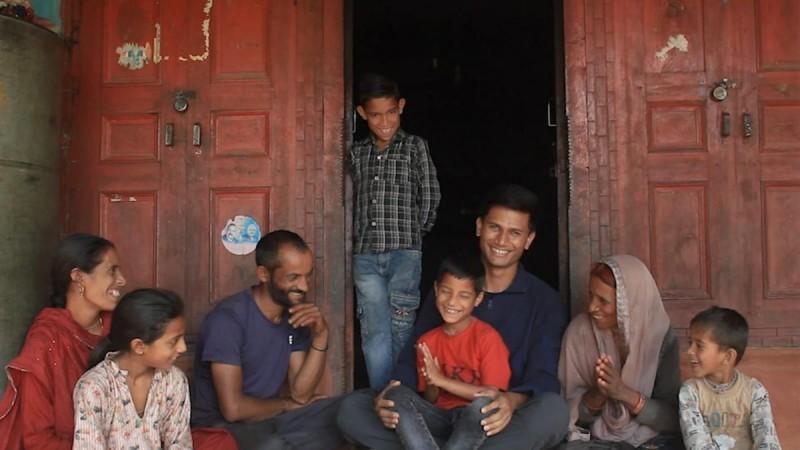
After weeks of dedication, Akshay began forming words, which gradually turned into short sentences. For the first time, he was able to speak with growing confidence.
The defining moment was when Akshay called out to his parents for the first time, a moment that turned years of silence into an unforgettable experience for the family. What seemed impossible had been realized through consistent therapy and the extraordinary dedication of a caring Army doctor.
For Akshay’s parents, it was nothing short of miraculous to hear their child speak after years of silence.
The story of Captain Saurabh Salunkhe and Akshay Sharma extends beyond a medical achievement. It highlights the importance of follow-up care for cleft lip and palate surgeries, demonstrating that surgery can repair structural issues but proper speech training is essential for communication development. This gap is particularly significant in remote areas where access to specialists is limited.
Captain Salunkhe’s intervention bridged this gap for Akshay, proving that a committed medical professional can make significant changes even in resource-limited settings through dedication and empathy.
The Indian Army is often associated with national security, yet in remote and border regions, Army personnel fulfill crucial humanitarian roles. Medical camps, emergency support, and community outreach provide essential services to local populations. In locales like Duggan with limited civilian healthcare, Army doctors frequently serve as primary medical support.
Captain Salunkhe exemplified this service ethos, going beyond his primary duty of caring for soldiers to help a civilian child in need, thereby changing a young boy's life forever.
By helping Akshay gain the ability to speak, Captain Salunkhe not only restored his voice but also endowed him with newfound confidence, dignity, and the means to express himself. This achievement has opened opportunities for better learning, social interactions, and emotional connections with his family and peers.
For Akshay, speaking represents the beginning of a new chapter in his life. For the Indian Army Medical Corps, this story reflects its longstanding tradition of service, compassion, and healing. It underscores that heroism is not confined to the battlefield but can also be found in the quiet efforts of those committed to helping others, as demonstrated by Captain Salunkhe’s inspiring dedication to service beyond duty.