
Air Marshal Palaparthy Highlights Indigenous Collaboration at SKYTECH India 2026 Summit in Ahmedabad

Air Marshal Venkat Shivanand Palaparthy, the Air Officer Commanding-in-Chief of the South Western Air Command, addressed the closing session of the first day of the SKYTECH India 2026 – Space Economy & Drone Innovation Summit in Ahmedabad. He underscored the rising significance of domestic innovation and enhanced cooperation between India's Armed Forces, academic institutions, researchers, and the nation's technology ecosystem.
During his speech at the summit, Air Marshal Palaparthy discussed the various initiatives being implemented by the government and the Armed Forces to cultivate India's indigenous startup ecosystem. These efforts aim to foster technological advancements that meet the country's emerging national security and aerospace needs.
He highlighted the necessity of closer collaboration between academia, researchers, innovators, startups, and the Armed Forces to expedite the development and utilization of advanced indigenous technologies.
The summit put a spotlight on the burgeoning fields of space and unmanned aerial systems. These sectors are becoming increasingly vital not only for the civilian economy but also for defense, surveillance, communications, logistics, and a wide array of military applications.
Air Marshal Palaparthy emphasized creating an ecosystem where innovative ideas from academic institutions, research bodies, and startups can be transformed into practical solutions that benefit the Armed Forces.
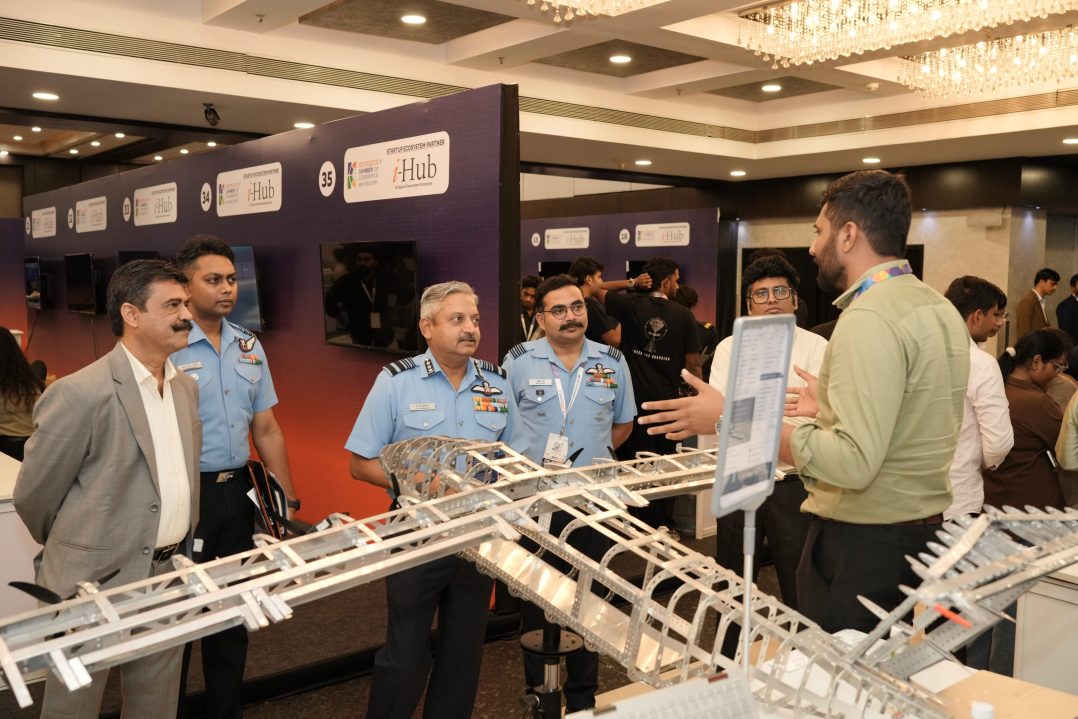
Such cooperation can help reduce the time from research and prototype development to testing and operational deployment. Interaction between technology developers and military users is crucial as it allows innovators to better understand operational needs while enabling the Armed Forces to identify promising technologies early on.
India is increasingly focusing on indigenous defense manufacturing, encouraging private companies and startups to develop next-generation capabilities. Fields like drones, artificial intelligence, autonomous systems, space technologies, sensors, communications, and advanced electronics offer new opportunities for small tech companies and entrepreneurs to contribute to the national defense ecosystem.
Drone technology, in particular, has rapidly evolved, with unmanned platforms being used for intelligence, surveillance, reconnaissance, logistics, disaster response, and more.
Meanwhile, advancements in the space sector are increasingly relevant to modern military operations. Satellite communications, navigation, remote sensing, and space-based situational awareness play crucial roles in supporting networked, information-driven operations.
The merging of space technologies, drones, artificial intelligence, advanced sensors, and secure communications is transforming contemporary warfare. This highlights the growing importance of continuous engagement between operational users and India's tech community.
As the leader of the South Western Air Command, Air Marshal Palaparthy's involvement in SKYTECH India 2026 signifies the Armed Forces' commitment to engaging with emerging technology ecosystems and fostering innovation-driven capability development.
The summit also provided a platform for startups and entrepreneurs to showcase their ideas, exchange knowledge, and engage with stakeholders in India's expanding space and drone sectors.
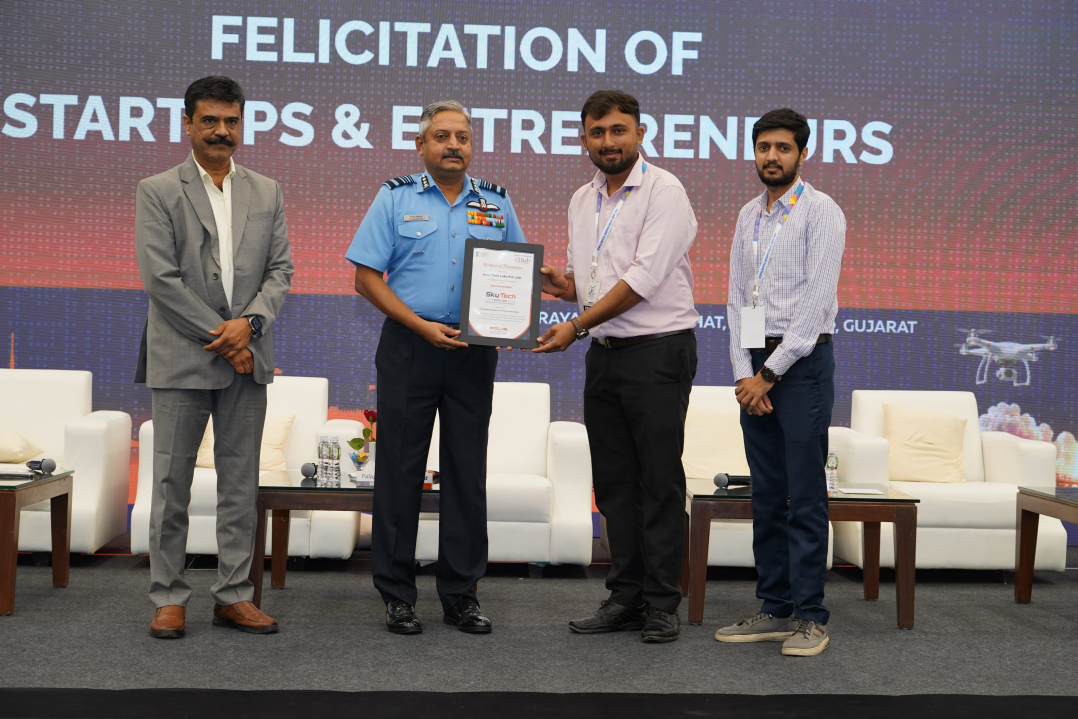
The first day concluded with the presentation of certificates of participation to the startups and entrepreneurs who took part in the event.
Air Marshal Palaparthy's final address reiterated that India's future technological capabilities largely depend on collaborations that cross institutional boundaries. By uniting the Armed Forces, government agencies, academic institutions, researchers, established industries, and emerging startups, a robust pathway can be established for indigenous technologies to evolve from innovative ideas to operational solutions.
SKYTECH India 2026 in Ahmedabad thus served as a key platform for enhancing interaction between innovators and stakeholders in the space, drone, and defense technology sectors, while underscoring the national goal of building a technologically advanced and self-reliant indigenous ecosystem.


